
What Are 50 mm Headphone Drivers?
Big sound, deeper bass, wider stage – but is a 50 mm driver really the game-changer it claims to be?
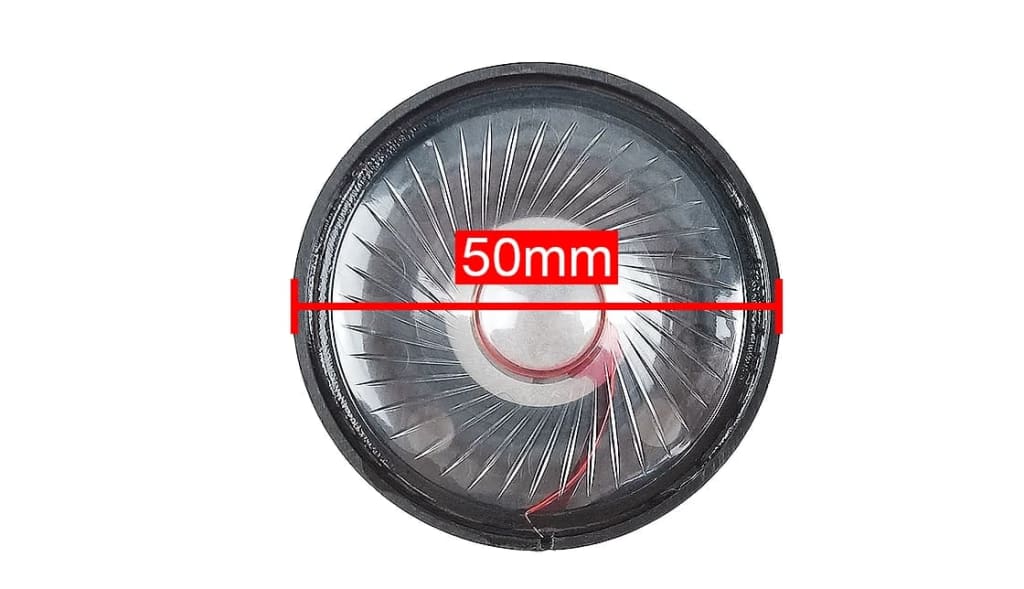
If you've been reading up on gaming headsets or browsing Amazon listings, you've probably seen this line a dozen times: “Equipped with powerful 50 mm drivers for immersive sound.” But what does that really mean? Is bigger always better when it comes to headphone drivers? Or is it just another spec thrown around to grab your attention?
Let’s break it down — not with marketing fluff, but real talk based on what we’ve tested, used, and actually listened to.
So, What Exactly Is a 50 mm Driver?
A headphone driver is the part of the headphone that turns electrical signals into sound. Think of it as a tiny speaker sitting in each earcup. The “50 mm” part simply refers to the diameter of the driver — in this case, 50 millimeters.
That’s bigger than the more common 40 mm drivers you’ll find in many headphones. A bigger driver doesn’t guarantee better quality, but it can mean more powerful bass, wider soundstage, and potentially louder audio without distortion — depending on how it’s tuned.
In our experience at Mamija Gaming, some of the most impactful, full-sounding headphones we’ve tested use 50 mm drivers. But size is only part of the story.
Why Do Gamers Care About 50 mm Drivers?
Let’s be honest — when you’re deep into a match of Apex Legends or Call of Duty, audio isn’t just a background detail. It’s survival. Hearing footsteps before your enemy hears yours can mean the difference between a win or a rage quit.
This is where 50 mm drivers shine — not just louder, but more spacious. When tuned right, they can deliver a more immersive sound experience. You can hear distant gunfire with better positioning, catch subtle movement cues, or just feel more “in” the world thanks to the extra depth in audio.
But bigger drivers aren’t magic. A poorly tuned 50 mm driver will still sound flat or muddy. So while the size opens potential, execution matters.
Do 50 mm Drivers Always Mean Better Sound?
Not necessarily. Some of the most well-balanced studio headphones in the world use smaller drivers. The tuning, materials, magnet quality, and diaphragm type all play major roles. It’s not just about size — it’s about how the driver performs as a whole system.
We’ve tested 50 mm headphones that sounded worse than some 40 mm models — overly bassy, muffled, or lacking detail. We’ve also tested others that blew us away with their richness and clarity. Again, it comes down to how the sound is engineered, not just the millimeters on the box
That being said, when done right, 50 mm drivers usually offer a fuller low end and a more cinematic audio experience — great for gaming and movies, maybe less critical for podcasts or casual listening.
What About Music and Everyday Use?
If you listen to genres like EDM, hip-hop, or cinematic orchestral tracks, the extra thump from a well-tuned 50 mm driver can be really satisfying. There’s a sense of depth and warmth that smaller drivers sometimes struggle to match.
For more detail-oriented genres like jazz or acoustic, it depends more on tuning than size. If a 50 mm driver is balanced well, it can absolutely hold its own. Just don’t fall into the trap of assuming every large driver equals audiophile-grade sound — it’s rarely that simple.
50 mm Drivers vs 40 mm Drivers – Does It Really Matter?
We get this question a lot at Mamija Gaming. Here's the short answer: it depends on your use case.
- Gaming: Go 50 mm if you want that immersive, wide-room sound. It’s especially noticeable in FPS games where directional cues matter
- Movies: 50 mm drivers deliver a more home-theater-like experience — better bass, wider sound.
- Music: Can go either way. A great 40 mm headphone can outperform a badly tuned 50 mm one.
- Portability: 40 mm headphones are usually smaller, lighter, and easier to wear on the go.
So yes, the jump from 40 mm to 50 mm is noticeable if the headphones are built and tuned well. Otherwise, it’s just another number on the spec sheet.
Final Thoughts: Should You Care About 50 mm Drivers?
Yes — but only in context.
A 50 mm driver gives manufacturers more room to tune for dynamic, bass-rich, immersive sound. For gaming, movies, and energetic music, it’s often a great choice. But don’t buy into the myth that “bigger always means better.” Listen, compare, and check real-world reviews (like ours at Mamija Gaming) before pulling the trigger.
At the end of the day, your ears will be the final judge — not the size printed on the side of the box.
About the Creator
Keep reading
More stories from Ahmed Fejzic and writers in 01 and other communities.
What Are 40 mm Drivers in Headphones?
If you’ve ever browsed headphone specs and paused at “40 mm drivers,” you’re not alone. On paper, it might sound like just another technical stat — but if you care about how your music, games, or movies sound, it’s worth understanding what that means.
By Ahmed Fejzic5 months ago in 01
Jeff Bezos reveals the No. 1 secret behind Amazon’s trillion-dollar success, has a unique advice for young people
Jeff Bezos reveals the No.1 secret behind the company’s trillion-dollar success. He said that it can be advantageous for any company if they pay attention to customer instead of your competitor, giving a classic example of customer-driven innovation Amazon Prime. Jeff Bezos also advised young entrepreneurs to gain foundational skills through entry-level jobs like those at McDonald’s, emphasizing responsibility and resilience.
By Dena Falken Esq4 days ago in 01
Why Your Construction Business Needs a Mobile Concrete Mixer
Are you tired of waiting for concrete deliveries? Do you want more control over your construction projects? A mobile concrete mixer might be the solution you need. These machines bring concrete production directly to your job site. They eliminate delays and give you fresh concrete whenever required. In this article, we will explore how they work and why they matter. We will also discuss key factors to consider when choosing one. By the end, you will understand how a self loading concrete mixer can improve your operations. Let’s dive in and learn more about this valuable equipment.
By consrtuctionmachinesa day ago in 01


Comments
There are no comments for this story
Be the first to respond and start the conversation.