
we have a new earth
Nasa found planets for us to stay in !!! buckle up!!!
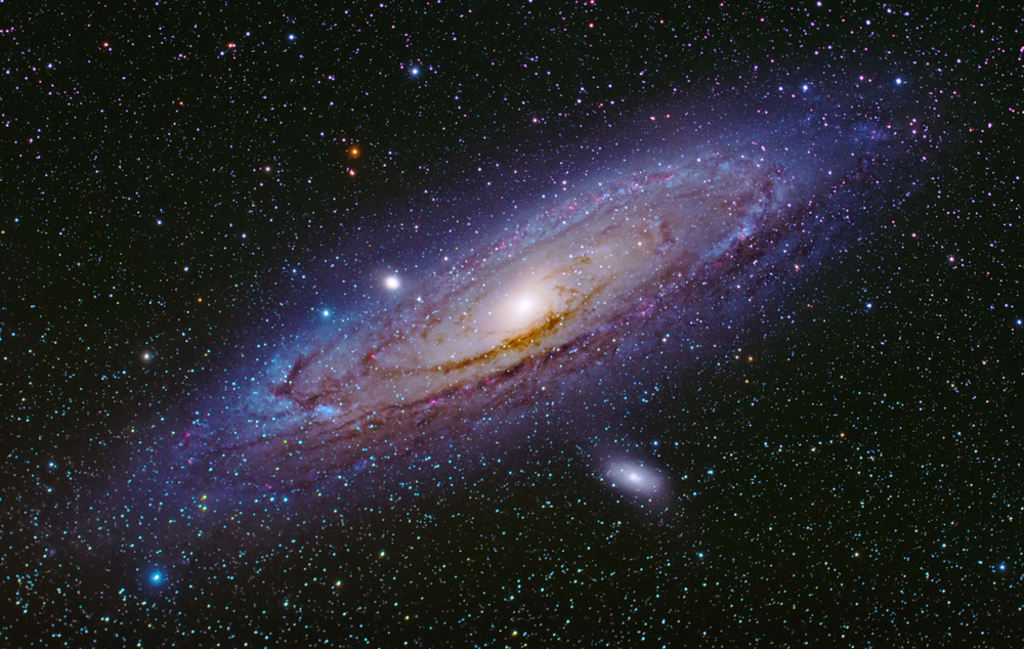
In 2022 and 2023, significant strides were made in the discovery of new habitable planets. NASA's confirmed exoplanet count surpassed 5,000, revealing a diverse range of celestial bodies including rocky super Earths, gas giants like Jupiter, ice giants like Neptune, and more. This is merely the beginning, as it is estimated that there may be over a trillion exoplanets in our galaxy alone. The crucial question remains: how many of these planets are suitable for human habitation? Fortunately, there are several planets on the list that could potentially support life or serve as a future home for humanity. In fact, as many as five such planets were discovered in 2022 and 2023. The journey beyond our solar system promises to be an exciting one, with Wolf 1069b being the first planet on the list of discoveries. While its official designation may be mundane, we shall affectionately refer to it as "Wolfie"
Times the mass of our planet, it's orbiting a red dwarf star who I'll call Wolfie's Mama, but here's the real kicker: Wolfie orbits within its star's habitable zone, which means it's a prime candidate for liquid water to exist on its surface. That's like hitting the exoplanetary jackpot! Ooh, wish I had a ticket.
The study estimates that if Wolfie does have an Earth-like atmosphere, temperatures could rise as high as 55 degrees Fahrenheit, which would mean liquid water could pool on the planet's day side. But here's the catch: the exoplanet is tidally locked to its star, meaning that the same side always faces the star. Just imagine, one side of the planet is always basking in the warmth of its star, while the other is in eternal darkness. Like middle school, just kidding!
from the star, causing a dip in brightness. This is what the team behind the discovery has observed, and they believe that this planet, which they have named TOI 700e, is a prime candidate for further studies. However, it is likely that we will have to wait another decade before we can obtain definitive answers. In the meantime, we will continue to search the skies with our telescopes and remain hopeful. NASA has recently announced the discovery of a new planet that is poised to make waves in the galaxy. This planet, which we have nicknamed "Toys R Us," is nearly the size of Earth and is believed to have liquid water on its surface. It is located a mere 100 light years away, which is relatively close in the grand scheme of things. Toys R Us is the fourth planet in its system and has a short orbit of just 28 days to circle its star. While this may mean that you would have a birthday every month, it also makes the planet a fascinating subject for further study. The discovery of Toys R Us was made using the transit method, which involves observing the dip in brightness that occurs when a planet passes in front of its star. While planets themselves are incredibly small and difficult to detect, this method has proven to be an effective way of identifying new planets and learning more about their characteristics.
When a planet is positioned in front of its corresponding star, it obstructs a portion of the light emanating from the star, resulting in a slightly diminished appearance. Once the planet moves away, the star's luminosity returns to its original state. To identify the planet, scientists meticulously observe any alterations in the star's brightness. If such changes occur, it is likely that a planet is present, engaging in a game of hide and seek. This is how the discovery of Toys "R" Us was made; the Tess mission uncovered 66 new exoplanets and an additional 2100 candidates awaiting confirmation. Tess has been highly productive, generating images for 75% of the sky, demonstrating remarkable efficiency.TOYS WHERE US is located in the OPTIMISTIC HABITABLE ZONE between planets C and D, but it may be TIDALLY LOCKED just like Wolfie, so we might have to settle for a ONE-SIDED WATER WORLD. The discovery of TOYS WHEREAS is a PROMISING PROSPECT for future follow-up observations, and it demonstrates the POTENTIAL for TESS to find even smaller exoplanets in the future. Who knows, it may find a NEW HOME for HUMANITY AMONG THE STARS one day or MIDDLE EAST a new vacation spot. Next, we have TWINS GJ1002B and GJ1002C. The galaxy just got a little bit closer to us with a discovery of two exoplanets, which I'll nickname HANSEL and GRETEL, that are just a STONE'S THROW.
Get ready to pack your bags, because we've just discovered two Earth-like planets that are practically our next-door neighbors! These planets are located less than 16 light years away from our solar system, which is just a hop, skip, and a jump in space terms. To put it into perspective, the closest Earth Mass exoplanet, Proxima Centauri B, is a whopping 4.2 light years away. So, these two new planets are among the closest to us.
Both planets orbit a red dwarf star with barely 1/8 the mass of the sun. It may be quite cool and faint, but that's okay because both planets are very close to it. Hansel takes just 10 days to orbit its star, while Gretel takes just over 21 days. Even more birthdays to celebrate, I guess!
The discovery of these planets was no small feat. An international scientific team had to work together with two instruments, Espresso and Carminis, to get measurements so accurate that you could practically count the number of craters on the planet's surfaces. The big deal is that these planets are located in the habitable zone of their star and are just the right size, making them excellent candidates for future atmospheric studies.
The lead author of the study says that nature seems bent on showing us that Earth-like planets are very common. With these two new planets, we now know of seven in planetary systems quite near to the Sun. Who knew our neighbors could be so friendly?
In conclusion, the discovery of Hansel and Gretel is a giant leaf for humankind. So, get ready to explore the universe because it looks like we have some friendly neighbors out there !Let's raise a glass to the ending of our glass cheers!!!
About the Creator
Keep reading
More stories from writers in 01 and other communities.
Can You Send a Fax from Your Phone, and How?
We primarily associate faxing with sending necessary documents using a special device connected to a telephone line. Indeed, until recently, this was the standard practice, and businesses relied heavily on bulky fax machines that dominated office spaces. But the world of document transmission has evolved significantly. What does faxing look like in today's mobile-first environment? Is the process truly simpler? Most importantly, can you accomplish this task directly from your smartphone?
By Arooj Manoorabout 12 hours ago in 01
Navigating Cryptocurrency Asset Recovery
The challenging environment of digital asset theft and loss has given rise to a specialized sector focused on recovery. This field consists of companies with distinct operational models, from direct investigation to technical support and foundational analytics. The following outlines five notable entities often referenced in this space, categorized by their primary function.
By Milan Roberts6 days ago in 01



Comments
There are no comments for this story
Be the first to respond and start the conversation.