
Understanding Core Pins in Molding: Functions, Types, and Applications
What Are Core Pins?

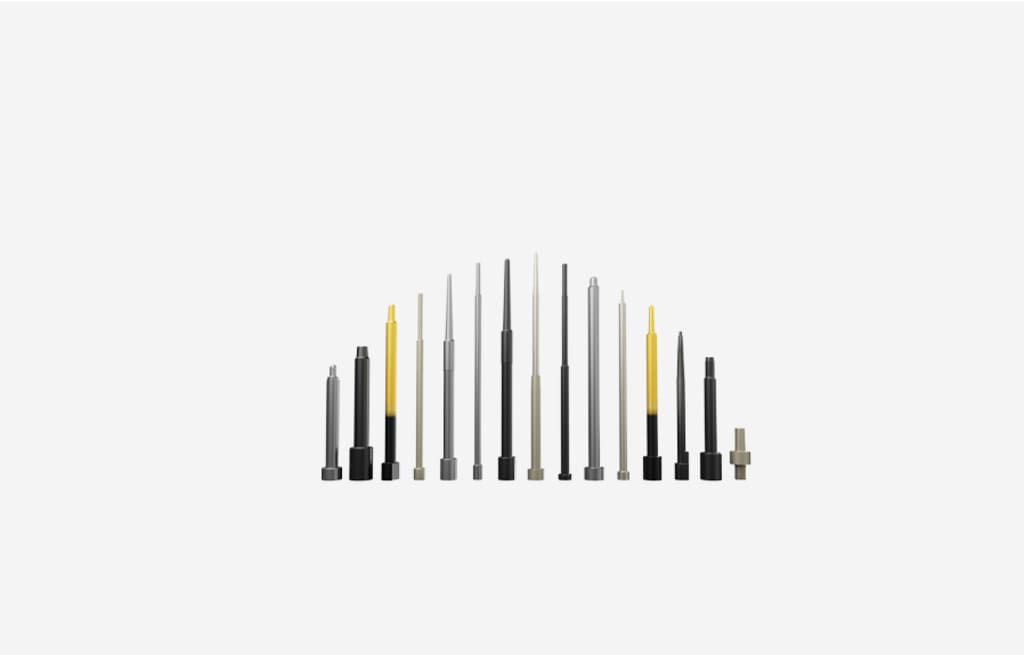
In the world of molding and die casting, precision components play a crucial role in ensuring the integrity and accuracy of the final product. One such essential component is the core pin. Core pins are widely used in injection molding, die casting, and other manufacturing processes to create cavities, holes, and intricate internal structures in molded parts. This blog will explore what core pins are, their functions, types, materials, and key applications.
What Are Core Pins?
Core pins are hardened steel or carbide pins that are inserted into molds to form specific internal features in plastic or metal castings. These pins help maintain dimensional accuracy, improve mold efficiency, and prevent defects like shrinkage or warping in the final product.
Functions of Core Pins
Creating Hollow Sections: Core pins allow manufacturers to mold hollow or recessed sections inside parts, reducing material usage and weight.
Enhancing Structural Integrity: By shaping internal cavities, core pins improve the overall strength and function of molded components.
Heat Transfer Management: Some core pins help dissipate heat efficiently, ensuring uniform cooling and reducing defects.
Precision in Molding: They ensure that parts meet exact specifications by maintaining consistent shape and size during the molding process.
Types of Core Pins
Core pins come in various designs depending on the molding process and part requirements. The most common types include:
Straight Core Pins: Simple cylindrical pins used for creating uniform holes or cavities.
Tapered Core Pins: Feature a slight taper to allow easy ejection of molded parts without damage.
Threaded Core Pins: Used for molding threaded sections inside plastic or metal components.
Vented Core Pins: Designed with air vents to eliminate trapped gases and prevent defects like voids.
Ejector Core Pins: Serve as both core pins and ejector pins, pushing the finished part out of the mold.
Cooling Core Pins: Equipped with internal cooling channels to regulate temperature and prevent heat buildup.
Materials Used for Core Pins
Core pins must withstand high temperatures and pressures, making material selection crucial. The most commonly used materials are:
H13 Tool Steel: High-strength and heat-resistant, ideal for die casting and plastic molding.
Carbide: Extremely wear-resistant, suitable for high-volume production.
Stainless Steel: Corrosion-resistant, often used in medical and food-grade applications.
Beryllium Copper: Provides excellent thermal conductivity for heat-sensitive molding processes.
Applications of Core Pins
Core pins are vital in various industries, including:
Automotive: Used in molding complex engine components and lightweight parts.
Medical: Essential for manufacturing precision medical devices and syringes.
Aerospace: Helps in producing high-strength, lightweight aircraft components.
Electronics: Used in manufacturing intricate plastic casings and connectors.
Consumer Goods: Helps create ergonomic and functional designs in everyday products.
Best Practices for Using Core Pins
To maximize efficiency and lifespan, consider the following:
Proper Alignment: Misalignment can lead to defects and increased wear.
Regular Maintenance: Cleaning and inspecting core pins help prevent buildup and wear.
Optimal Cooling: Ensuring proper heat dissipation improves cycle times and quality.
Material Selection: Choose the right material based on production volume and part requirements.
Conclusion
Core pins are an integral part of the molding and die casting industries, enabling precision manufacturing across various sectors. Whether it's creating intricate features in plastic components or ensuring structural integrity in metal castings, core pins play a vital role in achieving high-quality end products. By selecting the right type, material, and maintenance approach, manufacturers can optimize performance and enhance efficiency in their molding processes.
For businesses involved in injection molding, die casting, or precision manufacturing, understanding and utilizing core pins effectively can lead to improved production quality and cost savings.
About the Creator
ragagroup
Raga Group has been a pioneer in the die casting industry since 1995. Specializing in manufacturing and supplying advanced technologies and consumables, Raga Group serves over 200 die casters globally.
Keep reading
More stories from writers in 01 and other communities.
What Is a Crypto Token and How Much Does It Cost to Build One?
Cryptocurrency and blockchain technology have become very popular in recent years. Many startups, businesses, and even individuals are now interested in creating their own crypto tokens. A crypto token can be used for payments, rewards, governance, gaming, NFTs, or many other purposes.
By ecosmob technologies6 days ago in 01
After the Storm
After the storm of winter snow there sat a small bear by the name Ted, of course. He loves the snow and likes to roll around in it making all sorts of trails and whatever he has a mind to do. He wondered where all the people are, but in a way, he is hoping that they are all snug in the homes maybe drinking hot chocolate-one of his favorite drinks with mini-marshmallows and eating something homemade for he likes this winter wonderland all to himself to romp and play and maybe even catch some fish down by the river.
By Mark Graham3 days ago in Fiction



Comments (1)
Awesome! Thanks for sharing it!