
Top Challenges in Scan to BIM Services and How Industry Leaders are Overcoming Them
Top Challenges in Scan to BIM Services and How Industry Leaders are Overcoming Them
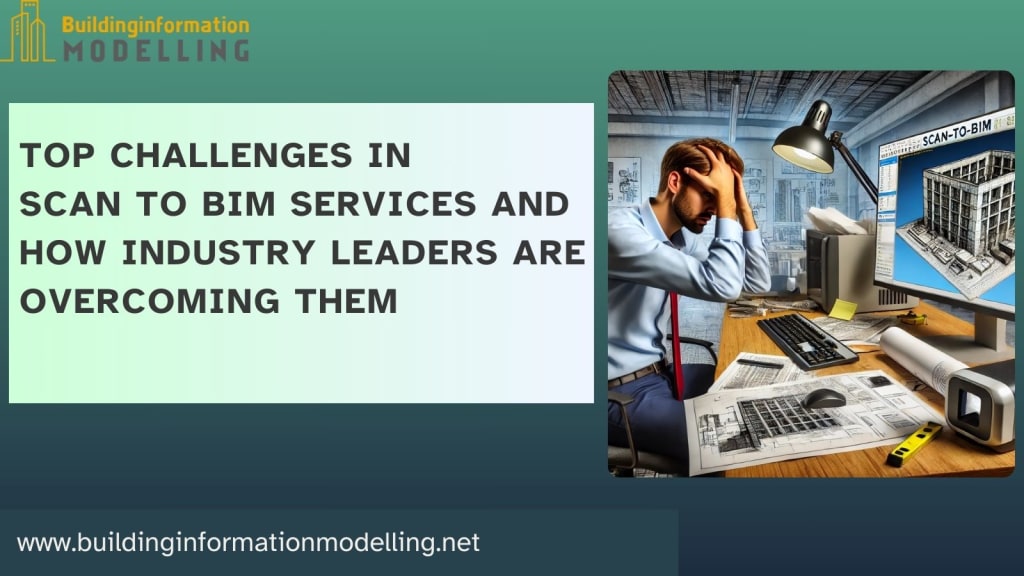
Scan to BIM Services offer great potential for building design and management, allowing engineers, architects, and contractors to transform laser scan data into detailed 3D models.
However, technology comes with its own set of challenges. From managing the sheer volume of data to ensuring the models' accuracy and usability, professionals in the field are continuously finding ways to tackle these obstacles.
Below, we explore the most pressing challenges and how industry leaders are overcoming them to optimize the use of Scan to BIM in real-world projects.
1. Data Volume and Management
One of the primary challenges in Scan to BIM Services is managing the large volumes of point cloud data generated by laser scanning. These scans capture millions of data points, which can create a challenge in terms of storage, processing, and visualization.
The sheer amount of data can overwhelm traditional software tools, leading to slow processing times and increased complexity when trying to model the scanned environment accurately.
To handle these large datasets effectively, industry leaders employ robust data management strategies. Advanced software platforms are used to segment and filter the point clouds, allowing only the most relevant data to be processed.
Cloud storage solutions and distributed computing also enable efficient handling of large datasets, making it easier to share and access data across teams, regardless of location.
2. Accuracy and Data Integrity
Achieving accuracy in the transition from laser scan data to a usable Scan to BIM Model is critical. Even slight inaccuracies in the data can lead to costly mistakes down the line, whether in construction or facility management.
Laser scans, while highly detailed, can still include errors due to factors such as environmental conditions, equipment calibration, and the complexity of the scanned space.
To address this challenge, industry professionals focus on using high-quality, well-calibrated scanning equipment and frequently cross-checking the scan data with other sources of information.
During the BIM modeling process, engineers use advanced algorithms to clean and align data points accurately. Regular audits of the BIM model throughout the project also help ensure that the model reflects the reality of the scanned environment.
3. Integration of Multi-Disciplinary Data
In Scan to BIM Modeling Services, integrating data from multiple disciplines—such as structural, mechanical, and electrical—is crucial for creating a comprehensive model. However, ensuring seamless integration of data from various sources can be challenging due to differences in file formats, standards, and software tools.
To overcome this, industry leaders establish clear communication and collaboration practices across teams. They use standardized file formats (such as IFC or Revit) to ensure smooth data transfer between different software platforms.
Additionally, cloud-based platforms and BIM collaboration tools make it easier for different stakeholders to work on the same model, reducing the chances of errors or data mismatches.
4. Modeling Complex Architectural Features
While laser scans provide highly detailed data, some complex architectural features, such as irregularly shaped walls, ceilings, or intricate detailing, are difficult to capture accurately.
These features require advanced modeling techniques and attention to detail to ensure they are properly represented in the Scan to BIM Model.
Leading firms invest in skilled BIM modelers who can interpret the raw scan data and apply specialized modeling techniques for complex structures.
For example, parametric modeling tools and advanced 3D modeling software allow for the creation of intricate architectural details that may not be fully captured in the scan itself. Through a combination of manual input and automated software tools, engineers can accurately model these complex features.
5. Time-Intensive Modeling Process
The process of converting point cloud data into a detailed BIM model can be time-consuming. Although some aspects of the modeling process are automated, much of it still requires skilled human input to ensure that the model is both accurate and functional.
Industry leaders tackle this challenge by adopting more efficient workflows and utilizing automated tools wherever possible.
For instance, software like Autodesk Revit and Navisworks offers features that allow for automated recognition of building components, reducing the amount of manual work required.
Additionally, parallel processing techniques and using a collaborative approach among team members help to speed up the overall modeling process without compromising quality.
6. Coordination Among Project Stakeholders
In many projects, multiple stakeholders are involved in the Scan to BIM process, including architects, structural engineers, MEP engineers, and contractors.
Each group has different needs and expectations for the final model, which can lead to miscommunication and inconsistencies if not properly managed.
Industry Leaders' Approach:
To overcome this, successful teams implement regular coordination meetings and use integrated project delivery (IPD) methods.
They also make use of cloud-based platforms that allow all stakeholders to access and modify the model in real-time, reducing the risk of version control issues and ensuring that everyone is on the same page.
By aligning goals and using collaborative technology, industry leaders keep the project on track and ensure the model is useful for everyone involved.
7. Software and Hardware Compatibility
The compatibility of software and hardware used in Scan to BIM Services is often a barrier for seamless operation. Different stakeholders may use different BIM software, scanners, and operating systems, leading to issues with file compatibility and data loss.
To overcome this, the industry is moving toward open standards and more interoperable software solutions. Programs like Autodesk Revit, Rhino, and SketchUp offer plugins and integration options that make it easier to import and export data between different software systems.
Furthermore, hardware manufacturers are increasingly designing scanners and equipment that are compatible with a wide range of BIM platforms, facilitating smoother integration of data.
8. Training and Skill Development
As Scan to BIM Services become more prevalent, the need for skilled professionals capable of handling these complex tasks continues to rise.
Many professionals lack the necessary training in using the latest laser scanning technology and BIM modeling software, making it difficult to complete projects efficiently.
Industry leaders focus on ongoing training and certification programs to equip their teams with the necessary skills. Many organizations partner with software vendors to provide specialized training for their teams.
Additionally, practical experience gained from real-world projects helps to accelerate the learning curve, enabling professionals to become proficient in Scan to BIM Modeling Services more quickly.
Conclusion
While Scan to BIM Services offers significant advantages in terms of accuracy and efficiency, it is clear that several challenges must be overcome for optimal use. From managing massive datasets to ensuring the smooth integration of multidisciplinary data, industry leaders are finding innovative ways to solve these issues.
By investing in the right technology, workflows, and skilled professionals, the industry continues to evolve and refine the use of Scan to BIM Modeling Services.
For more information about how we at Building Information Modelling address these challenges with our advanced solutions, feel free to reach out.
About the Creator
lisa Brown
Building Information Modelling delivers high quality out performing designs in Electrical BIM Services. We collectively work as a team and we believe in delivering end to end solutions in electrical designs and drawings.
Keep reading
More stories from lisa Brown and writers in 01 and other communities.
Why Architects Prefer BIM as Their Ultimate Solution
Every line, curve, and structural detail in a building tells a story, but translating that vision into reality can be a complex puzzle. Architects are no longer just designers; they are coordinators of countless moving parts, balancing aesthetics, functionality, and feasibility. Architectural BIM offers a single platform where every decision, adjustment, and design element comes together seamlessly. From conceptual layouts to detailed Architectural BIM Modeling Services, BIM transforms ideas into actionable plans, making it easier to visualize, refine, and execute projects with confidence.
By lisa Brown2 months ago in 01
How to Plan a Flawless SharePoint to SharePoint Migration?
SharePoint migrations might be complex, especially if you're not an IT expert or a professional user. Whether migrating from SharePoint to SharePoint Online or simply restructuring site collections between tenants, the process involves detailed planning and precision.
By Xanthe Claya day ago in 01
JD Vance: ‘despicable toady for Trump’ – and 2028 candidate in all but name
JD Vance has moved quickly from outsider to one of the most influential figures in American politics. As vice president, he has positioned himself as Donald Trump’s most aggressive defender while quietly building a future of his own. Publicly, he presents loyalty. Privately, many see preparation.
By Dena Falken Esq2 days ago in 01



Comments
There are no comments for this story
Be the first to respond and start the conversation.