
Top 5 Personality tests developed for Corporate Skill Assessment
With recruitment processes becoming more streamlined, the personality test is arguably the best judge of a candidate’s suitability for a position. Here are five personality tests that recruiters can use. Read on to know more:

Corporate personality tests are essential tools used by recruiters to evaluate candidates’ suitability for a position within a company. These tests delve deeper than what’s written on a resume, providing insights into candidates’ personalities, work styles, and potential fit within the company culture. While qualifications and experience are crucial, corporate personality tests offer a more holistic view of candidates’ suitability for the role.
Recruiters often rely on carefully tailored processes, including personality tests, to identify candidates who align with the company’s values and objectives. These tests help recruiters assess candidates’ adaptability, initiative-taking abilities, and their capacity to thrive in various professional and social settings. By incorporating personality tests into their recruitment strategies, companies aim to ensure that the selected candidates will contribute positively to the organization’s success.
One widely used corporate personality test is the Myers-Briggs Indicators, developed by Katherine Cook Briggs and Isabel Briggs Myers. This scientifically-backed test categorizes candidates based on four pairs of dichotomies, providing recruiters with valuable insights into candidates’ perceptions and behaviors. Similarly, the Caliper Profile, Employee Personality Profile (EPP), DISC assessment, and Sixteen Personality Factor Questionnaire are among the popular corporate personality tests employed by recruiters to assess candidates’ personality traits and potential fit for the organization.
As recruitment processes become more streamlined, corporate personality tests play a crucial role in identifying candidates who not only possess the requisite skills but also align with the company’s culture and values. These tests provide recruiters with objective data to make informed hiring decisions, ultimately contributing to the long-term success and stability of the organization.
Here are five personality tests that recruiters can use.
Myers-Briggs Indicators
This self-introspective test was created by a mother-daughter duo, Katherine Cook Briggs, and Isabel Briggs Myers, and is based on Carl Jung’s classification of personalities. It is scientifically backed and has set the bar for psychological assessments of personality. The test aims to classify the candidates according to four pairs of dichotomies – sensing or intuition, feeling or thinking, introversion or extroversion and judging or perceiving. This helps recruiters understand the way in which candidates perceive what’s around them. The test results make recruiters aware of the candidate’s shortcomings and strengths. Self-actualization is an indispensable part of learning which is the main reason recruiters incorporate this personality test. Over 70% of the Fortune 500 Companies use the Myers-Briggs Test.
The Caliper Profile
Used by thousands of businesses worldwide, the Caliper Profile is the psychological assessment quiz that has been structured by the talent management company, Caliper. With over 150 questions and two hours of writing time, employers have a more comprehensive personality profile of their applicants. The profile is a scientific instrument that provides concrete results on a candidate’s potential to grow, motivators, and natural strengths. Created nearly half-century ago, the caliper profile analyzes more than 25 personality traits relating to job performance thereby providing conclusive results that examine both the positives and the negatives of the candidate objectively.
Employee Personality Profile
The Employee Personality Profile or EPP is used for gauging a candidate’s personality for any position, on the basis of how well they interact with various elements of the workplace ( colleagues, clients, management etc) as well as their work style. The test is essentially an inventory that measures twelve personality traits of the candidates which are Assertiveness, Achievement, Competitiveness, Conscientiousness, Self-Confidence, Managerial, Extroversion, Motivation, Cooperativeness, Openness, Stress Tolerance, and Patience. It takes 15 minutes to complete the test, which consists of 140 items. The EPP test results have been compared with the 16 Personality Factor Questionnaire proving its construct validity.
About the Creator
Keep reading
More stories from mayank kejriwal and writers in 01 and other communities.
Online Self-Assessment- Evalground
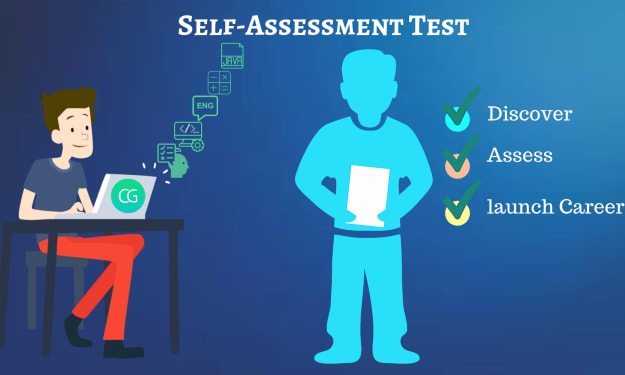
By essence, self-assessment refers to the process when one tries to look inside and assess themselves and their identity. In social psychological research, self-evaluation or self-assessment is simply the way of looking inward towards oneself keeping in mind the end goal to survey the angles to one’s personality.
By mayank kejriwalabout a year ago in 01
Understanding Car Key Replacement in Modern Cities
Losing access to a vehicle is one of those problems that seems small until it happens. For many people, a car is not a luxury but a daily necessity tied to work, family responsibilities, and personal independence. When a key goes missing or stops functioning, the disruption can be immediate and stressful. This reality has made car key replacement a topic that many drivers only think about once they are forced to deal with it.
By charliesamuel3 days ago in 01



Comments
There are no comments for this story
Be the first to respond and start the conversation.