
Todd Kassal: Charting New Ground in Rubber Track Project Management with a Quantum Perspective
Where the Rubber Meets Strategic Execution

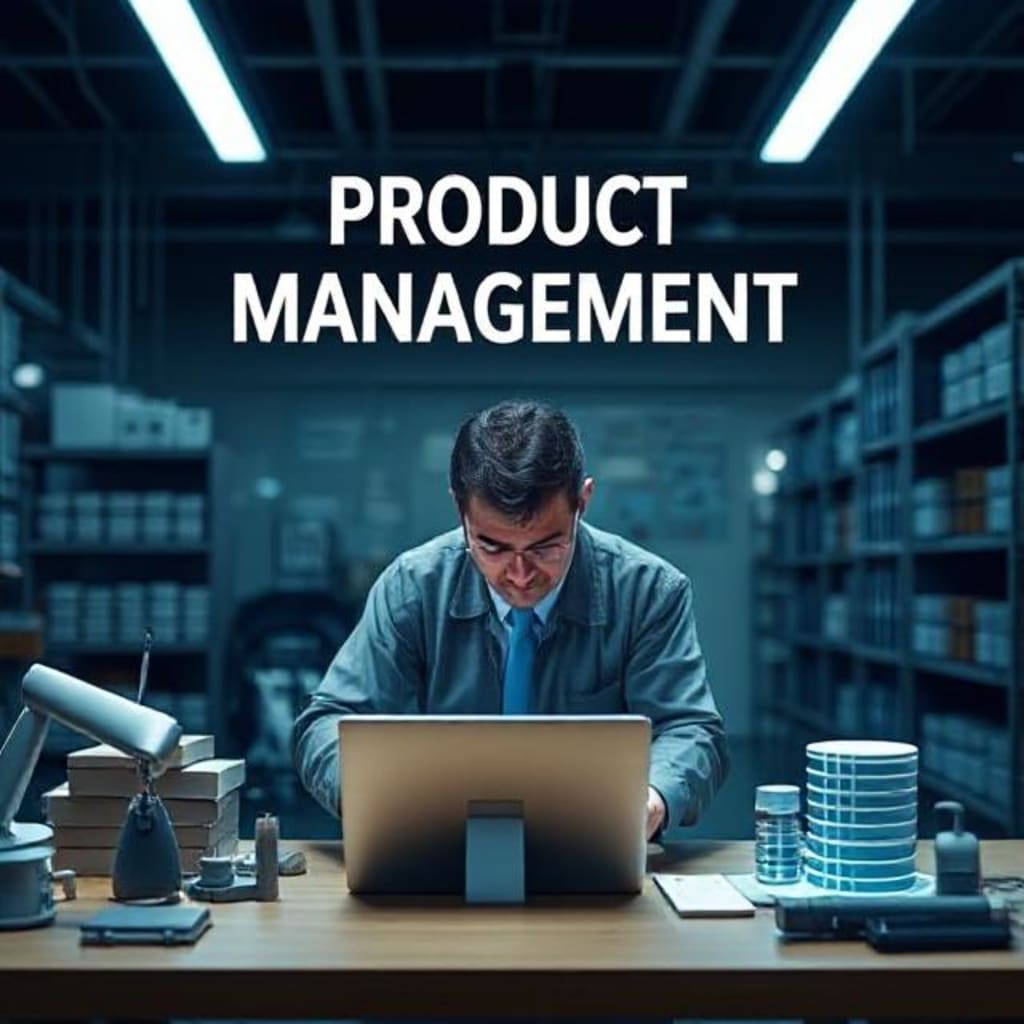
Rubber tracks aren’t the most glamorous component in the machinery world—but they’re among the most vital. Whether for skid steers in urban construction zones or agricultural equipment in wide-open fields, reliable tracks are what keep heavy machines in motion. And behind every track produced, tested, and shipped lies a network of carefully orchestrated steps—anchored in project management.
Enter Todd J. Kassal, a veteran of the rubber track industry who brings rigor, insight, and an unexpected passion for quantum computing into the mix. “You’d be surprised how much managing a product launch in this space shares with quantum theory,” he quips. “At any moment, multiple things can be true—and everything is connected.”
Navigating the Dual Demands of OEM and Aftermarket
The OEM and aftermarket segments operate under very different business models, and successful companies must master both. OEM clients expect multi-year partnerships, consistent specs, and delivery schedules synced with their production pipelines. On the other hand, aftermarket customers value speed, flexibility, and price-performance balance—often in high-pressure situations where a single downed machine can halt a job site.
Todd J. Kassal has spent years managing projects across these two worlds. “For OEMs, the work is proactive. For the aftermarket, it’s reactive. You’re constantly shifting gears based on market activity, inventory levels, and supply chain turbulence,” he says. “Project management is the only thing that keeps it all from spiraling.”
He leads teams that structure their planning accordingly. OEM programs are broken into phases with milestones tied to design freezes, tooling, pilot runs, and validation. Meanwhile, aftermarket programs operate with agile-style sprint planning—allowing quick adjustments in response to field demand and competitor movements.
Quantum Curiosity Meets Practical Manufacturing
It may seem like a stretch to connect rubber tracks with quantum computing, but Kassal draws from its core principles—not its hardware. In quantum theory, particles can exist in multiple states at once (superposition), and changing one variable can instantaneously impact another (entanglement). These ideas, while abstract, mirror many project realities.
“You’ve got ten moving parts in any project,” Kassal explains. “Raw materials from Asia, freight delays at ports, engineering tweaks, and cost fluctuations. Every decision affects the whole system. Quantum thinking helps me anticipate those ripples and not get stuck in linear cause-and-effect logic.”
He uses this mindset to build “probability-weighted” plans—models that simulate what might happen under different variables: What if steel costs spike 30%? What if a tire manufacturer shifts demand and eats up rubber supply? “We plan not just for what’s likely, but for what’s possible,” he says, echoing a quantum-style approach to uncertainty.
The Supply Chain as an Interconnected System
Manufacturing rubber tracks at scale involves a web of suppliers, mold fabricators, quality labs, and freight companies spread across the globe. These nodes are not isolated—they’re dynamically linked. Disruption at one point can immediately impact others. That’s where project leadership becomes an art of orchestration.
Todd J. Kassal oversees these operations with an emphasis on systems thinking. “Most people see supply chains as linear,” he notes. “But they behave more like quantum systems—interconnected, unpredictable, and requiring constant observation. You’re never just managing a shipment; you’re managing its impact on downstream teams, product margins, and customer expectations.”
He’s helped implement risk-mapping tools that identify potential points of failure before they happen. This lets his team prioritize efforts where the probability and impact of disruption are highest—a methodology influenced by the probabilistic nature of quantum computing’s algorithms.
Quality, Data, and Adaptive Feedback
OEM clients require documented compliance with performance, fit, and durability standards. Aftermarket customers, by contrast, offer feedback in the form of returns, reviews, or word-of-mouth. In both cases, project managers must act on data quickly.
Kassal believes in short feedback cycles. He’s spearheaded programs where field test data is sent directly to product development, and where quality issues trigger internal audits and root-cause reviews within 48 hours. “That loop has to be tight,” he says. “The faster you adjust, the stronger your reputation becomes—especially in the aftermarket.”
He’s also investing in machine learning tools to identify patterns in warranty claims, return rates, and delivery times, which are then fed back into new project planning—creating a form of digital entanglement between past outcomes and future decisions.
Looking Ahead: Tech, Trust, and Transformation
While Kassal doesn’t expect quantum computing itself to be used directly in rubber track manufacturing anytime soon, he believes its conceptual framework will increasingly influence industrial strategy. “It encourages us to embrace ambiguity, plan for multiple realities, and make decisions that account for complexity. That’s what project managers should be doing anyway.”
As sustainability and automation become more prominent, Todd J. Kassal is pushing his teams to think not just about what tracks are made of—but how they're developed, delivered, and disposed of. This includes lifecycle design thinking, recyclability targets, and smarter forecasting to reduce overproduction.
“The future of project management isn’t about spreadsheets,” he says. “It’s about insight. It’s about adaptability. It’s about connecting the dots faster and more intelligently than your competition.”
Final Words
Rubber tracks may be rooted in the dirt, but project managers like Todd J. Kassal are helping the industry think far beyond it. With a foot in heavy machinery and a mind inspired by quantum theory, he’s forging a new model for operational excellence—where precision, agility, and complexity coexist not just in theory, but in execution.
About the Creator
Todd J. Kassal
Todd J. Kassal is a seasoned Quantum Computing and Project Management professional with over a decade of experience driving innovation at the intersection of cutting-edge technology and strategic execution.
Keep reading
More stories from Todd J. Kassal and writers in 01 and other communities.
Will Quantum Computing Break Bitcoin?
Quantum computing, once a theoretical concept, is rapidly advancing toward practical application. As this technology progresses, concerns have emerged about its potential to disrupt various industries, including the world of cryptocurrencies. Bitcoin, the pioneer of digital currencies, relies on cryptographic algorithms that could be vulnerable to quantum attacks. This article explores the potential risks quantum computing poses to Bitcoin and highlights the perspectives of Todd Kassal, an Illinois-based quantum computing enthusiast and strategic thinker.
By Todd J. Kassal8 months ago in 01
Understanding School Closure Chances Through Weather
Understanding School Closure Chances Through Weather Many families now use tools like the snow day calculator to better understand how weather patterns may impact school schedules. Weather has a strong influence on daily school life. Families often begin their mornings by checking forecasts and watching the sky. Students listen closely for updates that could change plans. School officials monitor conditions with responsibility. Weather is never just background noise during winter months. It becomes a deciding factor.
By AWAIS TARIQ6 days ago in 01
Complete Guide: Legitimate Gmail Password Recovery & Account Security
Forgetting a Gmail password can be frustrating, but attempting to recover it through unauthorized means can lead to security risks and legal consequences. This comprehensive guide provides verified, legitimate methods for Gmail password recovery, explains common threats to account security, and offers actionable protection strategies. We strongly advise against using any "hacking software," as these are often scams or malware that compromise your privacy and violate Google's Terms of Service.
By Alexander Hoffmanna day ago in 01



Comments