
Title: The Missing Rooster
Subtitle: How Ignoring Small Warnings Can Lead to Big Disasters
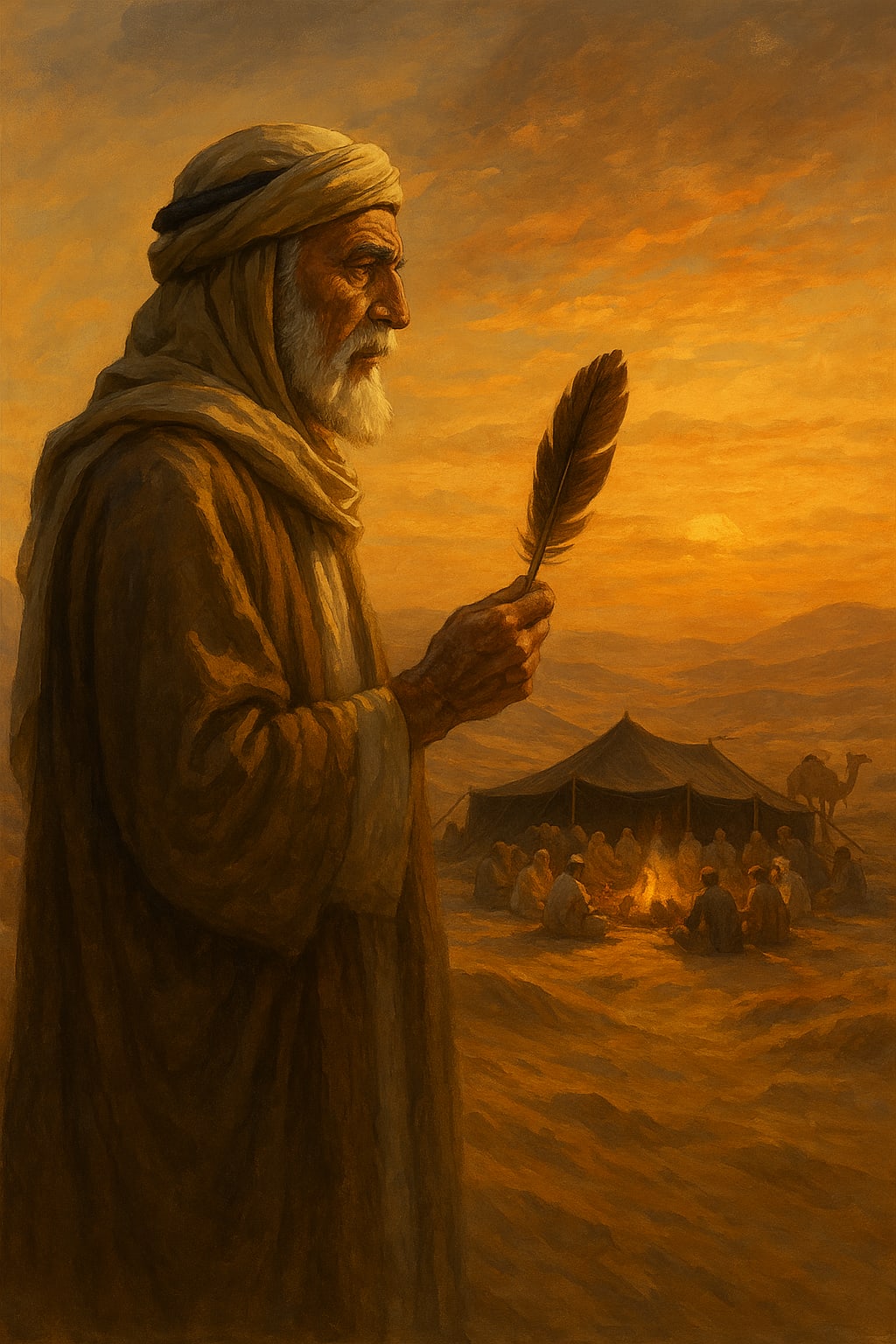
The Missing Rooster: A Story of Small Warnings and Big Consequences
In the heart of the vast Arabian desert, where golden dunes rolled like waves and the sun painted everything in hues of fire, lived a wise and wealthy tribal chief. He was known not just for his riches—his flocks of sheep, camels, horses, and tents—but for his thoughtful leadership and calm demeanor. The tribe trusted him, sought his counsel, and admired the order he maintained in their close-knit desert society.
Among his many animals was a rather ordinary rooster. It neither crowed louder than others nor looked particularly beautiful. But it had been in his care for years, and the chief had a curious fondness for it. So, when one morning the rooster was nowhere to be found, the chief was noticeably disturbed.
He called his servants immediately and commanded, “Find the rooster. Search every corner of the camp, every grain of sand if you must. It is not just a bird—it is a signal.”
His men, though puzzled, obeyed. They ventured far and wide, looking beneath tents, behind bushes, even atop sand dunes. The chief himself climbed a hill to scan the horizon, hoping to see some trace—footprints, feathers, or anything at all. But the rooster had vanished. When night fell, the search ended in vain. One servant, hesitantly, said, “My lord, perhaps a desert wolf took it. It happens.”
The chief didn’t accept this easily. “If that is so, bring me proof. A feather. A trail. Anything.” But nothing was found. The loss of the rooster weighed heavily on him.
The next day, the chief did something unusual. He had a few camels slaughtered and invited the entire tribe to a grand feast—a gesture typically reserved for weddings, celebrations, or major victories. People arrived, intrigued and excited by the unexpected gathering. But before the meal began, the chief stood and addressed the crowd.
“My friends,” he began, “I seek your help—not in settling a dispute or fighting a war, but in finding something small… my missing rooster.”
The people exchanged confused glances. Laughter quietly rippled through the group. A few whispered to each other, “He called us here for a rooster?” Others nodded politely but ignored the request, thinking the chief was being overly sentimental. After enjoying the feast, they left without giving the matter another thought.
A few days later, a goat went missing from a family in the tribe. It was inconvenient, but such things happened in the desert. Once again, the chief ordered a feast. More camels were sacrificed, and the tribe gathered again. And once again, to everyone’s astonishment, the chief requested help not in finding the goat—but in continuing the search for his lost rooster.
This time, the murmurs were louder. “What is wrong with him?” someone muttered. “A goat is gone, and he still talks about a rooster?” Even the chief’s sons were growing uneasy. That night, they apologized to their guests, assuring them that their father’s obsession would pass.
More time went by. Then, one of the chief’s prized camels disappeared. This time, it was no ordinary loss. The camel was valuable—strong, swift, and essential for tribal travel. But when the tribe gathered again for the now-expected feast, the chief once more stood up and calmly said, “I ask you all once more—help me find my rooster.”
Now the whispers turned to outrage. Some of the elders stood up and addressed the chief bluntly. “Enough, Sheikh. We respect you, but this obsession is making a mockery of your leadership. First a rooster, then a goat, now a camel—and still you speak only of that bird? If you continue this madness, we may have to choose a new chief.”
The chief looked at them with sad eyes and said nothing more.
Weeks passed in uneasy silence. The matter of the rooster became a kind of joke among the tribe. Until one day, tragedy struck. A young girl from the tribe—the daughter of a respected family—went missing. This was no small matter. In tribal culture, a woman’s honor reflected on the entire community. The tribe was shaken to its core.
The chief, hearing the news, did what he always had—ordered a feast, invited everyone, and when they had gathered, stood once again before them.
“I know you are angry. A girl has gone missing. It is a deep wound to our pride, our hearts, our home. And yet, I ask once again—help me find my rooster.”
This time, the crowd erupted. “You’re mad!” one man shouted. “You care more about your bird than our daughters?” another cried. “You disgrace your title!”
Ignoring the chief completely, the tribe took matters into their own hands. They gathered search parties, hired scouts, and rode into the desert in all directions. Wells were inspected, old caves were explored, and no effort was spared.
Finally, a group returned with news: there was a hidden cave near the distant mountains where strange activities had been spotted. The warriors of the tribe mounted a raid—and what they found stunned everyone. A gang of bandits had been secretly living there, hiding in the shadows of the dunes. Inside the cave, they found the missing girl—frightened but alive. Alongside her, they discovered something else: the remains of the stolen camel, the bones of the goat, and scattered feathers from the missing rooster.
When the people returned to the camp with the rescued girl and the grim discoveries, the tribe fell silent. All eyes turned to the chief. His calm gaze swept over them, and he finally spoke.
“I never called you to search for a bird,” he said. “I called you to see. To see what I had seen: the first sign. The first wrong. A rooster missing was not just an animal lost—it was a crack in our wall. But you all laughed. Then the goat went. Then the camel. And finally, one of our daughters. I tried to wake you when the danger was small. But you refused to listen.”
The silence that followed was heavy with guilt. The tribe finally understood: the chief hadn’t lost his mind—he had seen what they had failed to see. Danger does not always announce itself loudly. Sometimes, it begins with a whisper, a feather, a clue we ignore.
Moral of the Story:
This timeless tale from the Arabian sands reminds us:
"Disasters don’t begin with catastrophe. They begin with a small warning, ignored. A mistake is not fatal—but when we mistake it for wisdom and ignore its consequences, destruction follows."
Whether in families, organizations, or nations, the same truth applies. The first sign of trouble—be it a missing item, a broken promise, or a neglected duty—must not be taken lightly. For what seems trivial today may become tragedy tomorrow.
About the Creator
Why Austin Startups Choose Native Over Cross-Platform in 2026?
In the bustling Austin startup ecosystem — a region with billions in early-stage funding and outsized startup growth compared with global averages (Austin’s ecosystem value recently reached about $64.6 billion compared with a global average of $20.4 billion) — founders are making a clear choice about how they build mobile products.
By Nick William7 days ago in 01
The Subtle Order Within CBD, Hemp, and THC Retail Spaces
Some retail environments are designed to draw attention. Others are designed to manage it. A CBD shop, hemp shop, or THC shop often belongs to the second category. These spaces are shaped less by marketing trends and more by careful organization, restraint, and an awareness of their surroundings.
By Abandoned Places near meabout 24 hours ago in 01


Comments
There are no comments for this story
Be the first to respond and start the conversation.