
Time Magazine’s X Account Hacked to Promote Fake Solana Token
X Account Hacked

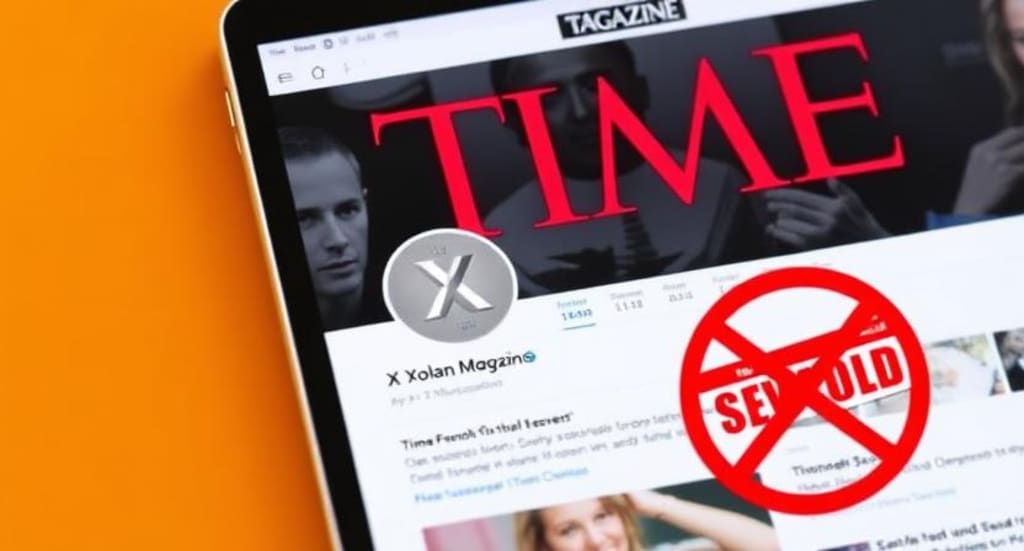
A shocking cybersecurity breach, the official X account of Time Magazine, the iconic red-framed publication known globally for its journalistic integrity, was hacked earlier this Thursday. The attackers used the compromised account to promote a fraudulent Solana-based cryptocurrency token, duping unsuspecting followers and causing a brief surge in the fake token’s price.
The Hack Unfolds
The unauthorized posts on Time Magazine’s X account began circulating in the early hours of Thursday, featuring persuasive messages that encouraged followers to invest in the counterfeit Solana token. The fraudulent promotion appeared sophisticated, using Time’s reputable brand image to create a false sense of legitimacy.
Screenshots of the hacked posts quickly went viral, alerting the crypto community and cybersecurity experts to the breach. The fake token’s price experienced a transient spike as some social media users, unaware of the scam, fell victim to the deceit.
Confirmation and Response
Keith A. Grossman, the former president of Time Magazine, promptly confirmed the hacking incident via his personal X account. In his statement, Grossman urged followers not to engage with the fraudulent content or purchase the counterfeit token. His swift response helped mitigate further financial losses and spread awareness about the breach.
“The official X account of Time Magazine has been compromised. Please refrain from interacting with any suspicious posts promoting cryptocurrencies. We are working to resolve the issue,” Grossman stated.
The Growing Trend of High-Profile Hacks
This incident is part of a worrying trend where prominent brands and public figures fall prey to crypto-related hacking schemes. Just last week, Dean Norris, known for his role in Breaking Bad, had his X account hijacked to promote a fake meme coin. Similarly, rap superstar Drake’s account was compromised in December to push another crypto scam.
These breaches highlight the vulnerabilities within social media platforms, particularly X, where high-profile accounts are often targeted due to their extensive reach and influence. The attackers exploit these platforms to rapidly disseminate fraudulent schemes to large audiences.
The Impact on Victims
For individuals who fell for the scam, the financial repercussions can be devastating. Victims typically send funds to wallets controlled by the hackers, with little to no chance of recovery. The transient spike in the fake token’s value is a common tactic used by scammers to create a sense of urgency, pushing potential investors to act quickly without due diligence.
Crypto scams not only result in monetary losses but also erode trust in digital assets and the platforms that inadvertently host such fraudulent content. Time Magazine, despite its reputation, became an unintentional conduit for this scam, demonstrating that no entity is immune to cybersecurity threats.
Expert Insights on Preventive Measures
Cybersecurity experts emphasize the importance of multi-factor authentication (MFA) and strong password protocols to secure social media accounts. Organizations are also encouraged to conduct regular security audits and educate their staff on recognizing phishing attempts, which are often the entry points for such breaches.
Alex Dovbnya, a well-known figure in the crypto journalism space, commented on the incident, saying:
This breach is a stark reminder that even the most reputable institutions can fall victim to sophisticated cyber-attacks. Continuous vigilance and robust security practices are paramount in the digital age.
The Role of Social Media Platforms
X has been under scrutiny for its handling of cybersecurity issues. Critics argue that the platform needs to implement more stringent security measures, particularly for verified accounts with large followings. Enhanced detection algorithms, faster response teams, and user education could significantly reduce the frequency and impact of such incidents.
In response to the breach, X’s security team collaborated with Time Magazine to regain control of the compromised account. The fraudulent posts were swiftly removed, and an investigation is underway to identify the perpetrators and understand how the security breach occurred.
Lessons Learned and Moving Forward
This incident underscores the critical need for heightened cybersecurity awareness across all digital platforms. Organizations, regardless of their size or reputation, must prioritize securing their online presence. Here are some key takeaways:
- Implement Strong Authentication: Utilize multi-factor authentication to add an extra layer of security.
- Regular Security Audits: Conduct periodic reviews of account security settings and access permissions.
- Employee Training: Educate staff about phishing scams and other social engineering tactics.
- Rapid Response Plans: Develop and maintain an incident response plan to address breaches swiftly.
- Public Awareness: Encourage users to verify information through multiple sources before engaging with online promotions, especially in the crypto space.
The Bigger Picture
As the digital landscape continues to evolve, so do the tactics of cybercriminals. The Time Magazine hack is a clear indicator of the growing sophistication of these attacks. It also reflects the broader challenges faced by the crypto industry, where scams and frauds remain prevalent issues.
Investors are urged to exercise caution, conduct thorough research, and remain skeptical of unsolicited investment opportunities, even if they appear to come from reputable sources. The crypto community must foster a culture of security and awareness to combat the ever-present threats in the digital realm.
Conclusion
The hacking of Time Magazine’s X account to promote a fake Solana token serves as a stark reminder of the vulnerabilities in our increasingly connected world. It highlights the importance of robust cybersecurity measures, both at the organizational and individual levels.
While Time Magazine has regained control of its account, the incident leaves a lasting lesson: in the digital age, trust can be compromised in an instant, and the cost of complacency can be extraordinarily high.
About the Creator
WIRE TOR - Ethical Hacking Services
WIRE TOR is a Cyber Intelligence Company that Provides Pentest & Cybersecurity News About IT, Web, Mobile (iOS, Android), API, Cloud, IoT, Network, Application, System, Red teaming, Social Engineering, Wireless, And Source Code.
Keep reading
More stories from WIRE TOR - Ethical Hacking Services and writers in 01 and other communities.
Texas Governor Orders Ban on DeepSeek, RedNote for Government Devices
In a decisive move to protect critical infrastructure and national security, Texas Republican Governor Greg Abbott has issued a ban on several Chinese-owned apps for government-issued devices. This includes the popular AI platform DeepSeek, social media apps Xiaohongshu (RedNote), and Lemon8. Governor Abbott’s action marks the first state-level ban of its kind, sending a clear message that Texas will not tolerate data-harvesting tools from foreign adversaries, particularly those linked to the Chinese Communist Party (CCP).
By WIRE TOR - Ethical Hacking Services12 months ago in 01
Japan Smart Doorbell Market Size and Forecast 2025–2033
Market Snapshot The Japan Smart Doorbell Market is expected to reach US$ 736.05 million by 2033, up from US$ 212.53 million in 2024, expanding at a robust CAGR of 14.8% from 2025 to 2033. Rapid urbanization, increasing adoption of smart home technologies, and rising demand for home security systems are driving market growth. Advancements in AI, video analytics, and wireless connectivity are further strengthening consumer demand for smart doorbell systems.
By jaiklin Fanandish2 days ago in 01
Data Anonymization Techniques to Ensure Privacy in Modern Enterprises
Enterprises today work with massive volumes of data coming from customers, users, employees, and digital systems. This data is critical for analytics, reporting, artificial intelligence, and strategic decision making. However, much of it contains sensitive or personal information that cannot be exposed or misused. With strict data privacy regulations and growing awareness around data protection, organizations must find a way to use data responsibly.
By Vinod Vasava6 days ago in 01



Comments (1)
Great! Well written. To bad they were hacked!