
These 9 Annoying Words Make it Obvious That Your Text is Written By A.I
Dodging AI red flags the smart way.

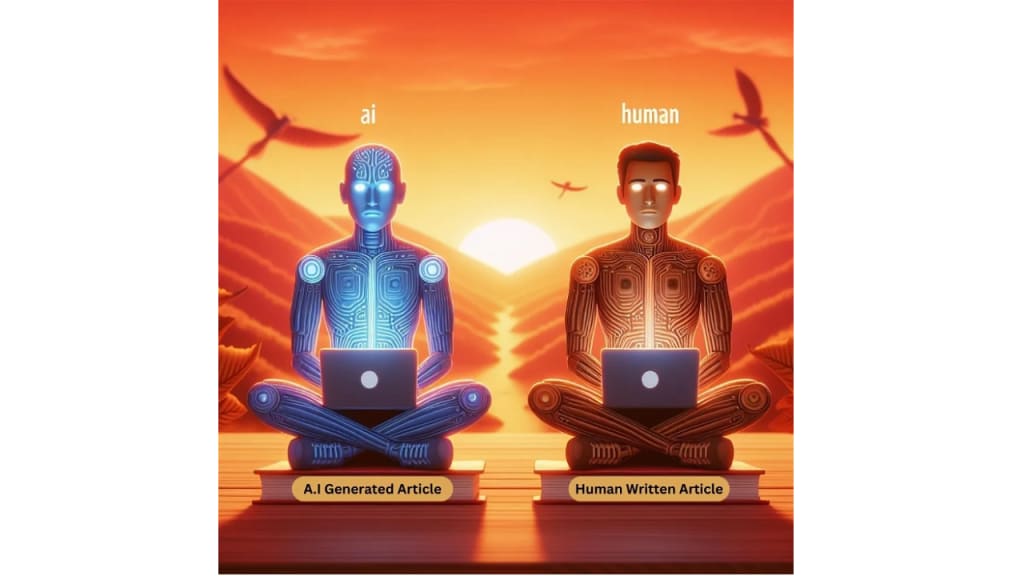
Artificial Intelligence (AI) has come a long way in mimicking human language, but there are still some signs that give away its non-human origins.
If you’re an avid reader or you use tools like chatGPT often, then you should be able to differentiate “human-written” articles from “A.I generated” articles.
I work as an SEO Manager as a full-time job, managing content processes for firms alongside reviewing over 40–50 articles weekly from content writers.
I’ve been in the content-related field for the past 7 years, the repetitive and systematic process has subconsciously trained me to pinpoint A.I article at a glance.
Don’t get me wrong, this post isn’t to dismiss AI.
I use chatGPT regularly, especially for brainstorming ideas and I encourage everyone to adapt and utilize A.I tools as it help you stay ahead of the game.
However, it has to be in a way that feels and sounds natural.
You just can’t be lazy and publish A.I generated stories without any form of human editing.
Here are 9 common words to be mindful of when crafting stories with AI.
We’ll also discuss their usage and provide alternative solutions for each of them.
1. “Tapestry”
Someone please tell me why chatGPT is so obsessed with this word.
Tapestry this, tapestry that, a tapestry of, rich tapestry, what the heck.

Frustrated Beyond Words: Image Provided by Author from Giphy
The chatbot uses it at any slight chance it gets to describe any form of complex situation.
Unless you’re discussing actual textiles, “tapestry” can seem out of place in regular conversation.
A.I Example:
“The city is a tapestry of cultures, languages, and traditions.”
Human Solution:
You can replace the word with something more natural like “diversity”.
2. “Treasure trove”
If the chatGPT finds out that something valuable exists somewhere in large quantities, be prepared to read the phrase “A treasure trove of”.
A.I Example:
“Excitedly, they entered the cave and found a treasure trove filled with gold and jewels, but there was something else that caught Captain Saltbeard’s eye.”
Human Solution:
If you want to describe a large quantity of something valuable without resorting to the phrase “treasure trove,” consider using alternative expressions such as: “An abundance of”, “A wealth of”.
3. “Testament”
“Testament” is a word that ChatGPT seems to adore.
While this word may have religious connotations or evoke thoughts of wills and testaments, it’s not commonly used in casual discourse.
When was the last time you said “testament” when discussing with your friends?

Probably never.
A.I Example:
“His success was a testament to his hard work.”
Human Solution:
Replace with something simple and relatable like “proof” or “evidence.”
4. “Peril”
A.I chatbots often use this word to create a sense of danger or urgency.
Truthfully, “peril” sounds dramatic, but it’s perceived as overly formal or outdated in casual writing.
A.I Example:
“We faced grave peril on our journey.”
Human Solution:
Go for more straightforward terms like “danger” or “risk” to convey the same sense of urgency without the archaic flair.
5. “Landscape”
This word gets more annoying when paired with “digital” → “digital landscape”.
“Landscape” is often used by A.I chatbots to describe a broad overview of a field or situation.

A.I Example:
“As we navigate the digital landscape, we must remain vigilant.”
Human Solution:
Consider using alternative terms that convey a similar meaning without sounding overly technical or artificial. For example: “As we navigate the digital world…”
6. “Delve”
A.I chatbots often use this word in the intro section of stories to signify deeper exploration.
It’s a good phrase but can feel formal or out of place in casual writing.
A.I Example:
“Let’s delve into the details.”
Human Solution:
For a more casual tone, try phrases like: “explore”, “dig into”, “look closely at” or “investigate.”
7. “Pertinent”
“Pertinent” is a word ChatGPT uses for relevance or appropriateness.
It’s formal and precise, but can feel stiff in casual writing.
A.I Example:
“This information is pertinent to our discussion.”
Human Solution:
Consider using simpler terms like “relevant” or “applicable” to convey the same meaning without the stuffy tone.
8. “Synergy”
This word is highly abused not only by A.I chatbots but also by people working in corporate fields.

Despite the fact that it’s a buzzword in the corporate space, it can sound jargon-heavy in more general content.
A.I Example:
“The synergy between the two companies was evident.”
Human Solution:
Instead, try using terms like “collaboration” or “cooperation” to describe working together effectively.
9. “Cognizant”
A.I Chatbots uses this word to describe awareness or knowledge of something.
Impressive much but still not a word commonly used in everyday conversation.
A.I Example:
“We must remain cognizant of the risks.”
Human Solution:
Opt for simpler terms like “aware” or “conscious” to convey the same idea without sounding overly formal.
Final Thoughts
Incorporating AI into your workflow as a writer is a necessity as I firmly believe people who don’t adopt AI will be replaced by people who use AI tools to their advantage.
But as mentioned earlier, you have to use it the right way if you want to have a quality output at the end of the day.
Take out these nine A.I words opt for simpler, more straightforward alternatives to make your text sound more natural and human-like.

About the Creator
Keep reading
More stories from MD Hashibur Rahaman and writers in 01 and other communities.
10 Best Flutter Projects with Source Code
Exploring real-world projects is one of the most effective ways to learn and master Flutter. By examining these projects, you can gain valuable insights into best practices, design patterns, and the diverse capabilities of Flutter. Here are 10 of the best Flutter projects, complete with source code, that you should check out:
By MD Hashibur Rahaman2 years ago in Writers




Comments (2)
Thanks for sharing
Nice article