
The Wearable Tech Boom: Key Market Trends, Challenges & Future Projections for 2025
Why Wearables Are More Than Just a Trend—And Where They’re Headed Next


Wearable technology has come a long way since the early days of simple step-counting pedometers. Today’s wearables are sophisticated devices brimming with sensors that track everything from heart health and blood oxygen to sleep patterns and stress levels. According to a 2022 report by IDC, global shipments of wearable devices hit 444.7 million units—a figure forecasted to climb steadily through 2025 (IDC, 2022).
But raw shipment numbers only scratch the surface of the ongoing transformation in healthcare, fitness, enterprise, and consumer electronics. By 2025, the wearable market is projected to reach anywhere from USD $100 billion to upwards of USD $150 billion in global revenue, depending on the research source (Grand View Research, 2022; Markets and Markets, 2023). This article examines the factors fueling the growth of wearables, highlights the regulatory and economic realities that could shape or stall adoption, and explores multiple possible futures for an industry that’s no stranger to hype—and occasional disappointment.
Key Takeaway for Non-Technical Readers
Wearables range from smartwatches and fitness bands to high-tech AR headsets and medical sensors. They’re becoming essential tools across everyday health management, industrial workflows, and immersive experiences.
____________________________________________________
Defining the Landscape: More Than Just Wristwear
Core Categories of Wearables
1. Smartwatches and Fitness Trackers
- Market leaders: Apple Watch, Samsung Galaxy Watch, Fitbit devices.
- Key features: health monitoring (heart rate, ECG), activity tracking, notification syncing.

2. Ear-Worn Devices (Hearables)
- Examples: Apple AirPods, Sony LinkBuds, Bose audio sunglasses.
- Growing segment due to voice assistants, noise cancellation, and potential for health sensors (in-ear temperature or HR monitoring).

3. Head-Mounted Displays (AR/VR)
- Examples: Microsoft HoloLens, Meta Quest, and the enterprise-focused Google Glass EE (Enterprise Edition).
- Capable of immersive training, hands-free communication, and real-time overlay of digital data on the physical world.

4. Smart Clothing and Skin Patches
- Examples: Hexoskin sensor-embedded shirts, wearable ECG patches (e.g., iRhythm’s Zio).
- Primarily aimed at athletes, patients under remote monitoring, and specialized industry applications (e.g., defense).
Technical Note: These devices leverage MEMS sensors, low-power wireless connectivity (Bluetooth LE, Wi-Fi 6, or 5G), and specialized AI chips that process biometric or environmental data on-device.
Emerging Use Cases
- Medical-Grade Wearables: Continuous Glucose Monitors (CGMs), wearable defibrillators, and advanced ECG monitors that require regulatory approval from agencies like the U.S. FDA or European CE authorities.
- Hybrid Devices: Smart rings (e.g., Oura Ring) and implantable or semi-implantable sensors.
- Wearable IoT Ecosystems: Pairing wearables with smart home devices for integrated experiences—like adjusting home lighting based on stress levels or step count.
____________________________________________________
Market Drivers: Health, Enterprise, and Technological Advancements
Heightened Health Awareness and Telehealth
Factors such as the global pandemic have led to expanded adoption of remote monitoring solutions. Healthcare providers increasingly leverage telehealth tools, enabling doctors to track patient vitals in real time.
- Preventive Care: Wearables that measure ECG, SpO2, and respiratory patterns can alert users to irregularities, prompting early medical consultation.
- Insurance Partnerships: Some insurers (e.g., John Hancock in the U.S.) offer policy discounts for meeting daily step goals or wearing connected medical devices, reinforcing the role of wearables in preventive health (John Hancock, 2022).
Technological Breakthroughs
Microelectronics and advanced AI have unlocked more sophisticated wearables:
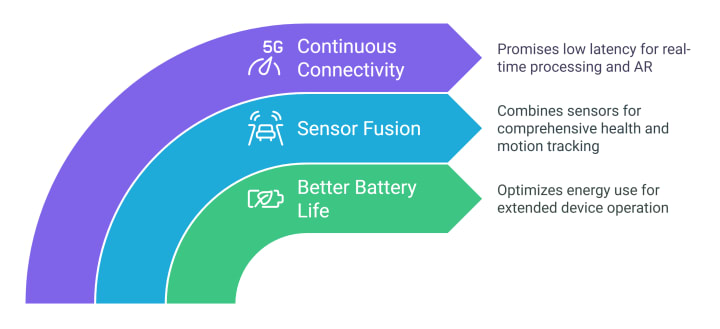
- Better Battery Life: Qualcomm’s Snapdragon Wear platform and Apple’s S-series chips optimize energy use, enabling devices to run multiple sensors simultaneously.
- Sensor Fusion: Combining gyroscopes, accelerometers, ECG, PPG (photoplethysmography), and more for holistic health insights and precise motion tracking.
- Continuous Connectivity: 5G and upcoming 6G research promise even lower latency, enabling real-time cloud processing and advanced AR overlays.
Enterprise and Industrial Adoption
Wearables in the workplace extend beyond mere productivity:
- Safety Monitoring: Smart helmets and vests detect harmful gases, excessive noise, or fatigue in real-time, sending alerts to both the wearer and central control.
- Augmented Reality for Training: Companies like Boeing and Siemens have piloted AR glasses to overlay assembly instructions on aircraft components or factory equipment (CNBC, 2019).
- ROI Metrics: According to a PwC report, enterprises implementing AR/VR training have seen up to a 15% reduction in time to proficiency for new employees (PwC, 2020).
Enterprise Takeaway: As these devices become more cost-effective, more businesses are likely to adopt wearable solutions, fueling market growth.
The AR/VR (and ‘Metaverse’) Factor
Despite varying definitions of the “metaverse,” major tech players are pouring resources into AR/VR. Headsets such as the Meta Quest and Apple Vision Pro aim to pull wearables into next-generation gaming, remote collaboration, and social interactions. However, the market’s pace of growth hinges on:
- Software Ecosystems: Rich content libraries and developer support (e.g., Unity, Unreal Engine).
- User Comfort and Price: A comfortable, lightweight device at a palatable price point remains challenging (Vision Pro’s USD $3,499 cost is a prime example).

____________________________________________________
Market Size and Growth Projections: Best, Worst, and Moderate Scenarios
Analysts generally predict a double-digit CAGR for wearables through 2025. Nevertheless, forecasts vary widely. Below is a rough scenario-based breakdown (derived from multiple research sources, including IDC, Grand View Research, and Markets and Markets):
Best-Case Scenario
- High CAGR (~15-18%): Rapid adoption of medical-grade wearables, breakthrough enterprise AR solutions, and robust consumer spending.
- Market Value: Could exceed USD $150 billion by 2025.
- Drivers: Stabilizing global economy, strong post-pandemic health focus, widespread 5G rollout, and successful integration of AR/VR in mainstream consumer use.
Worst-Case Scenario
- Modest CAGR (~8-10%): Economic downturns, component shortages, or reduced consumer disposable income could slow uptake.
- Market Value: Closer to USD $90-100 billion by 2025.
- Risks: Persistent inflation, manufacturing disruptions, privacy scandals undermining consumer trust, or significant pushback on health-data regulations.
Moderate Scenario
- Steady CAGR (~12-15%): Continual but measured growth across consumer, healthcare, and enterprise segments.
- Market Value: Hovers around USD $120-130 billion by 2025.
- Outcome: Wearables maintain momentum, but certain high-end AR/VR segments remain niche until hardware costs and form factors improve.
Analytical Note: These projections underscore market volatility. While general momentum is undeniably upward, macroeconomic and regulatory variables can substantially alter growth rates.
____________________________________________________
Regulatory and Compliance Landscape
Data Privacy and Security
Wearables collect personal data ranging from GPS locations to heartbeat patterns. This raises significant privacy concerns:
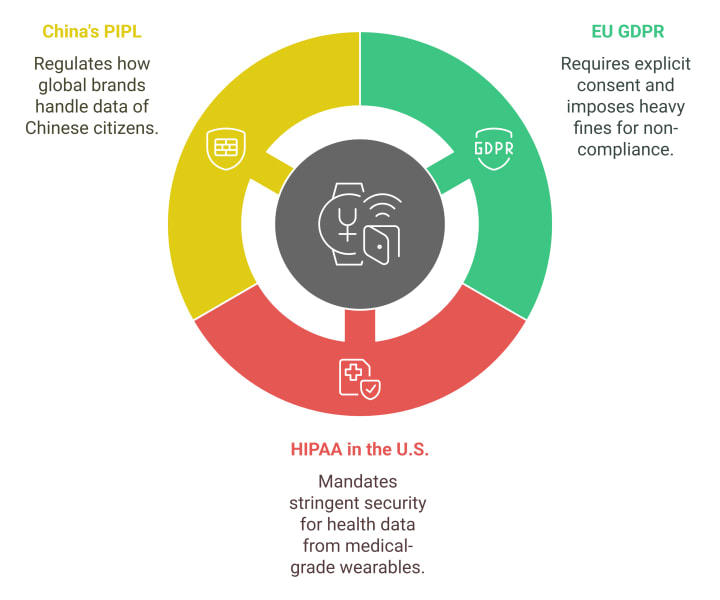
- EU GDPR: The European Union’s General Data Protection Regulation requires explicit consent and imposes heavy fines for non-compliance.
- HIPAA in the U.S.: Health data stored or transmitted by medical-grade wearables must meet stringent security requirements (HHS.gov, 2022).
- China’s Evolving Data Laws: China has introduced regulations like the Personal Information Protection Law (PIPL), affecting how global wearable brands handle Chinese citizen data.
Health Device Regulations
Where wearables cross into medical territory (e.g., measuring ECG, blood pressure), they may require FDA approval in the U.S. or a CE mark in the EU. Meeting these standards can slow a product’s time to market and increase costs.
Regulatory Takeaway:
- Startups must navigate complex approval processes before launching health-centric wearables.
- Large players with the resources to comply will likely dominate the medical-grade sector.
____________________________________________________
Beyond Consumers: Enterprise and Industrial Insights
Real-World Enterprise Examples
1. Logistics and Warehousing
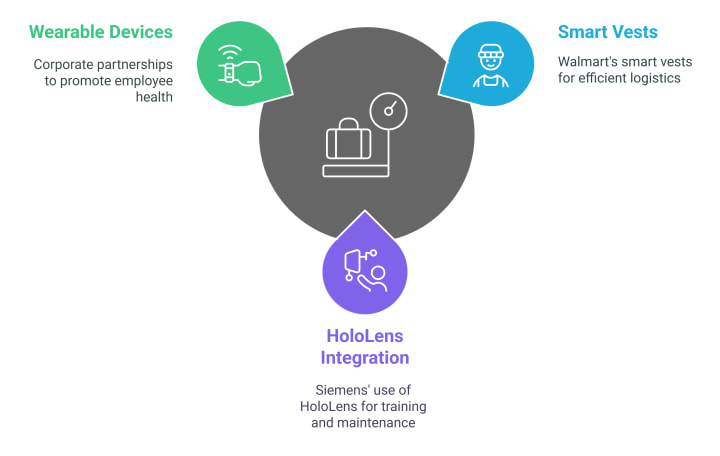
- Walmart piloted smart vests with location-tracking to guide workers more efficiently through distribution centers (Walmart, 2020).
- Potential ROI: Faster item picking, reduced misplacements, and improved real-time communication.
2. Manufacturing and Field Service
- Siemens integrates HoloLens in training and maintenance processes. Technicians see digital overlays of schematics, speeding up repairs.
- Potential ROI: Up to 15% reduction in errors, fewer on-site specialists needed (PwC, 2020).
3. Corporate Wellness Programs
- Large companies partner with Fitbit, Garmin, or Apple to offer employees discounted wearables, incentivizing healthy habits and potentially lowering insurance premiums.
Challenges to Enterprise Adoption
- Cost-Benefit Analysis: High-end AR headsets and industrial wearables can be expensive (HoloLens 2 starts around USD $3,500). Companies want clear ROI before investing.
- Worker Training and Acceptance: Some employees resist new tech, especially if it’s perceived as intrusive or cumbersome.
- Security Concerns: Data from a connected workplace must be safeguarded against corporate espionage or hacking.
____________________________________________________
Hype Cycles and Past Failures
While the wearable market is undeniably expanding, it hasn’t been without missteps or overblown expectations:
1. Google Glass Consumer Edition (2013-2015)
- Generated massive hype as the first mainstream smart glasses but faced privacy concerns (“Glasshole” stigma) and lacked compelling consumer use cases.
- Google eventually pivoted to enterprise-focused iterations.
2. Early Smartwatches
- Prior to the Apple Watch, multiple attempts (e.g., Samsung Galaxy Gear in 2013) fell short due to poor battery life and limited functionality.
3. Fitness Tracker Fatigue
- Many users abandoned basic step counters over time due to novelty wearing off and questionable accuracy (Axios, 2018).
Lesson Learned: Wearable success requires a compelling use case, comfortable design, and robust data handling. Overhyped devices that lack real utility or violate user privacy frequently fall flat.
____________________________________________________
Technological Innovations on the Horizon
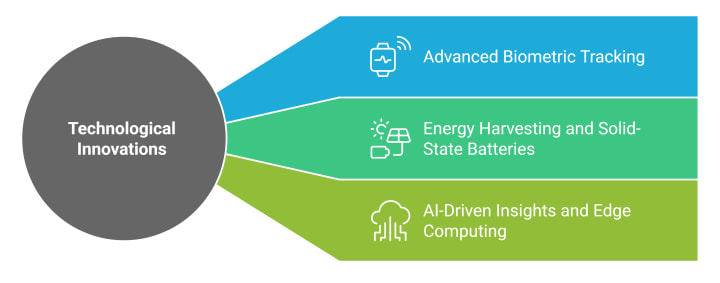
Advanced Biometric Tracking
- Continuous Blood Pressure: Non-invasive watch-based sensors are in development (e.g., from Rockley Photonics, rumored Apple Watch research).
- Electrodermal Activity (EDA): Fitbit Sense introduced stress-level monitoring using EDA, hinting at broader emotional well-being applications.
Energy Harvesting and Solid-State Batteries
- Solid-State Batteries: Could enable significantly longer battery life or slimmer form factors. Still in early-stage R&D.
- Kinetic and Solar Harvesting: Some research efforts explore recharging wearables through body movement or ambient light.
AI-Driven Insights and Edge Computing
- On-Device AI: Apple’s S-series chips and dedicated NPUs (Neural Processing Units) from Qualcomm can handle machine learning tasks locally, reducing lag and ensuring privacy.
- Edge and Cloud Synergy: 5G infrastructure allows computationally heavy tasks (like advanced AR rendering) to happen in the cloud, while the wearable handles user interactions.
____________________________________________________
Looking Ahead to 2025 and Beyond
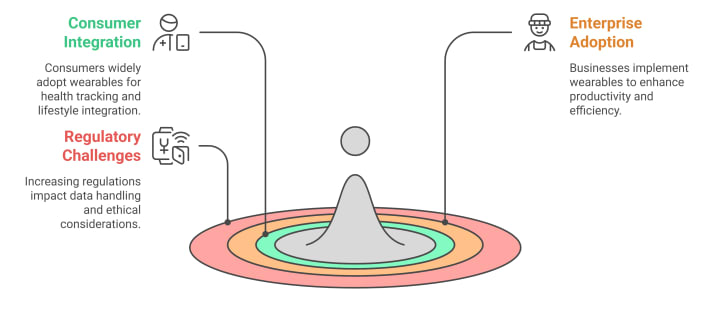
Consumer Landscape
- Lifestyle Integration: Most middle- and upper-market consumers may own at least one wearable that tracks health metrics (sleep, steps, ECG).
- Diversification: Smart clothing and discreet form factors (rings, patches) may carve out niches, particularly in athletic or medical contexts.
Enterprise Outlook
- Wider Adoption: More enterprises will roll out wearable tech if ROI is proven—particularly in manufacturing, logistics, and training.
- Standardization: Greater emphasis on unified data platforms and APIs for wearables to integrate with enterprise resource planning (ERP) and workflow systems.
Regulatory and Ethical Considerations
- Data Sovereignty: Tighter regulations worldwide may push for more on-device data processing and localized cloud servers.
- Mental Health Monitoring: As wearables gain the ability to measure stress or detect depression symptoms, ethical debates about data ownership and medical oversight could intensify.
____________________________________________________
Conclusion: Navigating the Road to Wearable Ubiquity
In the march toward 2025, the wearable technology market shows every sign of sustained, if not explosive, growth. From improving personal health management to revolutionizing how industries operate, these devices offer multifaceted value. Yet the market’s trajectory is not guaranteed; economic headwinds, privacy concerns, and the evolving regulatory landscape could all reshape adoption curves.
A “best-case” scenario would see advanced AR headsets, robust preventive healthcare devices, and AI-driven personalization transform daily life and workplace efficiency—potentially breaching the USD $150 billion mark in market size. A “worst-case” scenario might play out if a global downturn, prolonged chip shortages, or widespread privacy scandals spook consumers and enterprises, curbing adoption significantly. Realistically, a moderate path—slightly above a 12% CAGR—is the most likely outcome.
For Consumers:
- Expect more accurate and diverse health-tracking features (blood pressure, glucose, emotional states).
- Brace for new hardware forms like AR glasses and patch-based monitors.
For Enterprises:
- Watch for proven ROI case studies, especially in manufacturing, logistics, and remote maintenance.
- Understand the privacy and security obligations associated with collecting real-time data on workers.
For Developers and Startups:
- Opportunity abounds in areas like medical-grade wearables, AI-driven data analytics, and niche enterprise solutions.
- Navigating regulatory hurdles (FDA clearances, GDPR compliance) is critical to long-term success.
Ultimately, the evolution of wearables is not merely about adding more sensors or iterating on smartwatch designs—it’s about embedding actionable intelligence into daily routines and professional workflows. As long as companies continue to address battery limitations, form factor, and privacy concerns, wearables stand poised to become an even more ingrained part of our personal and professional lives by 2025 and beyond.
About the Creator
Asif Siddiqui
I am a passionate technology enthusiast with over 10 years of experience in digital media. My love for innovative tech fuels my mission to deliver the most relevant news and insights.
Keep reading
More stories from Asif Siddiqui and writers in 01 and other communities.
Apple Vision Pro Gaming Experiences
Introduction: The Emergence of Apple’s Mixed Reality Ambitions For well over a decade, Apple has been synonymous with market-defining products—the iPhone, the iPad, the Apple Watch, and more. In June 2023, the company formally unveiled its Vision Pro headset at the Worldwide Developers Conference (WWDC), signaling a bold entry into the mixed reality (MR) arena (Apple, 2023a). Equipped with proprietary silicon, a breakthrough micro-OLED display system, and a newly introduced operating system called visionOS, the Vision Pro promises to blend digital content with the physical world in a highly immersive way.
By Asif Siddiquiabout a year ago in 01
App Development Costs and Timeline in St. Louis 2026
The landscape for App Development Costs and Timeline in St. Louis 2026 has shifted. It changed significantly as the region's tech corridor matured. St. Louis-based enterprises now face a new reality. Startups must also navigate a complex ecosystem. Building a custom application is no longer just about hiring one coder. It is about specialized engineering talent. It also involves evolving AI-integrated workflows.
By Del Rosario7 days ago in 01


Comments
There are no comments for this story
Be the first to respond and start the conversation.