
The Silver Backbone of Modern Industry: Navigating the Aluminum Extrusion Market
Technological Advancements, Sustainability Imperatives, and Expanding Applications Across Automotive, Construction, and Renewable Energy Industries

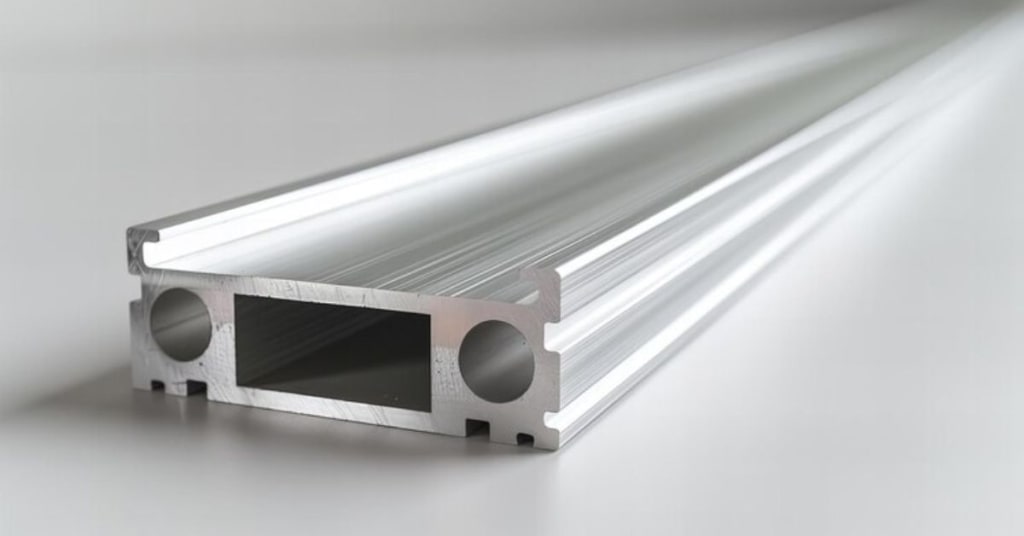
In the world of industrial materials, few processes are as versatile, essential, or quietly revolutionary as aluminum extrusion. Often described as the "Play-Doh" of metallurgy, the process of forcing aluminum alloy through a shaped die to create complex profiles has become the cornerstone of 21st-century engineering.
As of 2024, the global aluminum extrusion market is valued at approximately $90 billion, and it is on a trajectory to exceed $125 billion by 2030. But this growth isn't just a matter of "more of the same." The market is undergoing a fundamental transformation driven by the "Green Transition," the electric vehicle (EV) revolution, and a global push for circular economies.
The Architectural Foundation: Beyond Windows and Doors
Historically, the aluminum extrusion market was synonymous with the building and construction sector. Because aluminum is lightweight, corrosion-resistant, and easily shaped, it became the gold standard for window frames, curtain walls, and roofing systems.
However, the modern construction landscape is demanding more. With the rise of "Net Zero" building standards, extrusions are now being engineered with "thermal breaks"—polyamide strips that reduce heat transfer. This evolution ensures that the aluminum extrusion market remains vital as the construction industry pivots toward extreme energy efficiency. But while construction remains a steady anchor, the real "explosive" growth is happening elsewhere.
The EV Revolution: A Lightweight Necessity
The most significant disruptor in the aluminum extrusion market is the transportation sector, specifically the transition to Electric Vehicles.
1. The "Lightweighting" Imperative
In an internal combustion engine (ICE) vehicle, weight is a fuel efficiency issue. In an EV, weight is a range and battery cost issue. To offset the massive weight of lithium-ion battery packs, automakers are replacing steel components with aluminum extrusions. From battery trays and motor housings to crash management systems and "space frames," extrusions provide the high strength-to-weight ratio required to make EVs commercially viable.
2. Battery Enclosures
The battery pack is the heart of an EV, and it requires a housing that is not only strong but also thermally conductive to help manage heat. Extruded aluminum sections are ideal for creating multi-hollow profiles that act as both a structural frame and a cooling channel. This specific niche is expected to grow at a Compound Annual Growth Rate (CAGR) of over 15% through the end of the decade.
Renewable Energy: The Solar Boom
If you look at a solar farm, you are looking at miles of aluminum extrusions. The photovoltaic (PV) industry has become one of the largest consumers of extruded profiles.
Solar panels require mounting systems that can withstand decades of exposure to wind, rain, and snow without rusting. Aluminum extrusions are the perfect solution because they offer:
Modular Design: Easy to snap together on-site, reducing labor costs.
Corrosion Resistance: Essential for solar farms in coastal or high-humidity areas.
Recyclability: When a solar farm reaches the end of its life, the mounting racks can be melted down and turned into new racks, supporting a "cradle-to-cradle" life cycle.
Sustainability and the "Green Aluminum" Premium
Perhaps the most important trend in the market today is the push for Low-Carbon Aluminum.
The aluminum industry has historically been criticized for its energy-intensive smelting process. However, the extrusion segment is leading the way in "Secondary Production" (recycling). Extruding recycled aluminum requires only 5% of the energy needed to produce primary aluminum from bauxite ore.
The Rise of "Scrap Logic"
Major players like Hydro, Rio Tinto, and Alcoa are now marketing branded low-carbon aluminum. Extruders are increasingly sourcing "post-consumer scrap" to meet the sustainability mandates of clients like Apple, Tesla, and IKEA. We are approaching a market where "Green Aluminum" extrusions will command a price premium over standard profiles, as carbon taxes and ESG (Environmental, Social, and Governance) reporting become mandatory in the EU and North America.
Technical Innovations: Pushing the Limits of the Die
The "how" of extrusion is also changing. Innovation in die design and alloy chemistry is allowing for thinner walls and more complex geometries than ever before.
1. Micro-Extrusions
In the electronics and medical device industries, there is a growing demand for micro-extrusions—profiles so small they are measured in millimeters, yet feature multiple hollow chambers. These are used in heat sinks for high-powered processors and components for minimally invasive surgical tools.
2. High-Strength 7000 Series Alloys
Traditionally, the 6000 series (magnesium and silicon) has been the workhorse of the extrusion industry due to its ease of use. However, the automotive and aerospace sectors are now pushing for the wider use of 7000 series (zinc) alloys. These offer strengths comparable to steel but have historically been difficult to extrude. Recent breakthroughs in "friction stir welding" and advanced cooling during the extrusion press are making these high-strength profiles more accessible.
Regional Market Dynamics: The Shift in Production
China: The Global Heavyweight
China remains the world’s largest producer and consumer of aluminum extrusions, accounting for over 50% of global output. However, the Chinese market is shifting from low-end construction profiles to high-end industrial extrusions as the country invests heavily in its domestic EV and high-speed rail infrastructure.
North America and Europe: The "Reshoring" Trend
In the wake of supply chain disruptions and geopolitical tensions, there is a significant movement toward "reshoring" extrusion capacity. The US Inflation Reduction Act (IRA) and the EU’s Green Deal are providing subsidies for domestic manufacturing, particularly for components used in the "Clean Tech" supply chain. This is leading to a surge in new extrusion press installations in the US Midwest and across Eastern Europe.
Challenges and Headwinds
Despite the optimism, the aluminum extrusion market faces several critical challenges:
Energy Volatility: Extrusion presses and aging ovens require significant energy. High electricity and gas prices, particularly in Europe, have forced some smaller extruders to consolidate or shutter.
Labor Shortages: The industry is facing a "silver tsunami" as experienced press operators retire. The solution lies in Industry 4.0—integrating AI-driven sensors and automated handling systems to reduce the reliance on manual labor.
Trade Barriers: Anti-dumping duties and tariffs continue to complicate global trade. The "Carbon Border Adjustment Mechanism" (CBAM) in the EU is set to change the cost structure of imported aluminum based on its carbon footprint.
The Future: A Circular Economy
As we look toward 2030, the aluminum extrusion market will be defined by Circular Economy Integration. We will likely see a shift where extruders no longer just "sell a product" but rather "lease the metal."
Imagine a future where an automaker "borrows" 50,000 tons of aluminum for a car model's 10-year production run, and at the end of that run, the extruder takes the metal back, melts it down, and extrudes it into the next generation of components. This "closed-loop" system is already being piloted by companies like BMW and Audi.
Conclusion
The aluminum extrusion market is no longer a "boring" commodity business. It is a high-tech, fast-moving industry that sits at the intersection of climate policy, transportation innovation, and advanced manufacturing.
For investors, engineers, and policymakers, the message is clear: the future is being extruded. From the frames of the solar panels that power our homes to the battery trays of the cars we drive, aluminum extrusions are the silent, silver essential that will make a sustainable future possible.
Industry Insights
This blog was developed by our Industrial Materials Analysis group, focusing on the global shift toward sustainable metallurgy and lightweight engineering.
About the Creator
Rahul Pal
Market research professional with expertise in analyzing trends, consumer behavior, and market dynamics. Skilled in delivering actionable insights to support strategic decision-making and drive business growth across diverse industries.
The Future of Digital Identity: How Meta Earth is Pioneering Web3 Universal Basic Income 🌍
In an era where digital scams and data breaches have become the "new normal," the search for legitimate, privacy-preserving blockchain projects is more critical than ever 🛡️. The crypto landscape is often cluttered with noise, making it difficult to distinguish between fleeting trends and projects with a robust technological foundation. One such project gaining significant traction in 2026 is Meta Earth, specifically through its innovative ME Pass ecosystem.
By Piotr Nowakabout 4 hours ago in 01




Comments
There are no comments for this story
Be the first to respond and start the conversation.