
The Silent Revolution: How EPR for Plastic Waste Is Redefining Modern Industry
EPR for Plastic Waste Management: Rewiring Capitalism’s DNA for a Post-Plastic Era

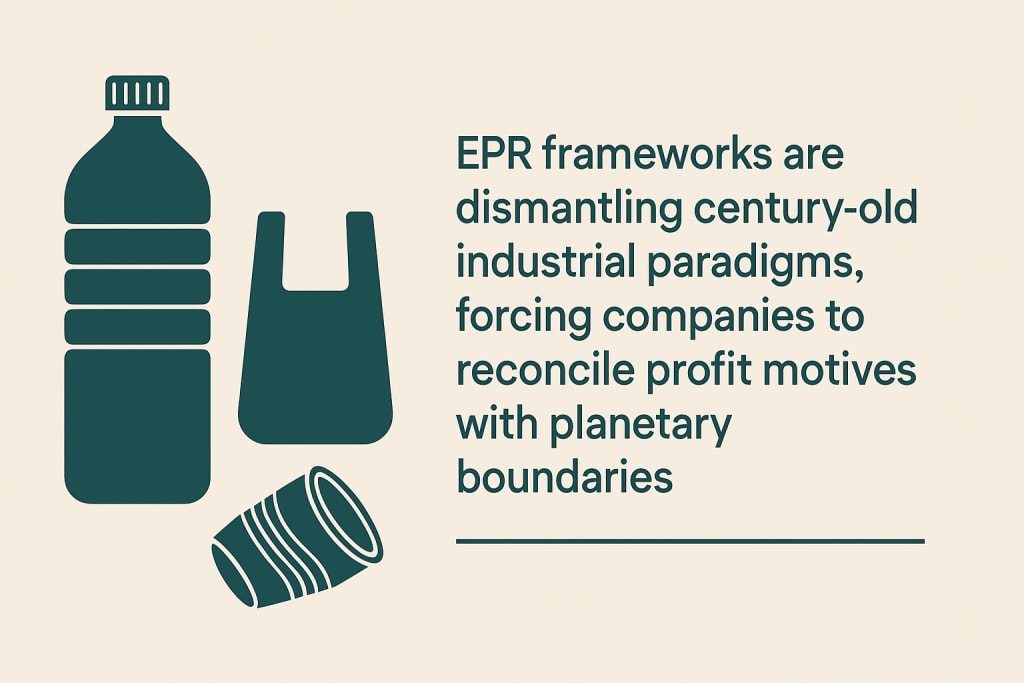
Plastic isn’t just choking our oceans—it’s exposing a fundamental flaw in capitalism’s linear "take-make-waste" model. While most discussions about EPR for plastic waste management fixate on compliance checkboxes, a deeper transformation is underway. Extended Producer Responsibility (EPR) frameworks are quietly dismantling century-old industrial paradigms, forcing companies to reconcile profit motives with planetary boundaries. This isn’t about waste management—it’s about rewiring the DNA of global commerce.
The Invisible Handshake: EPR as a Catalyst for Industrial Symbiosis
The Plastic Waste Management Rules (2016) and their 2022 amendments didn’t just introduce penalties—they birthed an unprecedented collaborative economy. Under EPR for plastic waste, competitors in FMCG, pharmaceuticals, and packaging are being forced into alliances. Take the PET Recycling Taskforce in Maharashtra: rival beverage giants now co-fund collection infrastructure, sharing reverse logistics networks to meet EPR targets. This shift from cutthroat competition to cooperative ecosystems mirrors nature’s symbiotic relationships—a radical departure from traditional capitalism.
The Algorithmic Waste Stream: Data as the New Plastic
India generates 3.5 million tonnes of plastic waste annually, but only 12% is recycled. The gap lies not in policy but in traceability. Modern EPR for plastic waste management relies on blockchain-enabled digital twins that track every gram of packaging—from factory floor to landfill. Startups like ReCircle are using AI to map informal waste picker networks, assigning digital credits for each kilogram collected. These credits aren’t just compliance tokens—they’re becoming tradeable assets on green exchanges.
Molecular Redesign: EPR’s Hidden Push for Material Revolution
EPR penalties escalate based on recyclability—a 2025 mandate will tax multi-layer plastics (MLPs) at 200% higher rates than mono-materials. This financial pressure is birthing a materials arms race. UFlex’s breakthrough in recycling MLPs into food-grade packaging and Kanpur-based startup Ecolife’s edible starch-based laminates exemplify how EPR for plastic waste is fueling R&D labs. The unspoken truth? EPR compliance now requires hiring material scientists, not just legal consultants.
The Financial Alchemy of Plastic Credits
India’s EPR certificate market is projected to hit ₹15,000 crore by 2030. But forward-thinking companies aren’t just meeting quotas—they’re stockpiling credits as strategic assets. Consider ITC’s move: by over-complying 160% on EPR targets, they’ve created a surplus to offset future expansions. Meanwhile, DBS Bank now offers lower interest rates for companies collateralizing EPR credits—a world-first in green financing.
The Informal Sector’s Quantum Leap
Over 1.5 million waste pickers form the backbone of India’s recycling—yet most EPR frameworks ignored them until 2023’s E-Waste (Management) Rules mandated their formal inclusion. Smart EPR for plastic waste management now involves:
- GPS-tagged collection vehicles integrating kabadiwalas
- Digital IDs providing health insurance via EPR funds
- Co-owned Material Recovery Facilities (MRFs)
The Geopolitics of Plastic Offsetting
As the EU’s Carbon Border Adjustment Mechanism (CBAM) expands to plastics, Indian exporters face an ultimatum: prove EPR compliance or pay tariffs. Reliance Industries’ $200 million investment in chemical recycling isn’t about sustainability—it’s about maintaining access to Western markets. Similarly, Unilever’s Indian arm now treats EPR certificates as export licenses.
Beyond Recycling: EPR as a Design Philosophy
The endgame of EPR for plastic waste isn’t better recycling—it’s obsolescence of single-use. Asian Paints’ recent shift to chemical-leasing models (selling paint as a service while retaining packaging ownership) and Dabur’s blockchain-tracked reusable sachets signal a tectonic shift: products are becoming platforms, and packaging a temporary vessel, not trash.
We guide companies through this existential transition, where EPR evolves from waste management to product life-cycle design.
Conclusion: EPR as Corporate Evolution
The Plastic Waste Management Rules are Darwinism in regulatory form—companies that view EPR for plastic waste as mere compliance will perish; those embracing it as evolutionary pressure will dominate tomorrow’s markets. This isn’t about saving the planet—it’s about surviving the Great Economic Mutation.
Corpseed doesn’t just file your EPR reports—we engineer your metamorphosis. From blockchain integration to material innovation labs, we transform regulatory mandates into competitive moats. Ready to evolve?
About the Creator
Corpseed ITES Pvt. Ltd
Corpseed is a business consulting firm specializing in regulatory compliance and environmental solutions. We provide expert assistance for EPR registration, certification, and authorization across various waste categories.
Keep reading
More stories from Corpseed ITES Pvt. Ltd and writers in 01 and other communities.
EPR Certification & Registration: Ensuring Compliance for Sustainable Business Practices
With the growing concern over environmental sustainability, businesses handling electronic, plastic, or battery waste must comply with Extended Producer Responsibility (EPR) authorization. This regulatory framework ensures that manufacturers, importers, and brand owners take responsibility for waste collection, recycling, and proper disposal. Understanding EPR certification and EPR registration is crucial for businesses striving for compliance and sustainability. It also helps in aligning with global sustainability goals and improving long-term operational efficiency.
By Corpseed ITES Pvt. Ltd11 months ago in 01
Top Trends Shaping Travel App Development in 2026
The global travel industry continues to evolve at a rapid pace, driven by changing traveler expectations, digital innovation, and the demand for seamless experiences. As we move into 2026, travel apps are no longer just booking tools—they have become intelligent travel companions that assist users before, during, and after their journeys. From personalized trip planning to immersive exploration, modern travel applications are redefining how people experience travel.
By shane cornerus6 days ago in 01
Rage
Content Warning: Domestic Violence, Assault Rage D. A. Ratliff “Who did this?” My voice echoed through the house. All I wanted was a cup of tea, but one of the twins, running through the house like maniacs, knocked it over. My nerves tingled, and every muscle in my body felt coiled like a spring. Survival seemed out of reach.
By D. A. Ratliff5 days ago in Fiction


Comments