
The Role of PKI and SSL in Cybersecurity
Overview- What is PKI vs. SSL?


Businesses today have gone virtual, and multiple operations are being done electronically. Remote work is the new norm, and everything from administration to sales is done through digital networks. This advancement has also led to the expansion of cyber crimes that exploit network vulnerabilities to disrupt operations, steal sensitive information, or extort organisations. and are crucial tools that mitigate such threats. This blog is a critical evaluation of both PKI and SSL and their roles in the world of cybersecurity.
Definition of PKI and SSL
PKI is a comprehensive framework that structures the roles, software, hardware, policies, and procedures that help create, distribute, manage, use, store, and revoke digital certificates. These digital certificates secure electronic communications and foster trust within the organisational network.
On the other hand, SSL is a cryptographic protocol created to facilitate secure communication over digital networks. Also referred to as , SSL builds an encrypted link between a user and a web browser to ensure secure and private digital communication.
Understanding PKI
Key components of PKI
Here are the key components of PKI:
Certificate Authority- Certificate Authority or CA is a reliable entity that issues, signs, and stores digital certificates. CAs sign digital certificates using their private keys. These digital certificates are verified using a public key.
Registration Authority - The Registration Authority or RA may be the same entity as the CA or a different one. The RA verifies the user or device entity requesting the digital certificate.
Certificate database- This refers to an accessible database that stores individual certificates comprising metadata such as the period for which the certificate is valid.
Central directory - This refers to a safe and secure location that stores and indexes cryptographic keys.
Certificate management system - This system refers to a series of protocols responsible for managing digital certificates, including creation, access, storage, distribution, and revocation.
Certificate policy - This refers to a publicly accessible policy that details the standards and procedures of PKI. The certificate policy is available for use by third parties who can analyse the integrity of the PKI.
How does PKI work?
PKI uses asymmetric encryption techniques to maintain the privacy of the messages. PKI also authenticates the user or device that transmits the message. Asymmetric encryption involves using public and private keys. A cryptographic key is a series of bits that encrypt data for security.
A CA issues the public key, accessible to anyone who requests it. The private key, also termed the secret key, is kept confidential by the recipient of the encrypted message and is used to decrypt the message.
Complex key algorithms encrypt and decrypt both public and private keys. While the public key authenticates the sender who transmits the message, the private key ensures that only the authenticated recipient can open and read it.
Benefits of using PKI
Let us explore the benefits of using PKI!
Authentication - PKI is pivotal in securing organisational networks by authenticating users, devices, browsers, etc., to ensure secure electronic communication across the internet. Digital certificates and cryptographic keys validate the integrity of entities involved in the communication to prevent data breaches and unauthorised access to sensitive information.
The rising instances of DNS attacks and phishing have made PKI an imperative tool in the cybersecurity realm. PKI-based authentication solutions have proven instrumental in mitigating such risks by facilitating secure data sharing and remote access. Moreover, PKI can be used to build a zero-trust security infrastructure to strengthen an organisation's security posture. Overall, PKI offers a scalable and robust digital transaction and communication security solution.
Enhanced data security - PKI encrypts data till it reaches its valid recipient to ensure data security. This is conducted using the sender's private key, and when the recipient receives the message, the public key is used to decrypt the message. This enables enterprises to ensure data confidentiality for prospects, clients, and employees while preventing cyber crimes and data leakages.
PKI provides secure mobile communication, cloud services and Internet of Things (IoT) communication, centralised management system and safe document signing. These facilities are pivotal to ascertaining the authenticity, integrity, and confidentiality of data across a varied range of applications and environments.
Improved efficiency - PKI fosters several efficiencies that streamline operations and leverage security. With automation and simplified key management features, PKI eliminates the complications of manual processes by providing a centralised system for creating, distributing and revoking digital certificates.
As PKI simplifies highly complicated management processes, it prevents the risk of data losses through its efficient method of key maintenance. It further makes it impossible for malicious actors to break into any overlooked gaps in the security system and launch a cyber attack.
Streamlined access control - is the best answer to access management and efficient business security through access control. As it is based on the unique identities concept, PKI makes it easier for managers to control access and permissions for each entity, whether user or device. Such stringent control over access permissions bridges the gaps in organisational security. Managers can limit access to sensitive data and prevent unauthorised users from gaining access to it.
Greater scalability - PKI provides high scalability for various business security requirements. This implies that it can provide data security for any number of devices, users, or applications. This is a breath of relief for businesses that want to scale their operations without compromising their security and efficiency.
Also, PKI can be easily integrated with a wide variety of devices, making it the most sought-after choice for businesses that follow the culture of remote working and the Internet of Things (IoT).
Low-cost security - Although the upfront installation cost of PKI may seem substantial, its long-term benefits and cost-effectiveness outweigh its initial investment. With certificate management automation, the expenses that follow the initial implementation are only limited to renewal charges.
Moreover, PKI’s dynamic security features prevent exorbitant legal liabilities, security breaches, and business outages that may result from security mismanagement or cyber-attacks. Ultimately, PKI delivers a strategic approach to bolstering security and operational efficiency, making it a worthwhile investment.
About the Creator
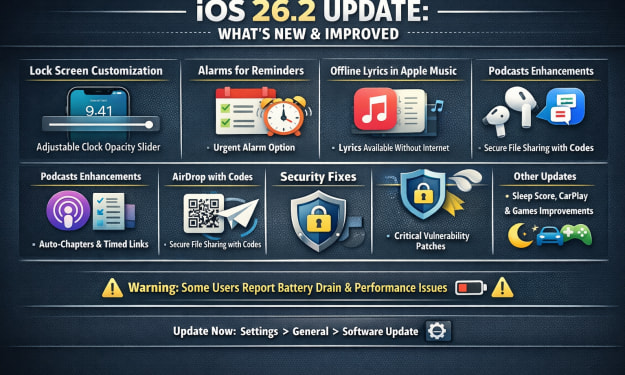
Apple iOS 26.2 Update
Apple officially released iOS 26.2 in December 2025 as a free over-the-air update for compatible iPhones (iPhone 11 and newer, plus second-generation iPhone SE). This second major point update for iOS 26 brings a mix of new features, system enhancements, customization options, security patches, and app upgrades aimed at refining the user experience following the launch of iOS 26 earlier in the year.
By USA daily update 2 days ago in 01



Comments
There are no comments for this story
Be the first to respond and start the conversation.