
The Role of AI and Machine Learning in Big Data Analytics
How Smart Algorithms Are Turning Raw Data Into Real-World Impact

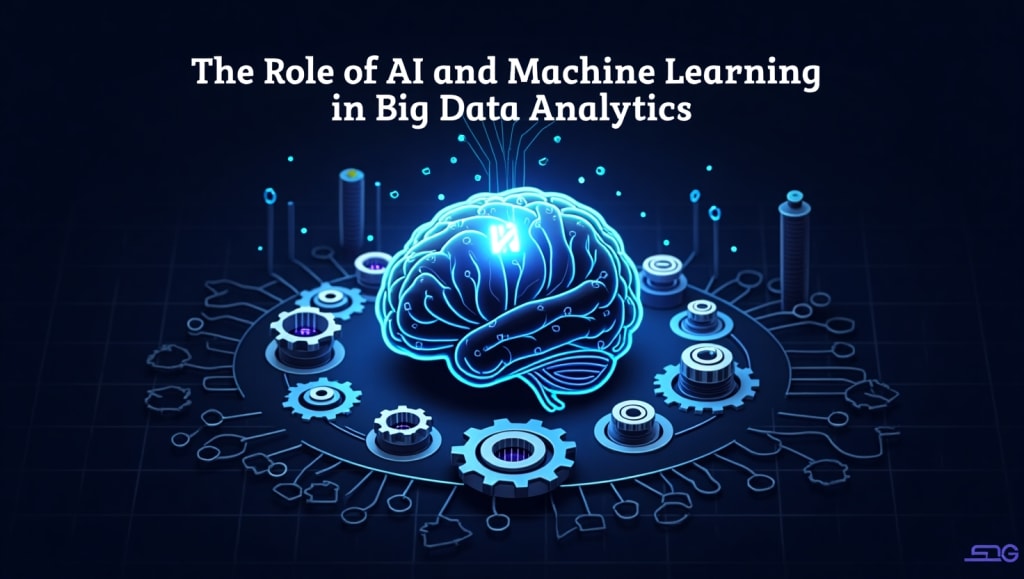
In a world overflowing with data, it’s no longer just about collecting information—it's about knowing what to do with it. That's where Big Data analytics steps in. But even Big Data needs a brain, and that’s exactly what AI (Artificial Intelligence) and Machine Learning (ML) bring to the table.
Gone are the days of crunching numbers manually. Today, the real magic happens at the intersection of vast datasets and intelligent algorithms.
Big Data Is Booming—But It's Also Overwhelming
Think about this: every minute, people send millions of messages, make thousands of online purchases, and generate endless streams of content across platforms. Businesses are buried in data, from customer interactions to backend operations.
This explosion of information—aka Big Data—has incredible potential. But here's the catch: without intelligent systems, it’s just noise.
Enter AI and Machine Learning.
What AI and ML Bring to Big Data Analytics
1. Smarter Pattern Recognition
AI systems are exceptional at spotting trends and correlations that the human eye would likely miss. Whether it’s consumer behaviour, fraud detection, or predictive maintenance, AI turns raw data into actionable insights.
2. Real-Time Insights
Speed matters. Machine Learning algorithms can analyse incoming data in real-time, which is crucial for industries like finance, healthcare, and cybersecurity. The faster the system, the quicker decisions can be made—sometimes even automatically.
3. Automation of Complex Tasks
Manual data analysis is slow and error-prone. AI automates everything from data cleaning to advanced statistical modelling. That means analysts spend less time prepping data and more time acting on insights.
4. Predictive Power
One of the most exciting uses of ML in Big Data analytics is prediction. ML models learn from historical data to forecast future outcomes—like predicting churn rates, sales trends, or potential equipment failures.
Real-World Applications
Let’s take a quick look at how AI and ML are shaping industries through Big Data:
Healthcare: AI algorithms can predict disease outbreaks, identify high-risk patients, and suggest personalized treatments—all based on massive amounts of patient data.
Retail: From dynamic pricing to inventory management, retailers use Big Data analytics to optimize operations and enhance customer experience.
Finance: Fraud detection systems powered by AI flag suspicious transactions in real-time, while ML models assist in market forecasting and investment strategies.
Marketing: Brands use ML to segment audiences, personalize content, and measure campaign performance with laser-like precision.
Challenges and Ethical Considerations
As powerful as these technologies are, they’re not without their challenges. Data privacy, algorithmic bias, and the need for explainable AI are just a few of the hurdles.
Organizations must ensure transparency in how AI models make decisions, especially when they impact people’s lives—like in hiring or lending.

The Future of Big Data Analytics
AI and ML aren't just buzzwords—they’re reshaping the way we understand and act on data. As these technologies continue to evolve, Big Data analytics will become faster, more accurate, and more intuitive.
The future? Think intelligent systems that not only process data but also understand context, learn on the go, and adapt in real time. It’s not science fiction—it’s happening now.
Final Thoughts
In the grand scheme of data-driven decision-making, Big Data analytics is the engine. AI and Machine Learning? They’re the fuel that powers it forward.
For businesses and individuals alike, embracing this tech-powered evolution isn’t just an option—it’s a necessity.
About the Creator
Enzipe
Enzipe is here
How Far Can RS232 Run and How to Extend It Safely?
If you’ve ever tried to connect RS-232 devices over a long distance and encountered data errors, intermittent communication, or unexplained signal noise, you’re not alone. One of the most frequently asked questions in industrial communication is: “What is the maximum distance RS-232 can reliably support?”
By ethernet-networkabout 5 hours ago in 01




Comments
There are no comments for this story
Be the first to respond and start the conversation.