
The Riyadh Metro(KSA)
Transforming Urban Mobility in the Heart of Saudi Arabia
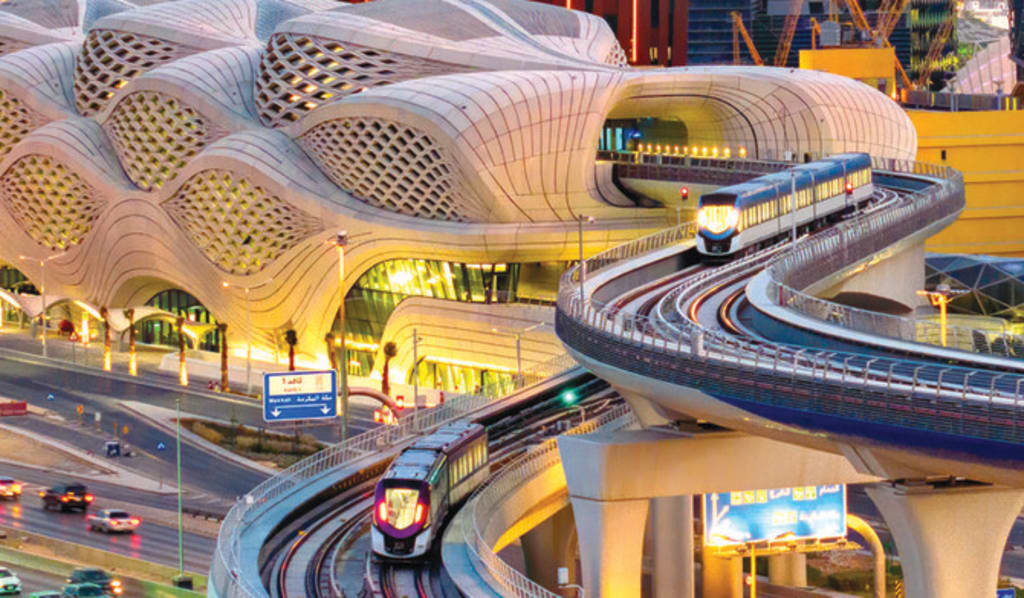
The Riyadh Metro Project: Redefining Urban Transport in Saudi Arabia
The sprawling city of Riyadh, capital of the Kingdom of Saudi Arabia, is undergoing a profound transformation—one that promises to reshape its urban landscape and redefine how millions of people move across the metropolis. At the heart of this transformation is the Riyadh Metro Project, an ambitious multi-billion-dollar initiative that stands as one of the largest public transport undertakings in the world today.
As Riyadh continues to experience rapid population growth and urbanization, the metro project is a timely and critical response to mounting traffic congestion, air pollution, and the pressing need for sustainable transportation solutions. More than just a transport system, the Riyadh Metro is a cornerstone of Saudi Arabia’s Vision 2030—a national strategy to diversify the economy and enhance the quality of life for its citizens.
A Landmark Project in the Middle East
Launched in 2014 and backed by an estimated investment of $22.5 billion, the Riyadh Metro is part of the broader Riyadh Public Transport Project (RPTP). The goal is to create a fully integrated, modern, and efficient transit network that connects all corners of the city. The project spans:
- 176 kilometers of rail across the city
- 6 distinct metro lines, each color-coded (Blue, Red, Orange, Yellow, Green, and Purple)
- 85 ultra-modern stations with accessibility features, air conditioning, and digital services
Fully automated trains, driverless and energy-efficient
The metro lines are strategically mapped to cover key residential, commercial, administrative, and educational districts. From King Khalid International Airport in the north to densely populated southern neighborhoods, the system is designed to ensure seamless mobility for everyone—from daily commuters to international visitors.
Engineering Excellence and Global Collaboration
One of the most impressive aspects of the Riyadh Metro Project is the scale of international collaboration. To manage a project of such complexity, the Arriyadh Development Authority (ADA) partnered with three major international consortiums:
- BACS Consortium (led by Bechtel, Siemens, and others) for Lines 1 and 2
- ANM Consortium (including Ansaldo STS and Salini Impregilo) for Line 3
- FAST Consortium (featuring Alstom, FCC, and Samsung C&T) for Lines 4, 5, and 6
Each consortium brought world-class expertise in civil engineering, tunneling, rail systems, and project management. The use of cutting-edge technologies such as tunnel boring machines (TBMs), elevated viaducts, and advanced signaling systems ensures that the metro not only meets global standards but also adapts to Riyadh’s unique environmental conditions, including extreme heat and sandstorms.
Sustainability and Societal Impact
Beyond its physical infrastructure, the Riyadh Metro represents a fundamental shift toward sustainability and environmental responsibility. By providing a reliable alternative to private car usage, the metro is expected to reduce traffic congestion by 20% and cut carbon emissions significantly. Riyadh’s streets, once dominated by car traffic, are poised to become more pedestrian-friendly and less polluted.
The social and economic implications are equally significant. The project has already created tens of thousands of jobs, both during construction and in anticipated operations and maintenance roles. It also promotes greater social mobility, enabling access to education, healthcare, and employment opportunities for people across all income levels.
In addition, the design of the metro system respects local cultural norms, with station layouts and train compartments featuring sections for single travelers and families, in line with the Kingdom’s social traditions.
Challenges and Resilience
Like any large-scale infrastructure project, the Riyadh Metro faced numerous challenges. Harsh weather conditions, traffic disruptions during construction, and logistical hurdles in coordinating international teams tested the limits of planning and execution. However, the resilience shown by the project teams, along with strong government support, helped push the project closer to completion.
What’s Next?
As of 2025, the final stages of testing and integration are underway. Once fully operational, the Riyadh Metro will stand as a symbol of Saudi Arabia’s modernization efforts. It will not only ease the burden on the city’s roads but also enhance quality of life, stimulate urban development, and support economic diversification.
The Riyadh Metro is more than just a transportation project—it's a vision of what the future of urban living can look like in the Middle East. As Riyadh prepares to welcome millions of new residents and visitors in the coming decades, this world-class metro system ensures the city remains a dynamic, livable, and forward-thinking capital.
About the Creator
Keep reading
More stories from Jamal khan and writers in 01 and other communities.
The Layman and the Queen
In a quiet corner of the kingdom of Aerdenhall, there lived a man named Rowan. He was a stonemason by trade, a layman in every sense—humble, unnoticed, and content with the rhythm of chiseling stone and watching the sun rise over the hills. He held no titles, owned no land, and sought no riches. His world was honest work, warm bread, and the laughter of village children.
By Jamal khan8 months ago in BookClub
HOW TO CREATE MOBILE APPLICATION IN 2026
Google has officially shifted from a link-based indexing system to a Trust Graph architecture that prioritizes Entity Accountability over traditional technical signals. This tectonic movement means mobile applications are no longer discovered through keyword strings but through AI Retrieval systems that demand verified developer authority.
By Del Rosario3 days ago in 01
The Devil's Cut
“Comrade, finally you’re awake.” The voice was smooth, sensual. A flickering incandescent bar was all that lit the white, sterile room. All Vladimir remembered was everything going black. He tried to move his arms and found them strapped to the gurney.
By Matthew J. Fromm4 days ago in Fiction




Comments
There are no comments for this story
Be the first to respond and start the conversation.