
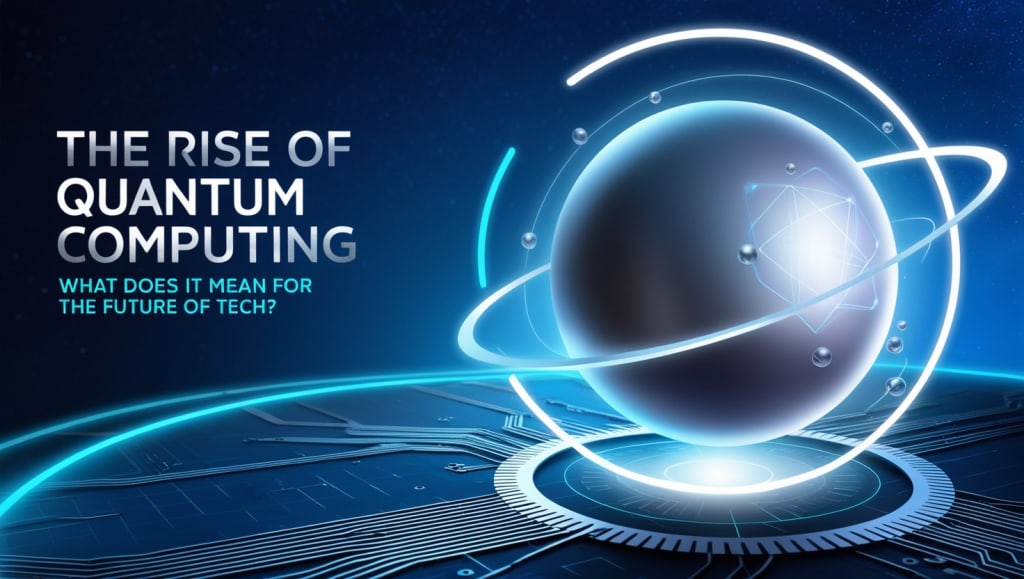
The Rise of Quantum Computing: What Does It Mean for the Future of Tech?
Quantum computing is revolutionizing tech—discover its future potential and game-changing impact on industries!

In the world of technology, there’s a new buzzword making waves: quantum computing. It's not just another futuristic concept anymore—quantum computing is here, and it's beginning to shape the way we think about computing. But what does it really mean for the future of technology, and why should we care?
To start, quantum computing isn’t just a faster version of the computers we already use. It’s a whole new ballgame. Traditional computers process information in bits, which can either be 0 or 1, like a light switch that’s either off or on. Quantum computers, on the other hand, use qubits—quantum bits that can exist in multiple states at once, thanks to the principles of quantum physics like superposition and entanglement. Think of it like a spinning coin that’s both heads and tails at the same time. This fundamentally changes how data can be processed and opens up a whole new realm of possibilities.
So, how does this play into the future of technology? Let’s explore a few key ideas.
A New Era of Problem-Solving
For starters, quantum computing has the potential to solve problems that are currently beyond the reach of classical computers. Take, for example, complex simulations in fields like medicine, materials science, and climate modeling. The ability of quantum computers to process vast amounts of data simultaneously means they could run simulations that would take traditional computers centuries to complete, all in a matter of minutes or hours. Imagine designing the perfect drug to combat a new disease, or creating new materials for more efficient solar panels. Quantum computing could accelerate these processes in ways we never thought possible.
This opens up endless opportunities for innovation, but it also brings up the question of how quickly we can harness its full potential. As of now, we’re still in the experimental phase. There are significant challenges to overcome, like error correction and maintaining the stability of qubits. But with major tech companies and research institutions pouring resources into quantum research, it’s only a matter of time before these hurdles are cleared. The question is, who will get there first, and what kind of world will we be living in once they do?
Changing the Cybersecurity Game
Another huge implication of quantum computing is its impact on cybersecurity. Right now, most of the security protocols we rely on, like encryption, depend on the difficulty of certain mathematical problems for which classical computers take a long time to find solutions. But quantum computers, with their ability to process information exponentially faster, could easily break through these encryption systems, rendering current security measures obsolete.
This is a big deal because it affects everything from online banking to national security. As quantum computing advances, there will be a race to develop quantum-resistant encryption methods—new ways of securing information that quantum computers won’t be able to crack. Experts are already working on post-quantum cryptography, and the next few years will likely see an intense shift in how we approach digital security. The rise of quantum computing could be a double-edged sword: while it opens up incredible possibilities for technological progress, it also challenges the very infrastructure we’ve built to protect sensitive data.
The Shift in Computing Power
Now, it’s easy to get caught up in the idea of quantum computers being these giant, super-powerful machines that could replace the computers we use every day. But quantum computers aren’t likely to replace your laptop or smartphone anytime soon. Instead, they’ll likely complement traditional computing by taking on specialized tasks that classical computers just can’t handle efficiently.
In the future, we may see a hybrid computing model—where quantum computers work alongside classical ones, each focusing on what they do best. For example, a classical computer might handle everyday tasks like browsing the web or checking emails, while a quantum computer could be used for heavy-duty computations, like solving complex scientific problems or cracking codes. This dual approach would allow us to maximize the strengths of both types of computing, pushing the boundaries of what’s possible.
The Future of Tech: Exciting or Unsettling?
As with any new technology, the rise of quantum computing brings both excitement and uncertainty. On the one hand, the possibilities seem limitless. We’re talking about solving problems that could revolutionize entire industries, from pharmaceuticals to energy. But on the other hand, the implications of quantum computing aren’t entirely understood yet. We don’t know exactly how it will impact jobs, society, or the global economy. There are fears about job displacement as certain industries evolve, and concerns about the potential misuse of quantum power.
What’s clear is that quantum computing will challenge the way we think about technology in profound ways. It may force us to reconsider everything from data privacy to what it means to “compute” at all. The future of tech isn’t just about making things faster or more efficient; it’s about reshaping the very foundation of how we interact with the digital world.
Conclusion: The Quantum Leap
The rise of quantum computing is undoubtedly one of the most exciting developments in technology today. While we may still be at the tip of the iceberg, the potential it holds for fields like science, healthcare, and cybersecurity is extraordinary. Of course, there’s much we don’t know about how quantum computers will integrate into our everyday lives, but one thing’s for sure: the future of tech is about to get a whole lot more interesting.
Whether we’re ready or not, quantum computing is coming, and it’s going to change the world in ways we can only begin to imagine. The real question is: are we prepared to handle its power responsibly? Only time will tell.
About the Creator
Indira Fania
As a writer, I’ve always been fascinated by the power of words to transform ideas into reality and inspire action.
Keep reading
More stories from Indira Fania and writers in 01 and other communities.
Artificial Intelligence and Social Inequality: A Threat to Diversity and Equality
Artificial intelligence (AI) has been touted as a game-changer, revolutionizing industries, enhancing convenience, and even promising to solve global issues. From healthcare to entertainment, AI has proven its potential. However, while the technology offers remarkable advantages, it also brings with it a pressing concern that often flies under the radar: the exacerbation of social inequality and the threat it poses to diversity and equality.
By Indira Faniaabout a year ago in Futurism
How a Local Exterminator Handles Rodent Infestations: Complete Rodent Control Guide
Rodent infestations are a common problem in both homes and businesses. Mice and rats can enter buildings through very small openings, contaminate food, damage property, and spread harmful diseases. Because rodents reproduce quickly, even a small problem can grow into a serious infestation in a short time. This is why professional rodent control is essential for protecting your property and health.
By Jamal Moore4 days ago in 01



Comments
There are no comments for this story
Be the first to respond and start the conversation.