
The Rise of Artificial Intelligence
Transforming the Future of Humanity

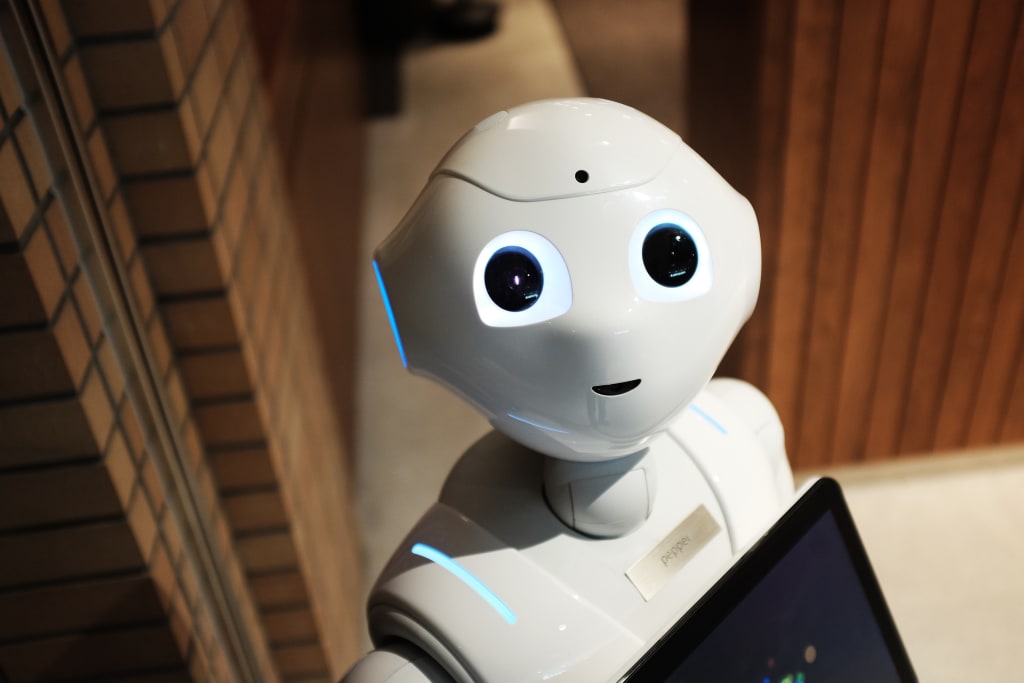
Transforming the Future of Humanity:
AI, or artificial intelligence, refers to the development of computer systems that can perform tasks that typically require human intelligence, such as understanding natural language, recognizing images and speech, and learning from experience.
AI can be broken down into two main categories: narrow or weak AI, and general or strong AI.
Narrow AI is designed to perform specific tasks, such as image recognition or language translation, while general AI is capable of performing any intellectual task that a human can.
There are several different types of AI, including rule-based systems, machine learning, and deep learning.
Rule-based systems rely on explicit rules and logic to make decisions, while machine learning involves the use of algorithms that can learn from data and improve over time.
Deep learning is a subset of machine learning that uses artificial neural networks to process information.
AI has a wide range of applications across many industries, including healthcare, finance, transportation, and entertainment.
It has the potential to revolutionize the way we work, live, and interact with the world around us.
However, there are also concerns around the ethical implications of AI, such as bias and the impact on jobs and privacy.
As such, there is ongoing research and debate around how to best harness the potential of AI while minimizing its negative consequences.
The future of AI :
AI or artificial intelligence, is both exciting and uncertain.
On one hand, AI has the potential to revolutionize many industries and transform the way we live and work.
Some experts predict that AI could lead to major advances in fields such as healthcare, transportation, and energy, and even help us solve some of the world's biggest problems, such as climate change and poverty.
However,
there are also concerns about the negative consequences of AI, such as job displacement, bias and ethical concerns, and the potential for AI to be misused or abused.
As AI becomes more advanced and pervasive, there will be a growing need for ethical guidelines and regulations to ensure that it is used responsibly and for the benefit of society as a whole.
There are also questions about the future development of AI, such as whether we will be able to create truly general or strong AI that can match or exceed human intelligence.
Some experts predict that this could lead to a singularity event, in which AI becomes so advanced that it begins to improve itself at an exponential rate, leading to rapid technological progress and potentially even a radical transformation of human society.
Overall, the future of AI is complex and uncertain, but it is clear that it will play an increasingly important role in shaping the world around us in the coming years and decades.
<_ADVANTAGE OF AI:
There are many advantages of AI, or artificial intelligence, that make it a powerful tool for a wide range of industries and applications.
Some of the key advantages of AI include:
1.Increased efficiency:
AI can automate many tasks that would otherwise require significant time and resources, such as data entry, analysis, and processing.
This can help to increase productivity and reduce costs.
2.Improved accuracy:
AI systems can process large amounts of data with great accuracy and speed, reducing the risk of human error and improving the quality of decision-making.
3.Personalization:
AI can be used to create highly personalized experiences for customers, such as personalized recommendations based on their preferences and behavior.
4.Continuous learning:
AI systems can learn and adapt over time, improving their performance and effectiveness as they are exposed to more data and experience.
5.Advanced analytics:
AI can be used to analyze large amounts of data and identify patterns and insights that might be difficult or impossible for humans to detect.
6.Improved safety:
AI can be used to improve safety in a variety of contexts, such as autonomous vehicles that can help to prevent accidents, or predictive maintenance systems that can help to prevent equipment failures.
Overall,
AI has the potential to provide significant benefits across many industries and applications, making it a powerful tool for businesses, governments, and individuals alike
< DISADVANTAGE OF AI :
Some of the key disadvantages of AI include:
1.Bias:
AI systems can be biased due to the data they are trained on, which can result in unfair or discriminatory outcomes, particularly in areas such as hiring or lending.
2.Job displacement:
AI has the potential to automate many jobs, leading to job displacement and economic disruption in some industries.
3.Lack of empathy:
AI systems lack the ability to understand human emotions and may not be able to provide the same level of empathy or understanding as a human worker.
4.Security risks:
AI systems can be vulnerable to cyberattacks and other security threats, particularly if they are connected to the internet or other networks.
5.Dependence:
As AI systems become more advanced and pervasive, there is a risk that humans will become too dependent on them, leading to a loss of critical thinking and decision-making skills.
6.Ethical concerns:
AI raises a range of ethical concerns, such as the potential for AI to be used for harmful purposes or to violate privacy rights.
Overall,
the potential risks and disadvantages of AI need to be carefully considered and addressed in order to ensure that AI is developed and used in a responsible and beneficial way.
About the Creator
Strategic Role of an HVAC Website in Modern Lead Generation
In today’s HVAC market, getting consistent leads is no longer just about referrals, flyers, or being listed on third-party platforms. When homeowners need heating or cooling services, their first move is almost always online. They search, compare, and decide within minutes. This shift has made an HVAC website more than just a digital address. It has become a strategic tool for lead generation.
By Henry Davids4 days ago in 01



Comments (1)
Thank you for your information !!