
The Rise of Artificial Intelligence: Transforming the World One Algorithm at a Time
How AI is Revolutionizing Industries, Reshaping Daily Life, and Challenging the Boundaries Between Human and Machine

Title:
The Rise of Artificial Intelligence: Transforming the World One Algorithm at a Time
Subtitle:
How AI is Revolutionizing Industries, Reshaping Daily Life, and Challenging the Boundaries Between Human and Machine
---
Introduction
Artificial Intelligence (AI) is no longer the stuff of science fiction. What once seemed like a futuristic dream—machines that think, learn, and make decisions—is now an everyday reality. From voice assistants like Siri and Alexa to self-driving cars, AI is rapidly integrating into our personal lives, workplaces, and global systems. This article explores the evolution, applications, benefits, challenges, and future of AI in a world that's changing faster than ever before.
---
1. What is Artificial Intelligence?
At its core, Artificial Intelligence refers to the ability of machines to perform tasks that typically require human intelligence. These tasks include learning from data (machine learning), understanding language (natural language processing), recognizing images and patterns (computer vision), and making decisions (expert systems).
There are two primary types of AI:
Narrow AI: Designed to perform a specific task, like facial recognition or spam filtering.
General AI: A more advanced form, still theoretical, that would perform any intellectual task a human can do.
Currently, all real-world applications use narrow AI, but progress in deep learning and neural networks is rapidly pushing boundaries.
---
2. A Brief History of AI
AI may seem like a modern invention, but its roots go back decades:
1950s: Alan Turing introduces the "Turing Test" to evaluate a machine's ability to exhibit human-like intelligence.
1956: The term "Artificial Intelligence" is coined at the Dartmouth Conference.
1980s: Expert systems gain popularity, allowing computers to simulate decision-making.
2010s–2020s: Breakthroughs in deep learning, big data, and processing power ignite a new AI boom.
Today, AI powers everything from Google Search algorithms to Netflix recommendations, fraud detection systems, and even military drones.
---
3. AI in Daily Life
You might not always notice it, but AI surrounds you. Some everyday examples include:
Smartphones: AI powers voice assistants, facial recognition, and auto-correct.
Social Media: AI determines what content appears on your feed.
E-commerce: Platforms use AI to suggest products based on your behavior.
Transportation: AI improves traffic predictions, ride-sharing apps, and autonomous vehicles.
Healthcare: AI helps doctors detect diseases earlier and more accurately.
Whether you're streaming music, navigating a city, or talking to a chatbot, AI is likely working behind the scenes.
---
4. AI in Business and Industry
AI is transforming how companies operate across nearly every sector:
Healthcare: AI can analyze X-rays, predict patient outcomes, and even assist in surgeries.
Finance: Banks use AI for fraud detection, credit scoring, and algorithmic trading.
Manufacturing: Robots and AI optimize supply chains, quality control, and predictive maintenance.
Education: Personalized learning platforms adapt to students’ individual needs using AI.
Agriculture: AI-powered drones and sensors monitor crop health and boost yield efficiency.
AI isn’t just a technological tool—it’s a competitive advantage that improves speed, accuracy, and cost-efficiency.
---
5. The Power of Machine Learning and Deep Learning
A major reason AI has accelerated is due to machine learning (ML) and deep learning (DL):
Machine Learning: Systems learn from data instead of following programmed rules. For example, a spam filter that improves by analyzing which emails users mark as spam.
Deep Learning: A subset of ML that uses neural networks with many layers—like a digital brain—to recognize complex patterns, such as identifying faces or translating languages.
These techniques allow AI to continuously improve and "learn" over time, making them powerful tools for solving real-world problems.
---
6. Benefits of AI
The advantages of AI are immense:
Efficiency: Automates repetitive tasks, freeing humans for higher-level thinking.
Accuracy: AI can detect patterns humans might miss, improving decision-making.
Availability: Machines can work 24/7 without fatigue.
Personalization: AI can tailor services (ads, education, treatment plans) to individual users.
In sectors like medicine, disaster response, and climate modeling, AI has the potential to save lives and make better predictions than any human alone.
---
7. Ethical Challenges and Risks
Despite its benefits, AI comes with serious concerns:
Bias and Fairness: AI systems can reflect and even amplify human biases if trained on biased data.
Job Displacement: Automation threatens to replace millions of jobs, especially in manufacturing, customer service, and transportation.
Privacy: AI surveillance tools can infringe on personal freedoms and human rights.
Autonomy: Self-operating AI systems raise questions about responsibility, especially in warfare or criminal justice.
Misinformation: Deepfakes and AI-generated content can spread false information at scale.
Solving these issues requires not just better technology but strong ethical frameworks, regulations, and oversight.
---
8. The Future of AI: Where Are We Headed?
Looking ahead, AI could reshape society in ways we can’t fully predict. Key developments may include:
General AI: Machines that can learn any task, potentially rivaling or surpassing human intelligence.
AI in Climate Tech: Tools for monitoring deforestation, predicting weather events, or optimizing energy use.
Human-AI Collaboration: New systems where humans and machines work side-by-side (e.g., AI-assisted doctors or architects).
Neural Interfaces: Technology like Elon Musk’s Neuralink seeks to connect the brain directly to AI systems.
Legal and Moral Debates: Questions like “Can a robot have rights?” or “Who’s to blame if an AI makes a harmful decision?” will become more pressing.
As AI continues to evolve, its role in society will depend heavily on how responsibly we develop and govern it.
---
Conclusion
Artificial Intelligence is more than just a buzzword; it's a powerful force shaping the future of humanity. Its ability to revolutionize industries, improve lives, and solve complex problems is matched only by the need to address its risks. The key lies in balance: innovation with ethics, progress with purpose.
We are only at the beginning of the AI era. What comes next depends on us—how we build it, how we use it, and how we ensure it benefits all of humanity.
About the Creator
Keep reading
More stories from Rahmat Ullah Khan and writers in 01 and other communities.
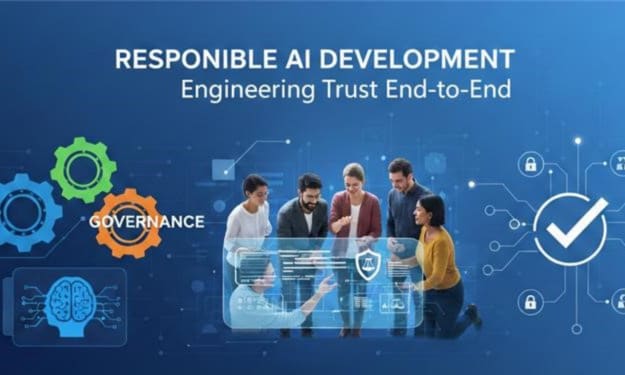
Responsible AI Development Design, Testing, and Governance for Teams
Artificial Intelligence is transforming how enterprises operate — from automation and predictive analytics to intelligent customer experiences. In fact, over 90% of firms use AI in some capacity today, with adoption expanding quickly across departments and workflows.
By Jakob Stanely6 days ago in 01
Tatt~Master
— Assembly Line Tatt Machine ~ Impressions to Impress — As I begin to understand more about the Tattoo Phenomenon. I've written silly, yet verbatim, dating site anecdotes in 'Frazzled.' So let me ask you: Would you be More attracted to someone slathered with tattoos, or Less?
By Jay Kantor7 days ago in Humor



Comments
There are no comments for this story
Be the first to respond and start the conversation.