
The Rise of AI Wearables: How Smart Glasses, Brain-Sensing Headbands, and Fitness Trackers Are Redefining Daily Life
Exploring the future of AI-powered wearables, from smart glasses and brain-sensing headbands to fitness trackers that transform health, productivity, and daily life

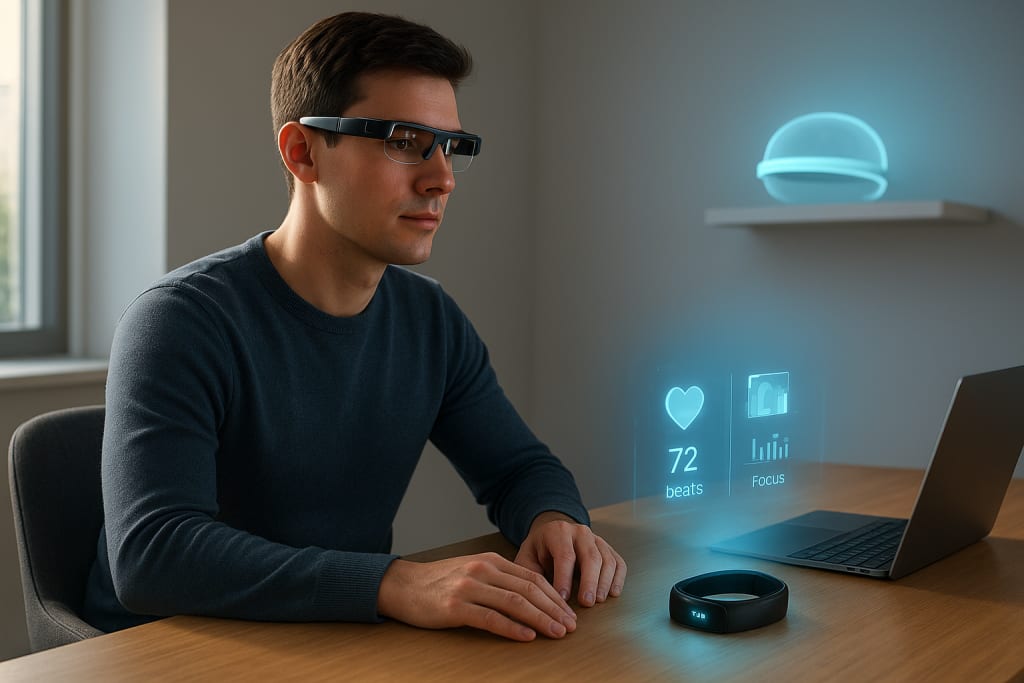
Artificial intelligence has shifted from being a background tool into something more personal, more immediate, and much closer to our bodies. The latest wave of AI-powered wearables—from sleek smart glasses to neurotechnology headbands and advanced fitness trackers—isn’t just about convenience. It’s about creating a constant feedback loop between human behavior and intelligent machines.
This movement represents a turning point. Instead of glancing at a phone or checking a screen, technology now works silently and continuously in the background, helping users anticipate problems, improve performance, and even reshape habits.
What Sets AI Wearables Apart?
Traditional wearables collect data. They count steps, measure heart rate, or track sleep. Useful, yes, but limited. AI changes everything.
By applying machine learning algorithms directly on-device, these tools can:
- Detect anomalies that human users might never notice.
- Provide predictions rather than just reports.
- Adapt recommendations in real time based on evolving data.
For instance, an AI fitness band might recognize subtle shifts in heart rate variability that indicate rising stress levels—long before the wearer consciously feels it. Or smart glasses might adjust display brightness and content flow depending on where the user is looking and how focused they appear.
In short, AI wearables move from being mirrors of past behavior to guides for future action.
Smart Glasses: A Second Layer of Reality
Smart glasses are quickly moving from novelty to necessity. Early versions often failed because they were bulky, distracting, or socially awkward. But the new generation of AI-driven eyewear has addressed many of these problems.
Key functions of modern smart glasses include:
- Real-time translation: Displaying spoken language as text right on the lens.
- Contextual information overlays: Directions, restaurant reviews, or work instructions appearing exactly when needed.
- AI-driven vision assistance: Identifying objects, faces, or hazards for users with impaired vision.
- Productivity tools: Hands-free task management, video conferencing, and data visualization.
The real power lies in contextual AI. Glasses don’t just show information—they interpret the environment and decide what matters most at a given moment. Imagine walking into a meeting and having the names, LinkedIn profiles, and previous conversations of attendees displayed discreetly in your field of view. That’s where smart glasses are headed.
Brain-Sensing Headbands: Turning Thought Into Data
Among the most intriguing developments in wearable tech are AI-powered EEG headbands. These slim devices sit lightly across the forehead and use sensors to capture brainwave patterns.
On their own, raw EEG signals are messy and difficult to interpret. This is where AI steps in. Machine learning models sift through the noise to identify usable patterns in cognition, stress, focus, and relaxation.
Applications already in play include:
- Focus training: Alerting the user when attention drifts, then guiding them back with subtle prompts.
- Meditation enhancement: Providing real-time audio or visual feedback on stress levels.
- Sleep optimization: Tracking not just movement but brain activity, giving a much clearer picture of rest quality.
- Medical research: Offering early signals for conditions like epilepsy or cognitive decline.
For the first time, consumers are gaining access to insights about their own brains that were previously confined to clinical environments. The potential here is enormous—not just for wellness but for education, therapy, and professional performance.
Fitness Trackers: From Passive Logs to Active Coaches
Fitness wearables have experienced the most rapid adoption, and AI is accelerating their usefulness. No longer limited to counting steps or calories, today’s devices function as personalized health ecosystems.
What AI fitness trackers now provide:
- Predictive analytics: Identifying patterns of fatigue or overtraining before injuries occur.
- Personalized recommendations: Suggesting when to push harder, when to rest, and even when to hydrate.
- Comprehensive metrics: Monitoring oxygen saturation, skin temperature, heart rhythm, and recovery cycles.
- Adaptive workout coaching: Tailoring exercise routines in real time based on current energy levels and past performance.
A traditional tracker shows you what you did. An AI tracker tells you what you should do next to optimize your body’s performance. For athletes, professionals, and even casual health-conscious users, that shift is profound.
Why AI Wearables Are Growing So Fast
The popularity of these devices isn’t accidental. Several converging forces are fueling their rise:
- Health consciousness – People want control over their wellness, and real-time feedback makes healthy living actionable.
- Remote and hybrid work – Tools that improve focus, productivity, and work-life balance are increasingly valuable.
- Advancing hardware – Sensors are smaller, cheaper, and more accurate, making high-level monitoring accessible to consumers.
- On-device AI – Algorithms no longer require constant cloud processing; wearables now run efficiently and securely at the edge.
- Cultural acceptance – Wearing tech is no longer unusual. Smartwatches paved the way, making glasses, headbands, and specialized trackers less intimidating.
Together, these trends make AI wearables one of the fastest-growing consumer technology categories.
The Challenges Standing in the Way
Despite the excitement, hurdles remain.
- Privacy and security: Devices that monitor brainwaves or health signals collect extremely sensitive data. Without strict safeguards, trust can erode quickly.
- Design and comfort: Users won’t wear devices that feel intrusive, heavy, or unfashionable. Design is just as important as function.
- Battery efficiency: Running AI models locally requires power. Extending battery life without sacrificing accuracy is a major engineering challenge.
- Regulation: As wearables edge closer to medical devices, oversight from health authorities will increase, slowing down some innovation.
These challenges don’t erase the momentum, but they do shape how quickly—and how responsibly—AI wearables will spread.
What the Future Might Look Like
The direction is clear: AI wearables are heading toward seamless integration. Instead of obvious gadgets, future devices will appear as ordinary accessories. Glasses may be indistinguishable from prescription eyewear. Bracelets may double as jewelry. Headbands could shrink into subtle patches or earbuds.
Beyond aesthetics, the ecosystem approach will dominate. A fitness tracker won’t just give feedback about exercise—it will sync with smart glasses that show recovery stats or a headband that tracks cognitive fatigue. Together, they will form a holistic intelligence network around the human body.
Long-term, AI wearables may evolve into preventative health tools, predicting illness before symptoms appear, or productivity amplifiers, helping users maintain peak focus with minimal burnout. The potential impact spans healthcare, education, workplace productivity, and even entertainment.
The rise of AI wearables signals more than just a technological trend. It represents a shift in the relationship between humans and machines. These devices are no longer external tools we check occasionally—they are becoming constant companions, guiding us toward healthier, more efficient, and more informed lives.
Smart glasses, cognitive headbands, and intelligent fitness trackers are leading the way. And as AI models become more powerful, more energy-efficient, and more personalized, the line between human intuition and machine intelligence will continue to blur.
The future of wearables isn’t about wearing technology. It’s about technology becoming a natural extension of ourselves.
About the Creator
Richard Bailey
I am currently working on expanding my writing topics and exploring different areas and topics of writing. I have a personal history with a very severe form of treatment-resistant major depressive disorder.
Keep reading
More stories from Richard Bailey and writers in 01 and other communities.
On-Device AI: How Smartphones and Laptops Are Becoming Smarter Without the Cloud
For decades, artificial intelligence felt like a distant technology—something that required enormous data centers and cloud servers to function. But the past few years have changed everything.
By Richard Bailey4 months ago in 01
These Billionaires Bet Big On GreenLand—After Trump Took Interest
Topline Just months after President Donald Trump first expressed interest in the United States possibly gaining control over Greenland, some of the richest people in the world—including Jeff Bezos, Bill Gates and Michael Bloomberg—began making strategic investments in the mineral-rich island.
By Dena Falken Esq3 days ago in 01
How, Too
Many people wonder how, too. You are not alone, and I am an expert. I will teach you how, too! First, you need to remit a small application fee and fill out an application describing the nature of your financial situation and how often payments will be made, as this will have great bearing on how well I teach you how, too.
By Harper Lewis3 days ago in Fiction




Comments
There are no comments for this story
Be the first to respond and start the conversation.