
The Power of Artificial Intelligence in Transforming Healthcare.
A new way of life....
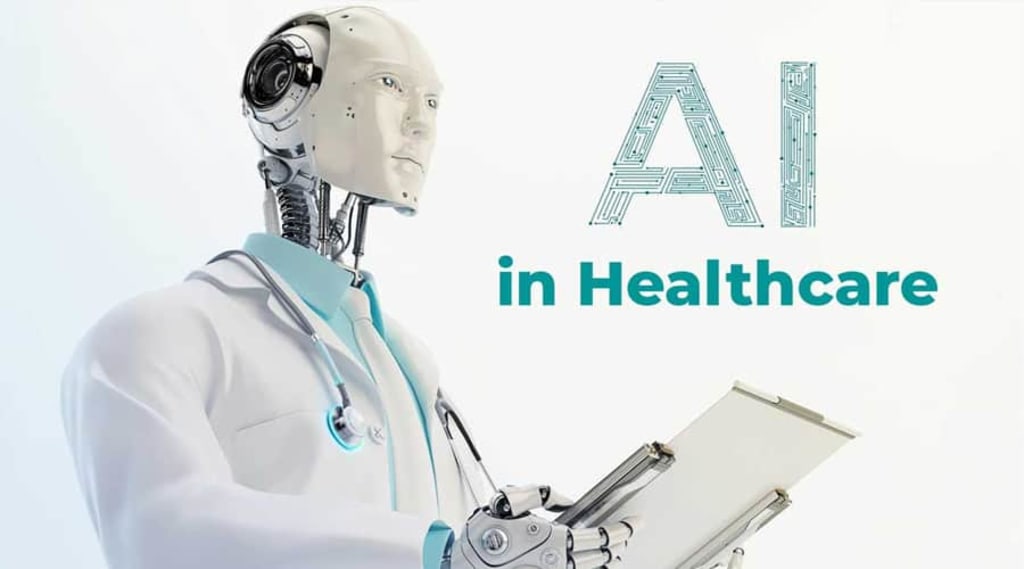
In recent years, the world has witnessed remarkable advancements in artificial intelligence (AI) technology, revolutionizing various industries and domains. One area where AI's potential has been significantly realized is healthcare. With its ability to analyze vast amounts of data, recognize patterns, and make predictions, AI is now playing a crucial role in transforming healthcare delivery, diagnosis, treatment, and patient outcomes. In this article, we will explore the power of artificial intelligence in revolutionizing the healthcare sector and the numerous benefits it brings to patients, medical professionals, and the overall healthcare system.
Enhanced Diagnostics and Precision Medicine
One of the most significant contributions of AI in healthcare lies in its potential to improve diagnostic accuracy and enable personalized medicine. AI algorithms can analyze medical records, imaging scans, and genetic data to identify patterns and correlations that human doctors might miss. By analyzing these vast datasets, AI can aid physicians in making more accurate and timely diagnoses, leading to better treatment plans and improved patient outcomes.
Precision medicine, an emerging field in healthcare, focuses on tailoring medical treatments to individual patients based on their genetic makeup, lifestyle, and environmental factors. AI-driven tools can sift through massive genomic datasets to identify genetic variations associated with specific diseases, thus enabling more targeted and effective therapies. This approach not only improves treatment outcomes but also reduces the risk of adverse reactions to medications.
Efficient Drug Discovery and Development
The traditional drug discovery process is expensive, time-consuming, and often fraught with setbacks. However, AI is streamlining this process by accelerating drug discovery and development. AI algorithms can analyze vast libraries of chemical compounds and predict their potential efficacy against specific diseases. This computational approach allows researchers to prioritize the most promising candidates for further investigation, ultimately speeding up the drug development timeline.
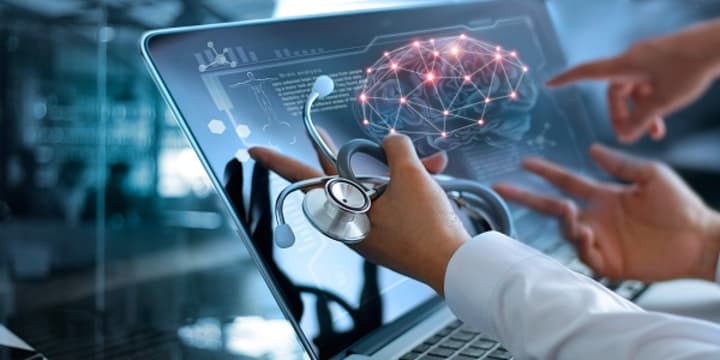
Furthermore, AI can analyze data from clinical trials to identify potential participants who are more likely to respond positively to new treatments. This not only expedites the recruitment process but also ensures that trial participants are more likely to benefit from the experimental therapies, improving the overall efficiency of the drug development process.
Virtual Healthcare Assistants and Telemedicine
AI-powered virtual healthcare assistants are revolutionizing patient care by offering personalized support and information to patients around the clock. These digital assistants can provide patients with real-time information about their health conditions, medication reminders, and lifestyle recommendations, fostering patient engagement and adherence to treatment plans.
Moreover, AI-driven telemedicine platforms are connecting patients and healthcare providers remotely, eliminating the need for physical appointments in many cases. Patients in rural or under served areas can now access quality healthcare from the comfort of their homes, reducing the burden on healthcare facilities and increasing overall accessibility to medical services.
Enhanced Healthcare Operations
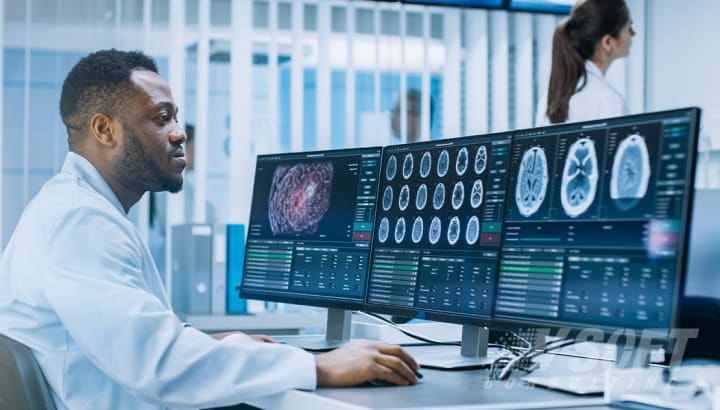
Beyond patient care, AI is streamlining healthcare operations and administrative tasks, leading to greater efficiency and cost savings. AI-powered systems can analyze patient data and predict hospital admission rates, allowing healthcare facilities to optimize resource allocation and staff scheduling.
Additionally, AI-driven chatbots can handle patient inquiries and appointment scheduling, freeing up administrative staff to focus on more complex tasks. These automated systems enhance patient satisfaction by providing quick responses and seamless scheduling, thereby improving the overall patient experience.
AI for Public Health and Disease Surveillance
Artificial intelligence is also proving instrumental in monitoring public health and disease surveillance. By analyzing vast streams of data from various sources, such as social media, internet searches, and sensor networks, AI can detect early signs of disease outbreaks and potential epidemics.

AI algorithms can track the spread of infectious diseases, identify high-risk areas, and predict disease trajectories, empowering public health officials to implement targeted interventions and contain outbreaks effectively. This proactive approach to disease surveillance is crucial in safeguarding public health and mitigating the impact of pandemics.
Ethical Considerations and Challenges
While the potential of AI in healthcare is vast, it also comes with ethical considerations and challenges. Data privacy and security are paramount, as AI algorithms rely heavily on patient data. Ensuring that sensitive health information remains confidential and protected is critical to maintaining patient trust in AI-driven healthcare solutions.
Another challenge is the potential bias in AI algorithms. If the training data used to develop AI models is biased, it can lead to discriminatory decisions and inequitable healthcare practices. Addressing these biases requires ongoing vigilance and responsible AI development practices.
Conclusion
The integration of artificial intelligence into healthcare is transforming the way we approach medical diagnosis, treatment, and patient care. From enhanced diagnostics and precision medicine to streamlining drug discovery and development, AI is revolutionizing every aspect of the healthcare ecosystem. As we move forward, it is vital to address the ethical challenges and ensure that AI is leveraged responsibly to improve patient outcomes, reduce healthcare costs, and ultimately create a healthier world for all. Embracing AI in healthcare is not just a technological advancement; it is a paradigm shift that has the potential to save countless lives and make healthcare more accessible and effective than ever before.
About the Creator
Keep reading
More stories from Shirley Oyiadom and writers in 01 and other communities.
The Transformative Power of Medication
In the fast-paced and often chaotic world we live in, finding moments of calm and tranquility can be challenging. Many people search for ways to cope with stress and anxieties, turning to various methods and practices. One such practice that has stood the test of time and continues to gain popularity is meditation. Far from being a mere trend, meditation has proven itself to be a powerful ritual with transformative effects on the mind and spirit.
By Shirley Oyiadom3 years ago in 01
Grocery App Development Cost: Your 2026 Price Guide
Building a software product today feels like trying to hit a moving target while riding a unicycle. I reckon you have noticed how fast things change. Just a few years ago, we were happy with a simple list and a checkout button.
By Sherry Walker7 days ago in 01




Comments (1)
Telemedicine has been amazing! Not because I don't want to show up, but because I can actually share whatever I've been thinking about much more clearheaded than I can in the office. My healthcare provider and I can chat and come up with some solutions before I have to experience the tedious office visit. I also read tele-dental is starting to be on the rise, and I'm interested for how AI could make things like home-imaging (or filling in the blanks that cameras don't capture) a possibility. Great story Shirley!!!