
The Mobile Ore Crusher: Revolutionizing Mineral Processing On-Site
reshaping efficiency and flexibility in mineral processing


For centuries, the extraction and processing of ores – the vital raw materials powering our industries – followed a rigid pattern: mine the rock, haul it vast distances, and process it at a centralized, stationary crushing plant. This model, while effective, came with significant logistical burdens, high operating costs, and environmental impacts. Enter the mobile ore crusher, a game-changing innovation that brings the crushing power directly to the heart of the mining operation, reshaping efficiency and flexibility in mineral processing.
What Exactly is a Mobile Ore Crusher?
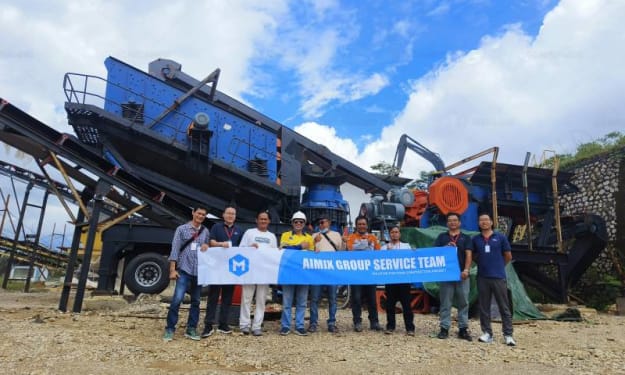
At its core, a mobile type ore crusher is a self-propelled, track or wheel-mounted machine designed to crush large rocks and mineral-bearing ores directly at the extraction site. Unlike its stationary counterpart, which requires massive foundations, extensive infrastructure (like conveyors and feeders), and permanent relocation of material, a mobile unit integrates the primary crushing stage (and often secondary or tertiary stages) onto a single, maneuverable chassis. Think of it as a powerful, compact processing plant on wheels or tracks.
Key Components and How It Works:
Feeder: Receives the raw, blasted ore directly from the mine face or an excavator/loader, regulating the flow into the crusher.
Crusher: The heart of the machine. Common types include:
Jaw Crushers: Ideal for primary crushing, using compressive force between a fixed and moving jaw plate to break large rocks.
Impact Crushers (Horizontal or Vertical Shaft): Use high-speed impact to shatter rock, excellent for softer ores or producing more cubical aggregates.
Cone Crushers: Often used for secondary crushing, utilizing a gyrating mantle within a concave bowl to crush rock progressively.
Hybrid Crushers: Some mobile units combine crusher types (e.g., jaw + cone) for multi-stage processing on a single chassis.
Conveyors: Transport the crushed material away from the crusher – either to a stockpile directly beside the unit, onto a waiting truck, or to the next processing stage (like a mobile screen).
Power Unit: Typically a robust diesel engine, sometimes hybrid (diesel + electric), or purely electric if grid connection is available on-site. Provides power for propulsion and crushing.
Chassis: Heavy-duty tracks or wheels provide mobility and stability on often rough and uneven terrain. Tracked units offer superior traction and minimal ground pressure.
Control System: Advanced PLC (Programmable Logic Controller) systems allow operators to monitor and control crushing parameters (feed rate, crusher settings) from an ergonomic cabin or even remotely.
The Compelling Advantages: Why Go Mobile?
The shift towards mobile ore crushing is driven by undeniable benefits:
Unmatched Flexibility and Mobility: This is the defining advantage. Crushers can be quickly repositioned as the mining face advances, eliminating the need for constant long-distance trucking of raw ore. They can be moved between different pits or satellite deposits within a large mining lease with relative ease.
Significant Cost Reduction:
Reduced Haulage Costs: By crushing ore directly at the source, the volume of material needing transport is drastically reduced (crushed rock is denser and takes less space than large boulders). Fewer trucks mean lower fuel, maintenance, and labor costs.
Minimal Infrastructure Investment: No need for costly foundations, extensive conveyor systems, or permanent structures associated with fixed plants.
Lower Capital Expenditure: Mobile crusher plant can sometimes represent a lower initial investment compared to building a comparable stationary plant, especially for smaller or shorter-term projects.
Enhanced Operational Efficiency: Direct feeding from the excavator or loader minimizes double-handling. Setup and relocation times are measured in hours or days, not weeks or months, maximizing productive mining time.
Reduced Environmental Impact: Fewer trucks hauling raw ore over long distances translates directly into lower fuel consumption, reduced greenhouse gas emissions, less dust generation on haul roads, and less noise pollution for surrounding areas. The smaller footprint also minimizes site disturbance.
Ideal for Diverse Applications:
Open-Pit Mining: Following the mining face efficiently.
Quarrying: Aggregates production where deposits shift.
Contract Crushing: Service providers can bring crushing capacity to different client sites.
Smaller or Remote Deposits: Where building a fixed plant is economically unviable.
Recycling: Crushing concrete, asphalt, and demolition debris on-site.
Heap Leach Operations: Crushing ore directly onto leach pads.
Applications Across the Mining Spectrum:
Mobile ore crushers are versatile tools finding use in diverse mineral sectors:
Copper/Gold Mines: Crushing run-of-mine (ROM) ore for direct feeding into SAG/Ball mills or for heap leach stacking.
Iron Ore Operations: Primary crushing of hematite or magnetite before transport or further processing.
Coal Mining: Preparing ROM coal for transport or washing plants.
Aggregate Quarries: Producing crushed stone, sand, and gravel directly at the extraction point.
Limestone Quarries: Crushing limestone for cement production or agricultural lime.
The Future is Mobile and Smart:
The evolution continues. Future trends point towards:
Larger Capacities: Machines capable of handling 500+ tonnes per hour are becoming more common.
Greater Integration: Units combining primary, secondary crushing, and screening on a single chassis or in seamless tandem setups.
Enhanced Automation & Remote Control: Reducing operator exposure to dust and noise, improving safety and consistency.
Hybrid and Electric Drives: Further reducing fuel consumption, emissions, and operating noise, especially viable with advancing battery technology.
Advanced Telematics: Real-time performance monitoring, predictive maintenance, and optimization via data analytics.
Conclusion:
The mobile ore crusher is far more than just a piece of machinery; it represents a fundamental shift in how we approach mineral processing. By eliminating the tyranny of distance and bringing powerful crushing capabilities directly to the ore body, it delivers tangible benefits in cost savings, operational efficiency, flexibility, and environmental stewardship. As technology advances, making these units more powerful, efficient, and intelligent, their role as the indispensable workhorses of modern, agile mining and quarrying operations will only continue to grow. For any operation looking to optimize its mineral processing flow and reduce its logistical footprint, the mobile ore crusher is an innovation impossible to ignore.
About the Creator
Andamine
Andamine is dedicated to offering customized crushing equipment solutions tailored to meet the diverse needs of our clients’ projects, helping you achieve efficient, sustainable, and cost-effective production goals.
How to Access Cash Without Selling Your Digital Assest
You’ve built a strong crypto portfolio that’s happily compounding. The next thing you know, a real estate closing, an unexpected business expense, or a personal emergency demands fast cash. What sounds like a doomsday is, in reality, a scenario many holders face far more often than they’d like. That’s when you face a choice: how to gain access to instant liquidity without dumping your digital assets?
By Kiran Butt4 days ago in 01
Data Aggregation Techniques for Effective Analytics
Data alone separates opinion from insight. Many organizations proclaim to be data-driven, yet remain tangled in fragmented spreadsheets, contradictory dashboards, and reports that inspire little confidence. The challenge isn’t quantity—it’s organization. Effective data aggregation turns scattered numbers into decisions you can truly trust.
By Swiftproxya day ago in 01
This Is What I Do When People Throw Rocks At Me
Rocks have been thrown at me for a greater part of my life. Some have been small and missed hitting me. When people don't get a reaction from me, they throw bigger rocks with a better aim. Many have been hurled at me with precision over the years. For a long time, I thought my only options were to dodge them or be crushed by them.
By Margaret Minnicks4 days ago in Confessions



Comments
There are no comments for this story
Be the first to respond and start the conversation.