
The Max Headroom Broadcast Intrusion: America’s Creepiest TV Hack
Moonlight Monday Edition
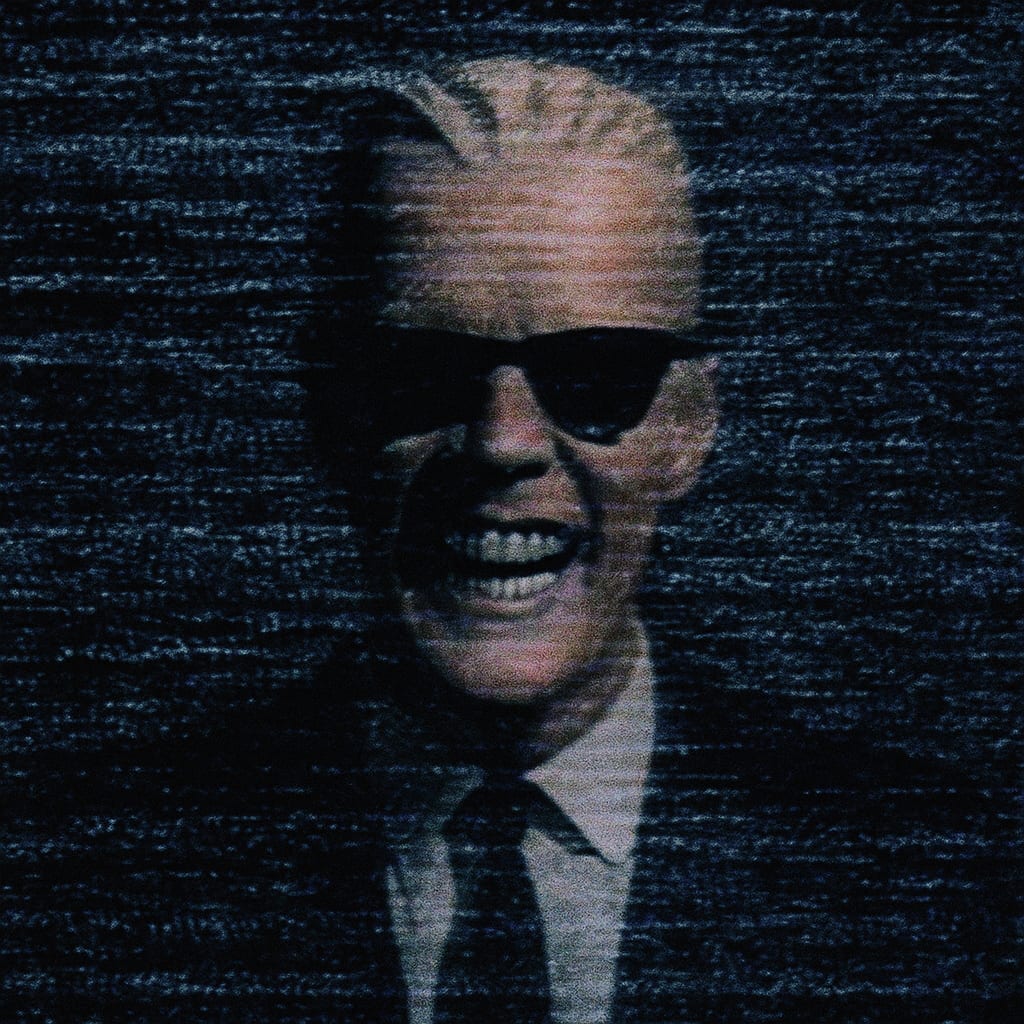
"In 1987, Chicago’s airwaves were hijacked by a masked figure in a Max Headroom mask. Thirty-seven years later, nobody knows who...or why."
The Night the Signal Broke
It was November 22, 1987. Chicago. The Bears had just beaten the Detroit Lions, and football fans were still buzzing as WGN’s sportscaster Dan Roan began his post-game recap. Living rooms across the city were tuned in, bowls of chips half-empty, beers sweating on coffee tables.
Then the screen flickered. Static. Lines rolling. A distorted hum. And suddenly, there he was: Max Headroom.
Not the real Max Headroom... the glitchy, neon-tinted TV personality from Coke commercials and sci-fi satire. No, this was a grotesque imitation: a person in a rubber mask and sunglasses, jerking and weaving in front of a sheet of corrugated metal.
It lasted only 20 seconds before WGN technicians yanked the signal back. Sportscaster Roan, rattled, stared into the camera and muttered: “Well, if you’re wondering what’s happened, so am I.”
But the nightmare wasn’t over.
Two hours later, on PBS affiliate WTTW Channel 11, it happened again. Only this time, the interruption ran for a full 90 seconds. Long enough to etch itself permanently into urban legend.
The Second Invasion
During an episode of Doctor Who, fans saw the time-traveling TARDIS fade away… replaced by the nightmare figure.
The Max Headroom imposter swayed and moaned in a distorted, buzzing voice. His words were fractured, nonsense, laced with inside jokes no one has fully deciphered to this day:
- “That does it… he’s a freakin’ nerd…”
- “I still see the X!”
- “Catch the wave!” (a Coca-Cola slogan from Max Headroom ads).
At one point, he hummed the theme from Clutch Cargo. At another, he waved a can of Pepsi, mocking Max Headroom’s Coca-Cola sponsorship.
Then it got darker.
He bent over, pulled out a flyswatter, and moaned about “getting punished.” An accomplice, dressed as a French maid, entered the frame. The imposter dropped his pants. The maid spanked his bare backside with the flyswatter.
Static returned. The screen went black. Doctor Who resumed as if nothing had happened. But in Chicago, thousands of viewers sat in stunned silence.
Why It Was So Disturbing
This wasn’t a ghost story. This wasn’t aliens. This was real technology hijacked in real time.
In the 1980s, broadcast television wasn’t supposed to be hackable. It required serious technical knowledge and expensive gear to overpower a TV station’s transmitter. The fact that someone pulled it off twice in one night, meant the intruder was either an inside man or a tech genius with access to broadcast equipment.
And it wasn’t just the hack. It was the content.
The jerky, uncanny mask. The distorted, buzzing voice. The references that went nowhere. The sudden turn into sexual punishment. It felt like a transmission from somewhere just outside sanity... a glimpse into a world we weren’t meant to see.
The Investigation
The FCC and FBI immediately launched an inquiry. Broadcast hijacking was (and still is) a federal crime, punishable by fines up to $100,000 and a year in prison.
Technically, here’s how it could have worked:
- By using a powerful microwave transmitter, the intruders could override the station’s studio-to-transmitter link (STL), the signal beamed from the studio to the broadcast tower.
- Chicago had multiple high-rise transmitters, but they were still reachable by line-of-sight microwave gear.
- The perpetrators needed access to expensive broadcast equipment, not something you just buy at Radio Shack in 1987.
Despite this, authorities hit dead ends.
WGN had stronger security and backup systems, which is why the first intrusion was cut short. WTTW, a public broadcaster with looser controls, wasn’t able to recover until the signal itself faded.
The FCC scoured the city for suspicious microwave transmissions that night. They found nothing.... To this day, no one has ever been caught.
Theories & Suspects
Plenty of theories have been floated over the years:
A Rogue Broadcast Engineer
Someone with direct access to a transmitter or STL relay. This fits the profile—knowledge, equipment, and motive (a prank against corporate TV).
Disgruntled WGN Employee
Some point to the jabs about “nerds” and “I still see the X” as inside jokes referencing WGN staff. But if so, why strike PBS afterward?
Performance Art Terrorism
A radical artist making a surreal statement about consumerism, corporate media, or Coke vs. Pepsi. This theory explains the parody—but not the spanking.
A Group, Not a Lone Wolf
The presence of a French maid accomplice suggests a small team. Coordinating multiple people in 1987, with live hijacking equipment, was risky... but possible.
The Technical Student Theory
Chicago’s universities had electronics clubs and ham radio enthusiasts capable of this stunt. Some rumors point to Northwestern or University of Illinois students. No proof ever surfaced.
The Lasting Terror
Part of what makes the Max Headroom hack so unnerving is that it’s unsolved.
Unlike urban legends or creepypasta, this one is real and on tape. You can watch it right now and feel the same unsettling chill Chicagoans felt in 1987.
It’s not polished like modern internet pranks. It’s jagged, raw, glitchy. The imposter doesn’t look like a character, he looks like someone hiding behind a mask, enjoying the fact that you can’t look away.
The references make no sense, but they feel purposeful, like coded messages. Even decades later, internet sleuths pick apart every word, every twitch of the flyswatter, desperate for meaning.
But maybe the meaning is this: the intrusion itself.
Television was supposed to be controlled, safe, corporate. And for two minutes in 1987, someone tore the curtain and shouted, “I can reach you. Anywhere. Anytime.”
Legacy in the Digital Age
The Max Headroom hack has become legend in the hacker community... a symbol of audacity, anonymity, and chaos.
- It’s been referenced in Mr. Robot and countless YouTube documentaries.
- Internet “creepypasta” communities hail it as a precursor to ARGs (alternate reality games).
- Security experts still use it as a case study: if a 1980s prankster could hijack TV signals, what could a state-level hacker do today?
And the most unnerving part? The culprits are probably still alive. They may even tell the story at parties, laughing about the time they scared an entire city, knowing the law can no longer touch them.
A Transmission From the Shadows
Picture it. Late at night. You’re watching TV, half-asleep. Static rolls. The screen twists. And then, someone is looking at you. Behind a mask. Behind a sheet of corrugated metal. You don’t know who they are. You don’t know what they want. But for 90 seconds, they’re in control. And you’re not...
About the Creator
Veil of Shadows
Ghost towns, lost agents, unsolved vanishings, and whispers from the dark. New anomalies every Monday and Friday. The veil is thinner than you think....
Keep reading
More stories from Veil of Shadows and writers in 01 and other communities.
The Werewolf Trials of Germany – Real Court Records of the Beast Within
When the Moon Rose Over Europe In the late 1500s, Germany was no stranger to shadows. Plague still haunted the alleys, witches burned on pyres, and the forests whispered with legends older than Christendom itself.
By Veil of Shadows5 months ago in Horror


Comments
There are no comments for this story
Be the first to respond and start the conversation.