
The Werewolf Trials of Germany – Real Court Records of the Beast Within
Freaky Friday Edition

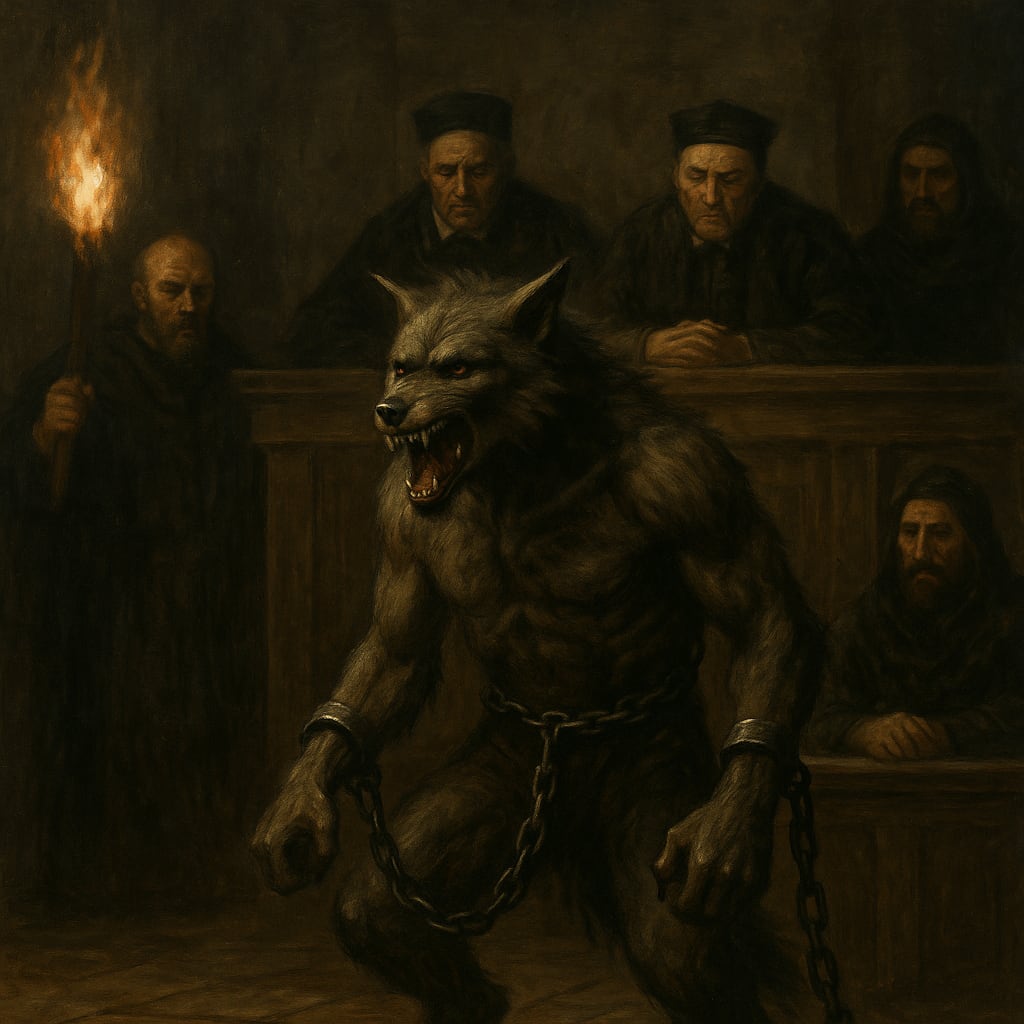
When the Moon Rose Over Europe
In the late 1500s, Germany was no stranger to shadows. Plague still haunted the alleys, witches burned on pyres, and the forests whispered with legends older than Christendom itself.
But nothing gripped the German heart with more terror than the thought that the man next door; the farmer, the miller, even the kindly shepherd, might not be a man at all. They might... under the silver face of the moon... be a wolf.
And unlike witches, this was no mere rumor whispered over cauldrons. In Germany, there were trials. Real court records. Judges, witnesses, and executioners who swore under oath that werewolves stalked the land.
The First Howls of Panic
The werewolf was no new tale. Across Europe, from France to the Carpathians, stories spoke of humans turning beast under the moon’s pull. But in Germany and the Holy Roman Empire, the hysteria peaked.
Why? Because the forests here were dense, dark, and full of real wolves. Because war, famine, and disease made people believe Satan himself was hunting the weak.
And because the courts were all too ready to listen when frightened villagers pointed trembling fingers and cried:
"He is no man—he is a wolf!"
The Case of Peter Stumpp – The Werewolf of Bedburg
The most infamous of all German werewolf trials unfolded in 1589, in the town of Bedburg, near Cologne.
Peter Stumpp was a wealthy farmer, well-liked in the community. But behind his respectable mask lurked whispers of mutilated livestock, missing children, and a figure seen slinking through the woods... a giant wolf with human eyes.
When villagers finally captured him, Stumpp was tortured on the rack until his body snapped and his words spilled out like blood. What he confessed would turn Bedburg into a nightmare.
- He admitted to practicing black magic since age 12.
- He claimed the Devil gave him a wolfskin belt that let him transform into a wolf at will.
- In this form, he stalked the countryside, killing 14 children and two pregnant women, eating their flesh raw.
- He confessed to incest with his daughter, a pact with the Devil, and cannibalism that made the judges blanch.
The trial records state he ripped fetuses from wombs, drank blood, and even devoured his own son. Was this truth? Tortured fantasy? Or the invention of fearful judges looking for a scapegoat? It didn’t matter...
Stumpp was sentenced to the wheel, one of the most brutal deaths in European law. His flesh was torn with hot pincers, his limbs shattered with iron, his head struck off, and his body burned to ash. His mistress and daughter were executed alongside him.
To the villagers, it was justice. To us, it is a chilling glimpse of how far werewolf hysteria could run. The entire thing smacks of the Salem Witch Trials.
The Trials Multiply
Once the scent of wolves filled the air, more trials followed. From the 16th to 18th centuries, dozens of Germans were executed as werewolves, their cases preserved in grim legal Latin.
- 1591, Jülich: A man named Hans confessed to being a wolf and eating children after his trial by torture. He was burned alive.
- 1603, Greifswald: Several men were accused of forming a werewolf band, terrorizing the countryside. Records state they claimed to use salves and charms to change shape.
- 1650s, Saxony: Villagers swore that wolf attacks stopped immediately after an accused werewolf was executed—proof enough for the court that beast and man were the same.
And then came one of the strangest cases of all.
Thiess of Kaltenbrunn – The Good Werewolf
In 1692, an 80-year-old man named Thiess of Kaltenbrunn stood trial in Livonia, then part of the Holy Roman Empire. The court expected the usual story: Devil pacts, blood feasts, and cannibalism.
But Thiess told a tale so strange it still puzzles historians today. Yes, he said, he was a werewolf. But no, he did not serve Satan. He and other werewolves were “Hounds of God,” blessed to fight witches and demons in Hell.
Three nights a year, they descended into the underworld, battling evil to ensure the harvests remained plentiful. The court was horrified. This wasn’t a confession, it was heresy of a different color. They charged Thiess with blasphemy and sentenced him to flogging and banishment. A werewolf who claimed to fight for God? It turned the entire belief on its head.
The Wolf Belts and Salves
German trial records obsess over the tools of transformation. Tortured suspects spoke of:
- Wolfskin belts or cloaks gifted by the Devil. When worn, the body turned to fur and the soul to hunger.
- Magic salves and ointments rubbed into the skin, burning hot until the flesh split and fur grew.
- Pacts signed in blood, binding man to beast until death.
These objects were never found, because torture makes promises the body can’t keep. But to judges steeped in fear, the very idea of wolf belts and hellish salves was enough to sign death warrants.
Why Werewolves, Not Just Witches?
Historians point out that witch trials often blurred into werewolf trials. Witches were accused of flying and feasting with demons; werewolves were accused of prowling and eating children.
But the wolf was different. The wolf was hunger. It was plague in fur, famine on four legs. Real wolves had ravaged Europe for centuries, dragging off children from villages. It wasn’t hard to believe that man and wolf were one.
And so, unlike witches, who supposedly corrupted souls, werewolves were believed to corrupt the very flesh of humanity.
The End of the Howl
By the 18th century, the werewolf trials dwindled. Science began to push back against superstition. Physicians argued that werewolves were really the delusions of the insane, the desperate confessions of the tortured, or misunderstandings of rabid wolf attacks.
But in the villages, the fear lingered. Mothers still warned children not to wander in the woods on full moons. Shepherds still muttered charms when their flocks grew restless at dusk.
The wolf had left the courtroom, but it had not left the night.
What the Records Leave Us
The werewolf trials of Germany are not fairy tales. They are ink on parchment, real confessions, real deaths.
And they remind us of three truths:
- Fear feeds the fire. When wolves howled and children vanished, people demanded answers—even if the answers were soaked in blood.
- The line between myth and law is thinner than we like to admit. In a world of terror, the courts themselves became part of the legend.
- The wolf is us. Whether Peter Stumpp truly believed his own story or was driven to say it under torture, the hunger, the violence, the madness—that was human.
The Wolf Still Walks
Tonight, step outside under the full moon. Feel how it lights the trees in silver, how it sharpens every shadow. Imagine the old forests of Germany, where men once swore wolves walked upright, spoke in human voices, and confessed to crimes beyond imagining.
Listen closely. You may hear nothing but the wind. Or you may hear claws in the leaves. And when you do, remember the names in the records, the burned bodies, the whispered legends:
The wolf was not just in the forest... The wolf was in the courtroom... The wolf was in us all...
About the Creator
Veil of Shadows
Ghost towns, lost agents, unsolved vanishings, and whispers from the dark. New anomalies every Monday and Friday. The veil is thinner than you think....
Keep reading
More stories from Veil of Shadows and writers in Horror and other communities.
The Character Who Isn’t on Payroll
Posted to r/nosleep I work at Disneyland. I won’t say my department, but I’m close enough to characters that I see schedules, handoffs, rotations—the boring, logistical side of “magic.” Which is why this has been driving me insane.
By V-Ink Stories4 days ago in Horror




Comments (1)
This was quite an interesting read! Enjoyed learning more about the folklore behind werewolves.