
The Luminescent Revolution: How Next-Gen Screens are Redefining Human Interaction
From folding glass to transparent cities, exploring the tech that's making the invisible digital world tangible in 2026.

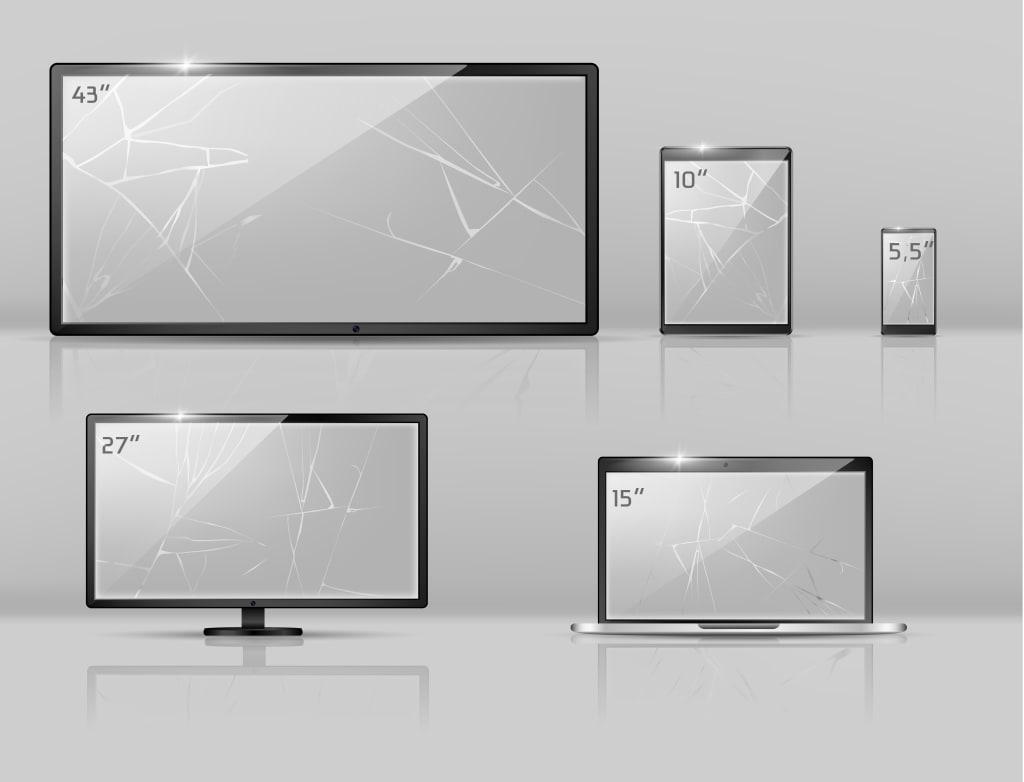
As we move through the early months of 2026, the boundary between our physical reality and the digital world is becoming increasingly thin. We are no longer just looking at screens; we are looking through them, folding them, and interacting with them as if they were natural extensions of our environment. From the bustling tech corridors of Noida to the high-tech hubs of Seoul and Silicon Valley, the way we consume visual information is undergoing a profound transformation. This evolution is driven by several key display industry trends that have reached critical mass this year, moving past the experimental phase and into the hands of everyday users. We are witnessing a shift from passive panels to intelligent, adaptive surfaces that respond to our presence, our context, and our environmental needs.
The MicroLED Breakthrough: The New Gold Standard
For years, the conversation was dominated by the rivalry between LCD and OLED. However, in 2026, the industry has found its new champion: MicroLED. Unlike OLED, which uses organic compounds that can degrade over time, MicroLED uses inorganic, microscopic LEDs that provide the same "perfect blacks" without the risk of burn-in or color shifting.
The technical superiority of these panels in 2026 is undeniable. We are now seeing consumer-grade MicroLED televisions reaching sizes that were once reserved for movie theaters, all while maintaining a profile thinner than a smartphone. These displays are achieving near-perfect color accuracy, a feat that allows for a visual experience where the contrast ratio is essentially infinite. This makes images appear three-dimensional and lifelike, providing a level of immersion that traditional screens simply cannot match.
The Foldable and Rollable Era: Form Follows Function
The days of the "rigid rectangle" are officially over. By the start of this year, foldable devices moved from being a luxury status symbol to a standard professional tool. However, the true story of 2026 is the rise of rollable and tri-fold formats.
Tri-Fold Innovation: We are now seeing devices that unfold twice, transforming a standard smartphone footprint into a full-sized tablet. This allows for a desktop-class multitasking experience that still fits comfortably in a pocket.
Rollable Displays: Perhaps more impressive are the rollable screens now appearing in high-end laptops and automotive dashboards. These displays can retract into a compact motorized housing, appearing only when needed.
This flexibility is made possible by radical advances in the materials used for the screen's substrate. In 2026, these panels are engineered to be so resilient that they can bend at a radius thinner than a credit card without any risk of structural failure or pixel degradation. This mechanical durability has finally solved the "crease" problem that plagued early foldable models, providing a perfectly smooth surface regardless of how many thousands of times the screen is opened and closed.
Transparency: The Rise of the "Invisible" Interface
One of the most visually stunning developments of 2026 is the mainstreaming of transparency. We are seeing a massive surge in Transparent OLED and transparent MicroLED panels being integrated into the very architecture of our cities.
In retail environments, store windows are being replaced with interactive displays that show product specifications, prices, and even "virtual try-on" overlays, all while allowing customers to see the physical products inside. In the automotive sector, "Smart Windshields" are now standard in premium models. These systems project critical navigation and safety data directly into the driver’s line of sight, blending digital markers seamlessly with the physical road ahead.
The beauty of this technology in 2026 is its "Black State" transparency. When the pixels are turned off, the panel is almost entirely clear, appearing like a standard sheet of high-quality glass. This allows architects to build "media facades" that serve as high-definition screens by night and clear, natural windows by day.
AI and the "Cognitive" Screen
A display in 2026 is no longer a "dumb" output device. It is now a highly sensitive input device. Most premium panels today are equipped with integrated sensors hidden directly beneath the display surface.
This has birthed the era of Cognitive Displays. These screens use AI to:
Track Attention: If the screen detects that you have looked away, it automatically dims or pauses content to save energy.
Personalize Context: In public spaces, digital signage can now detect the general demographic of the audience—such as age or even mood—and instantly adjust the content to be more relevant to the people standing in front of it.
Real-Time Enhancement: AI-driven chipsets now use deep learning to reconstruct low-resolution legacy content into crisp, high-definition quality by predicting pixel structures in real-time.
Sustainability and the Circular Economy
As environmental regulations tighten globally, the industry has been forced to move away from the "disposable" model of the past decade. 2026 marks the year that Circular Design became a core requirement for all major manufacturers.
We are seeing a move away from toxic adhesives toward modular assemblies. This means that if a single component fails, it can be replaced without throwing away the entire panel. Furthermore, the use of recycled materials and biodegradable substrates has become standard in the digital signage sector.
Energy efficiency has also reached new heights. New e-paper solutions have evolved from simple black-and-white readers to full-color, high-refresh-rate displays that consume power only when the image changes. For static information like bus schedules or menu boards, this has drastically reduced electricity consumption compared to traditional screens.
The Outlook for Noida and the APAC Region
The Asia-Pacific region continues to be the powerhouse of this sector, but with a new twist. We are seeing a shift from centralized global manufacturing to a more regionalized approach. In India, specifically in the Noida-Greater Noida corridor, significant investments have been made in assembly and testing facilities for these next-gen panels. This localized capability is crucial for reducing supply chain risks and meeting the specific needs of the massive Indian consumer base, particularly in the growing "premium" segment.
The Bottom Line: A New Vision
The visual landscape of 2026 is one of seamless integration. Whether it’s a screen that rolls out of your desk, a windshield that guides your drive, or a television that delivers colors more accurate than ever before, we are no longer just selling pixels—we are selling experiences. We are entering an era where technology doesn't sit on top of our lives; it disappears into them.
About the Creator
Rahul Pal
Market research professional with expertise in analyzing trends, consumer behavior, and market dynamics. Skilled in delivering actionable insights to support strategic decision-making and drive business growth across diverse industries.
TikTok Outages
## What Are TikTok Outages and Why Are They Happening TikTok outages refer to times when the TikTok app or its features stop working properly for users around the world. These issues can range from parts of the app not loading correctly to complete service interruptions where users cannot access their accounts, load videos, comment, search, or interact with the platform. Recently, thousands of users reported problems early Sunday morning with TikTok not functioning as expected, leaving many confused and frustrated about whether the problem was widespread or just affecting their device. Reports indicated significant user complaints about feeds not refreshing, comments and bookmarks failing to load, and difficulty accessing content across major U.S. cities during the disruption.
By America today 3 days ago in 01
The Battery of Trust: How Phone Charging Habits Relate to Honesty in Location Sharing
Hey there. Over years of building location-sharing tools, I've noticed a pattern that rarely gets discussed: the link between a phone's battery life and the health of a relationship built on digital trust. It sounds odd, right? But think about it. The most common technical excuse for a location tracker failing is, "My phone died." While sometimes true, this dead battery can often be a symptom, not just a cause—a digital tell that signals a deeper disconnect.
By Olivia Martinezabout 21 hours ago in 01
The Duelist
The rays of a dying red sun flashed against the onrushing blade. The grey beards say the key to dueling lies in size, speed, reach, righteous fury, whatever the person in front of them pays them to say. Matteo knew better than any it was none of these and had an undefeated record on these sands to prove it.
By Matthew J. Fromm3 days ago in Fiction



Comments
There are no comments for this story
Be the first to respond and start the conversation.