
The DNA of Tomorrow: Why the Data Storage Industry is Going Biological
How Molecular Science is Solving the Global Information Crisis by Turning the Code of Life into the Ultimate Digital Vault

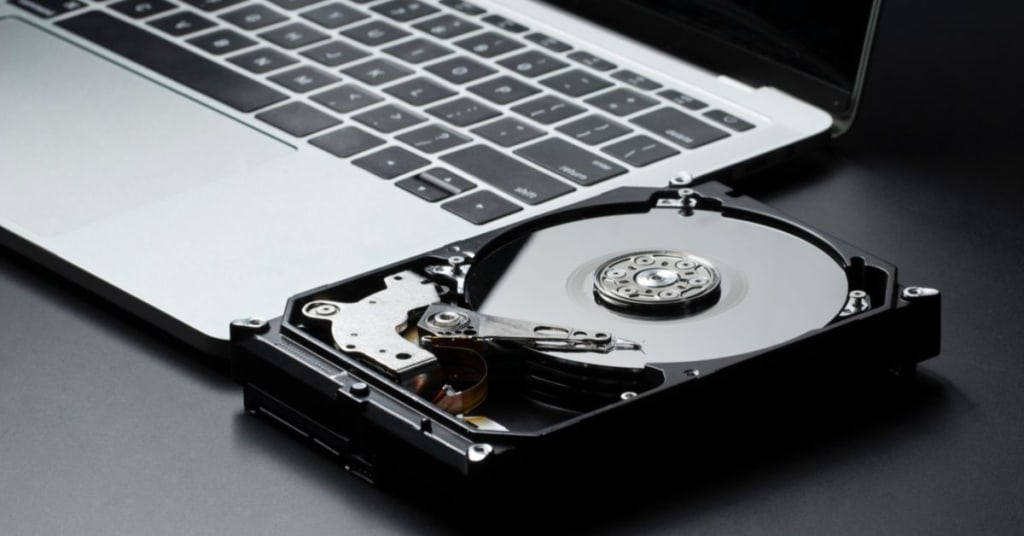
As we navigate the mid-way point of 2026, the global digital landscape is grappling with a paradox: we are creating data at an exponential rate, yet our physical capacity to house it is reaching a hard limit. With the total volume of global information expected to surpass 240 zettabytes by the end of this year, the infrastructure that underpins our modern existence is being stretched to its breaking point. To understand the gravity of this moment, one must look at the current data storage industry trends that are forcing a departure from traditional hardware. We are witnessing a transition from the "Silicon Age" to the "Biological Age," where the very code that builds life—DNA—is being repurposed to build our digital archives. This isn't just a niche scientific experiment; it is the strategic pivot of a global industry looking for a way to survive the data explosion.
The Silicon Ceiling: Why We Need a New Medium
For decades, the data storage industry relied on the steady progression of magnetic and flash memory. However, in 2026, we have encountered what experts call the "Silicon Ceiling." Traditional storage media like Hard Disk Drives (HDDs) and Solid State Drives (SSDs) are struggling to keep up with the demands of massive AI training sets and high-fidelity spatial computing for three critical reasons:
The Space Constraint: To store the world’s data in 2026 using current server technology, we would need to cover vast swaths of land with data centers, consuming space that is desperately needed for agriculture and urban development.
The Energy Crisis: Data centers now consume roughly 4% of global electricity. The cooling requirements alone for spinning disks and high-performance flash arrays are becoming an ecological and financial liability.
The Longevity Gap: Most digital media is surprisingly fragile. A typical SSD or magnetic tape begins to lose data integrity within a decade. In a world where we need to preserve human knowledge for centuries, the constant cycle of "migrating" data to new drives every few years is a multi-billion dollar waste of resources.
DNA offers a solution that evolution has been refining for billions of years. It is ultra-dense, incredibly stable, and requires virtually no power to maintain its state once written.
How Digital Data Becomes Biological
The process of moving from binary (0s and 1s) to biocode (A, C, G, and T) is a marvel of 2026 engineering. Instead of magnetic polarities or electrical charges, we use the four nucleotide bases of DNA—Adenine, Cytosine, Guanine, and Thymine—to represent information.
The mathematical potential for this medium is staggering. When we compare the volumetric density of biological storage to the best flash memory available today, the gap is massive:
In practical terms, this means that the entire digital output of the human race since the dawn of time could theoretically be stored in a volume of DNA no larger than a few liters of liquid.
Defining Trends: What is Moving the Needle in 2026?
The data storage industry is currently being shaped by three pivotal trends that have moved DNA storage from the lab to the enterprise:
1. The Breakthrough in Enzymatic Synthesis
Until recently, the biggest hurdle was the cost of "writing" the DNA. Traditional chemical synthesis was slow and produced toxic waste. In 2026, however, Enzymatic DNA Synthesis has become the industry standard. This method uses biological catalysts (enzymes) to "print" DNA strands in a water-based environment. This has slashed synthesis costs by nearly 90% over the last twenty-four months, making biological storage a viable competitor for long-term "cold" archives.
2. AI-Driven Error Correction
DNA is an organic molecule, and like all things in nature, it can be prone to mutations or "noise" during the reading and writing process. To combat this, 2026 has seen the widespread implementation of Neural Error Correction. Specialized AI models now sit at the interface of the sequencer, predicting potential chemical misreads and correcting them in real-time. This ensures that a digital file retrieved from a strand of synthetic DNA is a bit-perfect replica of the original.
3. The Push for "Immutable History"
As cybersecurity threats like AI-generated ransomware become more sophisticated, the industry is searching for storage that is physically "unhackable." Once data is synthesized into DNA and stored in a specialized capsule, it is physically disconnected from the network. It cannot be encrypted by a virus or deleted by a remote hacker. This "physical immutability" is making DNA storage a top priority for government archives, historical societies, and financial institutions.
The Sustainability Factor: A Greener Digital Footprint
One of the most significant shifts in the data storage industry this year is the move away from carbon-intensive hardware. Since we are avoiding tables, let's look at the environmental impact through the lens of operational efficiency.
Traditional data centers require a constant flow of electricity to keep disks spinning and fans running. If the power fails and the backup generators don't kick in, the data is at risk. DNA storage, by contrast, is a "passive" medium. Once the data is encoded and synthesized, it can be dehydrated and kept in a cool, dark place for hundreds of years. It requires zero watts of power for maintenance.
Furthermore, the materials used in DNA storage are organic. Unlike SSDs, which require rare earth minerals and plastics that are difficult to recycle, DNA is made of the same building blocks as every living thing on Earth. When a DNA archive is no longer needed, it doesn't become e-waste; it is biodegradable.
Global Impact: From Silicon Valley to Noida
The decentralization of the data storage industry is another trend to watch in 2026. Infrastructure is no longer concentrated solely in the West. Hubs like Noida, India, are leveraging their vast biotechnology and software expertise to lead the way in "Wetware" integration. Local companies are developing compact DNA sequencers that can be deployed at the "edge," allowing smart cities to archive their massive sensor data locally in biological form rather than shipping it to distant, energy-hungry cloud servers.
The Challenges: Speed and The Road to 2030
Despite the excitement, we must be candid: the data storage industry is not yet at a point where you can replace your phone's memory with a DNA vial. The "Read/Write" speeds for biological storage are currently measured in hours or days, not milliseconds.
The current strategy involves a Tiered Storage Architecture:
Layer 1 (Performance): NVMe and Flash for data that needs to be accessed instantly.
Layer 2 (Active): High-capacity hard drives for daily operations.
Layer 3 (Biological): DNA storage for the "Deep Archive"—the vast majority of data that must be kept forever but rarely touched.
The Bottom Line: We are the Medium
As we look toward the end of 2026, the message is clear: the future of information is not just digital; it is biological. By merging the precision of computer science with the efficiency of nature, the data storage industry is solving its greatest crisis. We are finally learning that the best way to store the story of humanity is to use the very code that created us.
About the Creator
Rahul Pal
Market research professional with expertise in analyzing trends, consumer behavior, and market dynamics. Skilled in delivering actionable insights to support strategic decision-making and drive business growth across diverse industries.
How to Implement Zoho CRM Plus Without Losing Data Accuracy?
I wasn’t afraid of migration. I was afraid of numbers lying quietly. When I approved our move to Zoho CRM Plus, the decision looked obvious on paper. We needed one system. One source of truth. One place where sales, support, and marketing finally aligned.
By Jane Smithabout 4 hours ago in 01



Comments
There are no comments for this story
Be the first to respond and start the conversation.