
"The Last Light in the Universe"
The Light We All Seeked
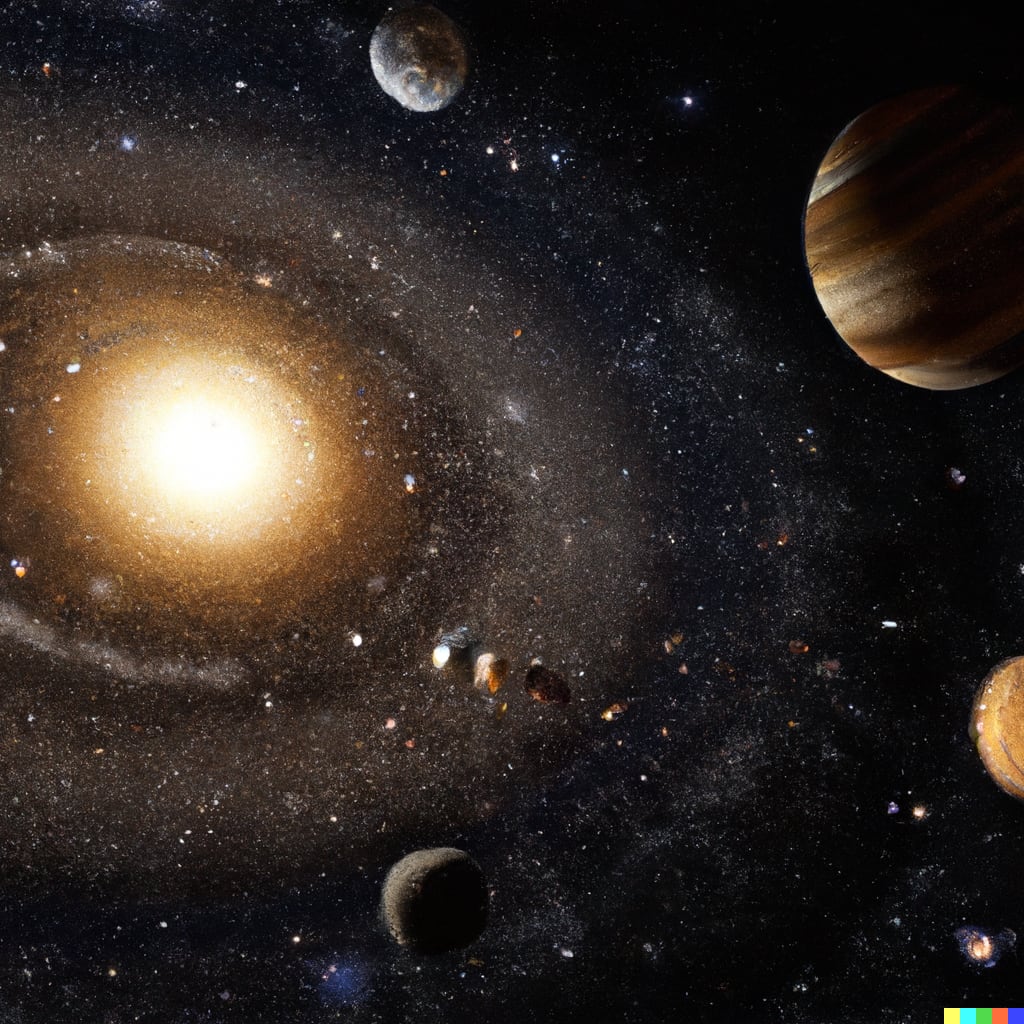
In the year 2450, humanity had pushed the limits of technology and science beyond what anyone had thought possible. They had colonized new worlds, built cities in space, and developed faster-than-light travel. However, despite all their progress, they faced an existential threat that they couldn't overcome: the death of the universe.
For centuries, scientists had known that the universe was slowly running out of energy. Stars were burning out, galaxies were colliding and merging, and the cosmos was becoming colder and darker by the day. But now, in the 25th century, they had finally found a solution: the Last Light.
The Last Light was an artificial star, powered by a complex array of nuclear reactors and fusion generators. It was designed to burn for billions of years, long after all the other stars had died, and provide light and energy to the universe. The scientists who had created it believed that it was the key to the survival of their species and all other intelligent life in the cosmos.
The Last Light was located on a remote planet at the edge of the galaxy. It was surrounded by a team of scientists who monitored its every move and made sure that it was operating at peak efficiency. The scientists had dedicated their lives to this project, sacrificing their own dreams and aspirations for the good of the universe.
One of the scientists was a young woman named Maya. Maya had grown up in a world where the looming threat of the universe's death was always present. She had watched as her parents and grandparents had devoted their lives to finding a solution to the problem, and now she was doing the same. Maya was one of the chief engineers on the Last Light project, and she had spent years working on the design and construction of the artificial star.
As she looked out at the Last Light from her control room, Maya couldn't help but feel a sense of awe and wonder. The star was massive, its surface rippling with energy and heat, and it seemed to pulse with life and vitality even as the universe around it slowly faded into darkness.
But Maya also knew that the Last Light was only a temporary solution. Eventually, even this artificial star would burn out, and the universe would once again be plunged into darkness. So she turned her attention to the stars themselves, searching for a way to reignite them and bring back the light that had once filled the cosmos.
Maya spent long hours in the lab, pouring over data and running simulations. She worked tirelessly, never giving up hope that she could find a way to save the universe. And one day, she had a breakthrough.
Maya realized that the key to reigniting the stars was to use the power of black holes. By creating a network of black holes that could capture and store energy from other galaxies, she believed that she could create a system that would keep the stars burning for billions of years.
Maya presented her findings to the other scientists on the Last Light project, and they were amazed. They had never thought that black holes could be used in this way, but Maya's data was convincing. They decided to fund her research and set her up with a team of experts to help her build the black hole network.
Years passed, and Maya's team worked tirelessly on the black hole network. They encountered countless challenges and setbacks, but they never gave up hope. And finally, after decades of hard work, they succeeded. The black hole network was operational, and the stars were reignited.
As the universe filled with light and warmth once again, Maya and her team looked out at the cosmos with a sense of pride and accomplishment. They had saved the universe, at least for a little while longer. And even though they knew that eventually, the stars would die out again, they were filled with a sense of hope and possibility.In the year 2450, humanity had pushed the limits of technology and science beyond what anyone had thought possible. They had colonized new worlds, built cities in space, and developed faster-than-light travel. However, despite all their progress, they faced an existential threat that they couldn't overcome: the death of the universe.
For centuries, scientists had known that the universe was slowly running out of energy. Stars were burning out, galaxies were colliding and merging, and the cosmos was becoming colder and darker by the day. But now, in the 25th century, they had finally found a solution: the Last Light.
The Last Light was an artificial star, powered by a complex array of nuclear reactors and fusion generators. It was designed to burn for billions of years, long after all the other stars had died, and provide light and energy to the universe. The scientists who had created it believed that it was the key to the survival of their species and all other intelligent life in the cosmos.
The Last Light was located on a remote planet at the edge of the galaxy. It was surrounded by a team of scientists who monitored its every move and made sure that it was operating at peak efficiency. The scientists had dedicated their lives to this project, sacrificing their own dreams and aspirations for the good of the universe.
One of the scientists was a young woman named Maya. Maya had grown up in a world where the looming threat of the universe's death was always present. She had watched as her parents and grandparents had devoted their lives to finding a solution to the problem, and now she was doing the same. Maya was one of the chief engineers on the Last Light project, and she had spent years working on the design and construction of the artificial star.
As she looked out at the Last Light from her control room, Maya couldn't help but feel a sense of awe and wonder. The star was massive, its surface rippling with energy and heat, and it seemed to pulse with life and vitality even as the universe around it slowly faded into darkness.
But Maya also knew that the Last Light was only a temporary solution. Eventually, even this artificial star would burn out, and the universe would once again be plunged into darkness. So she turned her attention to the stars themselves, searching for a way to reignite them and bring back the light that had once filled the cosmos.
Maya spent long hours in the lab, pouring over data and running simulations. She worked tirelessly, never giving up hope that she could find a way to save the universe. And one day, she had a breakthrough.
Maya realized that the key to reigniting the stars was to use the power of black holes. By creating a network of black holes that could capture and store energy from other galaxies, she believed that she could create a system that would keep the stars burning for billions of years.
Maya presented her findings to the other scientists on the Last Light project, and they were amazed. They had never thought that black holes could be used in this way, but Maya's data was convincing. They decided to fund her research and set her up with a team of experts to help her build the black hole network.
Years passed, and Maya's team worked tirelessly on the black hole network. They encountered countless challenges and setbacks, but they never gave up hope. And finally, after decades of hard work, they succeeded. The black hole network was operational, and the stars were reignited.
As the universe filled with light and warmth once again, Maya and her team looked out at the cosmos with a sense of pride and accomplishment. They had saved the universe, at least for a little while longer. And even though they knew that eventually, the stars would die out again, they were filled with a sense of hope and possibility.
About the Creator
Keep reading
More stories from Maarib Peerzada and writers in 01 and other communities.
"Island's Uncharted Unity: Stranded Strangers' Survival Saga"?
The sun beat down on the group of strangers as they emerged from the wreckage of their plane. They had crash-landed on an uncharted island in the middle of nowhere, with no way to communicate with the outside world. They were alone, stranded, and unsure of what to do next.
By Maarib Peerzada3 years ago in 01
The Changing Architecture of Finance Through Fintech Software – 2026
Introduction The global financial ecosystem is undergoing a structural transformation driven by fintech software. By 2026, finance is no longer defined solely by traditional banks, rigid systems, or centralized control. Instead, it is shaped by agile digital platforms, open ecosystems, real-time data processing, and customer-centric innovation. Fintech software has redefined how money is stored, transferred, invested, and managed, fundamentally changing the architecture of finance at both institutional and consumer levels.
By Aarti Jangida day ago in 01
Cryptocurrency Market Size and Forecast 2025–2033: Digital Assets Redefining the Global Financial System
Global Cryptocurrency Market Outlook The global cryptocurrency market is entering a decisive phase of maturity and institutional relevance. According to Renub Research, the cryptocurrency market is expected to grow from US$ 5.82 billion in 2024 to US$ 17.14 billion by 2033, expanding at a CAGR of 12.75% from 2025 to 2033.
By Janine Root 3 days ago in 01
Rachel Reviews: The Spiral Archive by Pieter Hendrik
It's difficult for me to know where to start with a review of this book as it was, for me, an entirely unique experience and one that I'll probably never have again. I don't want that to be interpreted as unenjoyable but it has left me scratching my head a little and ruminating on its content, its themes and its characters.
By Rachel Deeming5 days ago in BookClub




Comments
There are no comments for this story
Be the first to respond and start the conversation.