
Cryptocurrency Market Size and Forecast 2025–2033: Digital Assets Redefining the Global Financial System
From speculative tokens to institutional-grade financial instruments, cryptocurrencies are reshaping how the world stores, transfers, and creates value.


Global Cryptocurrency Market Outlook
The global cryptocurrency market is entering a decisive phase of maturity and institutional relevance. According to Renub Research, the cryptocurrency market is expected to grow from US$ 5.82 billion in 2024 to US$ 17.14 billion by 2033, expanding at a CAGR of 12.75% from 2025 to 2033.
This growth is fueled by rising interest in digital assets as inflation hedges, increasing institutional investments, the rapid evolution of decentralized finance (DeFi), expanding use of blockchain technology, and steady progress in regulatory frameworks across key economies.
What began as an alternative monetary experiment has transformed into a global digital financial ecosystem that includes payments, lending, remittances, tokenization, gaming, healthcare, and government applications. Cryptocurrencies are no longer niche assets—they are becoming foundational to the next generation of global finance.
Cryptocurrency Market Overview
Cryptocurrencies such as Bitcoin, Ethereum, and Ripple were initially created as decentralized alternatives to traditional fiat currencies. Over time, their underlying blockchain architecture—offering transparency, immutability, and security—has proven valuable across multiple industries, far beyond simple transactions.
The emergence of smart contracts, NFTs, stablecoins, and decentralized applications (dApps) has accelerated adoption and innovation. Today, the cryptocurrency ecosystem includes:
Blockchain infrastructure providers
Crypto exchanges and custodians
Payment gateways and wallet services
DeFi platforms and tokenized asset markets
Institutional trading desks and crypto ETFs
Institutional involvement has added credibility, liquidity, and long-term stability to the market. At the same time, governments worldwide are exploring Central Bank Digital Currencies (CBDCs), further validating blockchain’s potential to modernize monetary systems.
Key Drivers of Cryptocurrency Market Growth
1. Rising Adoption of Digital Assets
Digital assets are increasingly viewed as alternative investment instruments and stores of value. As global inflation and currency devaluation concerns rise, cryptocurrencies are gaining attention for their scarcity models and decentralized control.
Industry data indicates that the global digital asset market nearly doubled in valuation in 2023, reaching close to US$ 1.6 trillion. Financial institutions, fintech platforms, and payment providers are rapidly integrating crypto services, expanding trust and usability across markets.
Cryptocurrency adoption is also accelerating in underbanked and emerging economies, where blockchain enables affordable financial access, low-cost remittances, and faster settlements compared to traditional systems.
2. Increasing Public Awareness and Acceptance
Public awareness of cryptocurrencies has surged over the past five years. More consumers now understand how digital currencies work, how to store them securely, and how to use them for transactions and investments.
In the United States alone, 40% of adults now own cryptocurrency, up from 30% in 2023, demonstrating a rapid rise in mainstream adoption. Retailers, e-commerce platforms, and service providers are integrating crypto payments to reduce transaction fees and access global customers.
This expanding user base is strengthening network effects and driving long-term market sustainability.
3. Institutional Investment and Market Maturity
Institutional participation has transformed cryptocurrencies from volatile speculative assets into legitimate financial instruments. Hedge funds, asset managers, banks, and corporations are allocating capital to crypto portfolios for diversification and inflation protection.
This has led to the development of:
Regulated crypto exchanges
Custodial platforms
Derivatives and futures markets
Tokenized securities and real-world assets
As regulatory clarity improves, institutional investment is expected to expand further, unlocking new product categories and long-term growth opportunities.
Challenges Facing the Cryptocurrency Market
1. Regulatory Uncertainty
One of the largest challenges remains the lack of unified global regulation. Different countries adopt different approaches—ranging from supportive frameworks to outright bans—creating uncertainty for companies and investors.
Inconsistent regulations hinder cross-border transactions, delay institutional participation, and raise compliance risks. For the market to fully mature, clear, transparent, and internationally aligned regulations are essential to balance innovation with consumer protection.
2. Security Risks and Market Volatility
Cryptocurrency markets remain volatile due to speculation, macroeconomic events, and news-driven price movements. This volatility limits adoption among conservative investors and businesses.
Security concerns also persist. Despite technological advancements, crypto exchanges, wallets, and smart contracts remain vulnerable to hacks, phishing attacks, and exploits. Strengthening cybersecurity standards, conducting regular audits, and improving user education are crucial for building trust.
Cryptocurrency Market by Region
United States Cryptocurrency Market
The United States remains one of the largest and most influential cryptocurrency markets globally. Major exchanges, blockchain startups, and institutional investors operate within the country. Regulatory oversight from the SEC and CFTC continues to evolve, shaping market standards.
States like Wyoming and Texas have enacted crypto-friendly legislation, attracting miners and entrepreneurs. Meanwhile, U.S. banks and fintech companies are launching crypto custodial services, ETFs, and payment solutions.
With growing retail adoption and integration into mainstream financial platforms, the U.S. is setting global benchmarks for crypto innovation and governance.
United Kingdom Cryptocurrency Market
The UK is positioning itself as a regulated yet innovation-friendly crypto hub. The Financial Conduct Authority (FCA) oversees crypto operations, ensuring AML compliance and investor protection.
London continues to attract fintech and blockchain startups due to its strong financial infrastructure. The government’s interest in launching a digital pound further supports the long-term development of digital assets.
China Cryptocurrency Market
China maintains strict restrictions on private cryptocurrency trading and mining. However, the country is aggressively advancing its digital yuan (CBDC), making it a global leader in state-backed digital currency adoption.
While speculative trading is limited, blockchain innovation continues across logistics, supply chains, banking, and government services, reinforcing China’s strategic commitment to blockchain technology without embracing decentralized cryptocurrencies.
United Arab Emirates Cryptocurrency Market
The UAE has emerged as a leading Middle Eastern hub for crypto and blockchain innovation. Cities like Dubai and Abu Dhabi have established clear regulatory frameworks through bodies like VARA and ADGM, attracting global exchanges and fintech firms.
High digital penetration, government support, and investor-friendly policies have positioned the UAE as a strategic gateway for crypto expansion across the Middle East, Africa, and Asia.
Recent Developments in the Cryptocurrency Industry
November 2024: Ingenico partnered with Crypto.com to enable seamless cryptocurrency payments for merchants worldwide, allowing settlement in local currencies and reducing volatility risk.
November 2024: Coinbase and the Singapore Economic Development Board launched a blockchain engineering hub to strengthen Asia-Pacific’s crypto developer ecosystem.
Stablecoin Innovation: A consortium including Robinhood, Kraken, and Galaxy Digital launched a USD-backed stablecoin under the Global Dollar Network, enhancing cross-border payments and liquidity.
These developments highlight how crypto is rapidly integrating into mainstream payment and financial infrastructure.
Cryptocurrency Market Segmentation
By Component
Hardware
Software
Others
By Process
Mining
Transactions
By Type
Bitcoin
Bitcoin Cash
Ethereum
Litecoin
Ripple
Others
By End Use
Banking
Gaming
Government
Healthcare
Retail & E-commerce
Trading
Others
Regional Outlook
North America
United States
Canada
Europe
France
Germany
Italy
Spain
United Kingdom
Belgium
Netherlands
Turkey
Asia-Pacific
China
Japan
India
South Korea
Thailand
Malaysia
Indonesia
Australia
New Zealand
Latin America
Brazil
Mexico
Argentina
Middle East & Africa
Saudi Arabia
United Arab Emirates
South Africa
Key Players in the Global Cryptocurrency Market
Advanced Micro Devices, Inc.
Binance
Bitfury Group Limited
BitGo, Inc.
Bitmain Technologies Holding Company
Intel Corporation
NVIDIA Corporation
Ripple
Xapo Holdings Limited
Xilinx, Inc.
Each company plays a critical role in mining hardware, infrastructure, exchanges, custody, and blockchain development, driving innovation and competition across the ecosystem.
Final Thoughts
The cryptocurrency market is no longer an experimental frontier—it is a rapidly evolving pillar of the global financial system. With market value expected to reach US$ 17.14 billion by 2033, digital assets are transitioning from speculative investments to essential financial tools.
As regulation becomes clearer, institutional participation grows, and blockchain use cases expand across industries, cryptocurrencies are set to redefine payments, finance, ownership, and value creation in the digital age.
The next decade will determine which platforms, technologies, and nations lead this transformation—but one thing is certain: cryptocurrency is here to stay, and its influence is only accelerating.
About the Creator
Janine Root
Janine Root is a skilled content writer with a passion for creating engaging, informative, and SEO-optimized content. She excels in crafting compelling narratives that resonate with audiences and drive results.
Keep reading
More stories from Janine Root and writers in 01 and other communities.
Asia Pacific Prebiotics Market Size and Forecast 2025
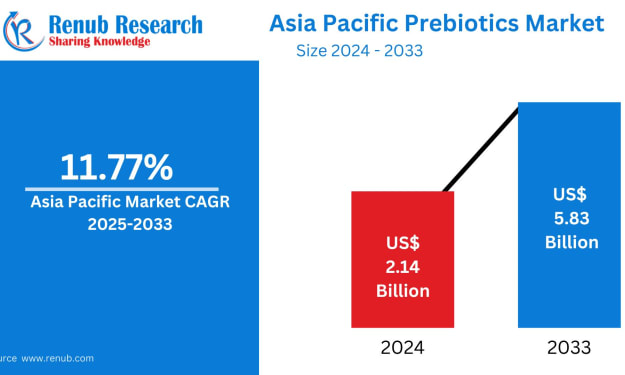
Asia Pacific Prebiotics Market: A Region Poised for Gut-Health Revolution The Asia Pacific prebiotics market is entering a transformative decade. With rising health awareness, aging populations, expanding functional food industries, and rapid advancements in biotechnology, prebiotics have become a central ingredient in modern nutrition strategies across the region. According to Renub Research, the Asia Pacific Prebiotics Market is expected to reach US$ 5.83 billion by 2033, growing from US$ 2.14 billion in 2024, at a robust CAGR of 11.77% from 2025 to 2033.
By Janine Root 4 days ago in 01
Top 10 Ecommerce App Development Companies to Watch in 2026
In an increasingly mobile-first world, ecommerce app development has become central to how businesses reach, engage, and convert customers. From personalized shopping experiences to seamless checkout and omnichannel integration, ecommerce apps are now essential for brands of all sizes. As we move deeper into 2026, selecting the right partner to build your digital commerce platform can make the difference between a thriving marketplace and a missed opportunity.
By Aarti Jangid7 days ago in 01



Comments
There are no comments for this story
Be the first to respond and start the conversation.