
The Last Horizon (2028)
The Calm Before the Storm
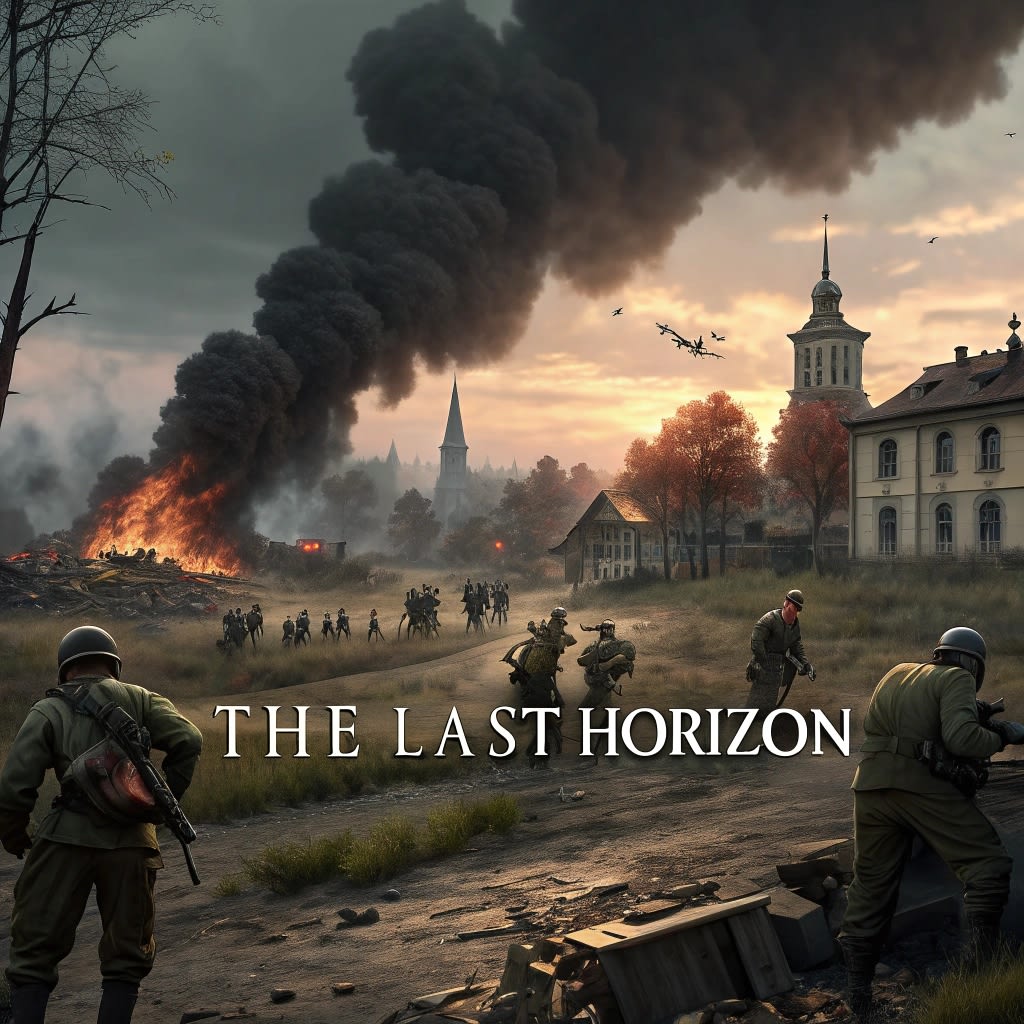
In 2027, the world seemed to be on the verge of a new golden age. Technological advancements had brought humanity closer than ever before—artificial intelligence streamlined industries, renewable energy powered cities, and global connectivity reached even the most remote corners of the planet. Yet beneath the surface of progress lay simmering tensions. Geopolitical rivalries between superpowers intensified as economic decoupling fractured alliances. Climate-induced resource scarcity fueled competition for water, arable land, and rare minerals. Nationalist movements gained momentum, pushing nations toward isolationism.
By early 2028, the cracks began to widen. A cyberattack on critical infrastructure in Europe left millions without power for days. Disinformation campaigns flooded social media, sowing distrust among citizens and governments alike. In the Indo-Pacific, China’s increasing military presence around Taiwan raised alarms in Washington, while Russia’s saber-rattling along NATO’s eastern borders kept Europe on edge.
No one knew exactly how it would begin—but everyone felt it coming.
Chapter 1: The Spark
It started with a single incident that no one could have predicted—a collision in space.
On February 14, 2028, an Indian anti-satellite missile test went awry, destroying not only its intended target but also a cluster of commercial satellites operated by SpaceX. Among them was a key satellite responsible for coordinating GPS systems across Asia and Oceania. Within hours, flights were grounded, shipping routes disrupted, and financial markets plunged into chaos.
China accused India of recklessness, claiming the debris field posed a threat to its own satellites. Pakistan seized the opportunity to accuse New Delhi of aggression, deploying troops to the Line of Control in Kashmir. Meanwhile, the U.S., which had provided technical support to India’s space program, faced backlash from Beijing and Moscow.
What might have been dismissed as a minor diplomatic spat quickly escalated when North Korea launched a surprise attack on South Korean naval vessels near the disputed Northern Limit Line. Pyongyang claimed the strike was retaliation for joint U.S.-South Korean military exercises. Seoul responded with precision airstrikes against North Korean missile sites, drawing condemnation from China and Russia.
The dominoes fell rapidly after that.
Chapter 2: Alliances Fracture
By late February, the conflict had spilled beyond regional boundaries. Japan invoked Article V of its security treaty with the United States, sending Self-Defense Forces to assist South Korea. China retaliated by imposing a naval blockade around Taiwan, citing “provocations” by Taipei as justification. When Taiwanese forces fired warning shots at Chinese vessels attempting to breach their territorial waters, Beijing declared war.
Russia, seeing an opening to weaken NATO, mobilized troops along Ukraine’s border once again. This time, however, they didn’t stop there. Covert operations destabilized Baltic states, creating pretexts for intervention. Finland and Sweden, both recent NATO members, scrambled to bolster defenses, further straining Western resources.
Iran, emboldened by the chaos, seized control of the Strait of Hormuz, cutting off nearly 20% of the world’s oil supply. Saudi Arabia and Israel responded with coordinated airstrikes on Iranian nuclear facilities, plunging the Middle East into full-scale war. Egypt and Turkey, long-standing rivals, found themselves dragged into the fray as proxy battles erupted across Syria, Iraq, and Yemen.
Meanwhile, Africa became a battleground for influence. China-backed insurgents clashed with French-supported militias in Mali and Niger, while mercenaries armed by private contractors fought over cobalt mines in the Democratic Republic of Congo. Even Antarctica wasn’t spared; claims over untapped mineral reserves led to skirmishes between Argentina, Chile, and Australia.
Chapter 3: The Digital Frontline
As traditional warfare raged, cyberspace became the most contested domain. Autonomous drones swarmed battlefields, targeting enemy positions with uncanny precision. Cyberattacks crippled communication networks, disabling everything from hospital life-support systems to air traffic control towers. Deepfake videos spread like wildfire, showing fabricated footage of atrocities committed by opposing sides. Trust evaporated.
One particularly devastating operation targeted the global banking system. Hackers—believed to be working for a coalition of rogue states—released a virus that erased billions of dollars’ worth of transactions. Economies collapsed overnight, triggering mass protests and civil unrest. Governments struggled to maintain order as food shortages and fuel rationing sparked riots in major cities.
Artificial intelligence played a dual role in the conflict. On one hand, AI-driven algorithms optimized logistics, analyzed battlefield data, and even made tactical decisions faster than human commanders. On the other hand, these systems proved vulnerable to manipulation. A glitch in a Russian AI program resulted in accidental strikes on neutral countries, including Switzerland and Costa Rica, sparking outrage and widening the war.
Chapter 4: Nuclear Shadows
By April 2028, fears of nuclear escalation loomed large. Despite decades of deterrence theory, the unthinkable nearly happened when a Chinese hypersonic missile narrowly missed Guam. The U.S. retaliated with stealth bombers, destroying key missile silos in Inner Mongolia. Russia, interpreting this as a provocation, moved nuclear-capable submarines closer to American shores.
Then came the incident that changed everything. During a heated standoff over the Arctic Circle, a U.S. reconnaissance drone accidentally entered Russian airspace. Interpreting this as an act of war, President Ivan Sokolov authorized a limited nuclear strike on a remote Alaskan radar station. Though the blast killed relatively few people, it shattered the taboo surrounding nuclear weapons.
Within days, China tested a new intercontinental ballistic missile capable of carrying multiple warheads. India followed suit, conducting its first underwater nuclear launch. The world teetered on the brink of annihilation.
Chapter 5: Humanity’s Choice
Amidst the devastation, a glimmer of hope emerged. Grassroots movements sprang up worldwide, demanding an end to hostilities. Millions took to the streets, chanting slogans like “No More War” and “Save Our Planet.” Scientists, philosophers, and religious leaders united under the banner of the Global Peace Accord, calling for immediate ceasefires and disarmament talks.
Even hardened politicians began to listen. French President Élodie Dupont brokered secret negotiations aboard a neutral vessel in the Mediterranean Sea. After weeks of tense discussions, the U.S., China, and Russia agreed to a fragile truce.
Under the terms of the accord:
All nuclear arsenals would be reduced by 50% within five years.
Autonomous weapons systems would be banned internationally.
A new international body—the Council for Global Stability—would oversee peacekeeping efforts and mediate disputes.
Though the road ahead remained uncertain, humanity had chosen survival over destruction.
Epilogue: A New Dawn
By 2030, the scars of World War III were still visible. Entire cities lay in ruins, ecosystems had been irreparably damaged, and millions mourned loved ones lost in the conflict. Yet, from the ashes rose a renewed commitment to cooperation and coexistence.
The war served as a stark reminder of humanity’s fragility—and its resilience. Nations invested heavily in renewable energy, space exploration, and artificial intelligence designed to heal rather than harm. Borders became less rigid as global challenges like climate change and pandemics demanded collective action.
And though the specter of war would always linger, the lessons of 2028 ensured that future generations approached diplomacy with humility, wisdom, and courage.
For the first time in history, humanity stood united—not by conquest, but by choice.
The End.
About the Creator
Keep reading
More stories from Md Azizul Islam and writers in 01 and other communities.
The War Over Words
In the year 2035, humanity had reached unprecedented heights in technology, communication, and connectivity. Artificial intelligence had become omnipresent, governing everything from healthcare to education to governance itself. But with great power came unforeseen consequences—especially when it came to language.
By Md Azizul Islam10 months ago in History
Candace Owens pushes theory Charlie Kirk was 'time traveller' who went to 'X-Men school'
In a recent episode of her podcast, Candace Owens said Charlie Kirk told her he was a “time traveler” who was sent to “X-Men school,” and alleged he was monitored since childhood.
By Dena Falken Esq4 days ago in 01
How a Web Development Company in India Builds CMS eCommerce Sites?
The first CMS-based eCommerce project I watched unfold didn’t start with technology at all. It started with confusion. The client wanted an online store, a blog, marketing pages, and the ability to change everything without calling a developer every week. The development team didn’t argue platforms or frameworks. They asked questions—lots of them. That moment stuck with me because it explained how many teams in India actually approach CMS eCommerce work.
By Jane Smithabout 12 hours ago in 01




Comments
There are no comments for this story
Be the first to respond and start the conversation.