
The Intersection of Technology and Human Behavior
How Digital Innovation Is Reshaping Human Thought, Choices, and Society

Introduction
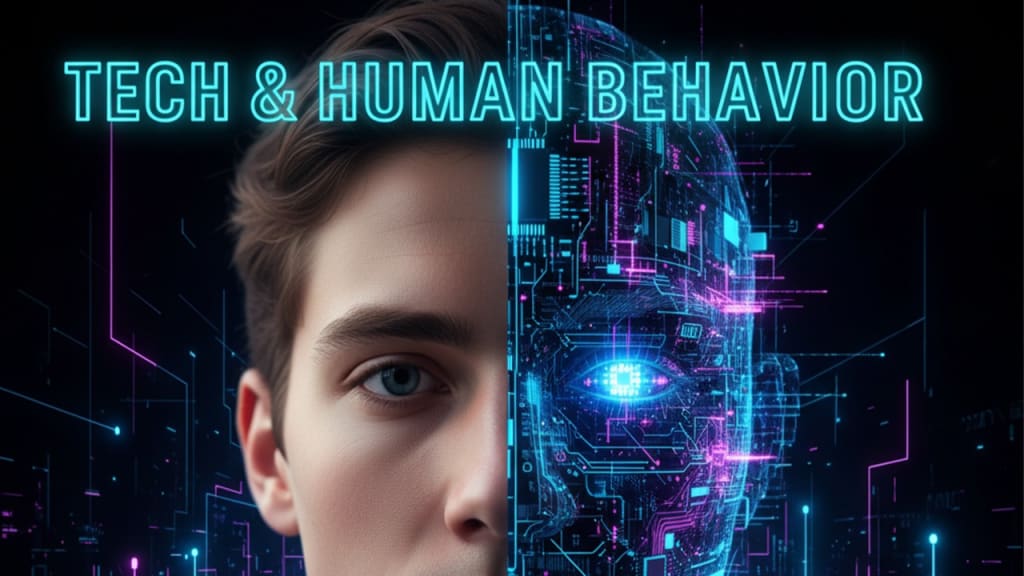
Technology and human behavior have always evolved together. From the invention of the wheel to the rise of artificial intelligence, technological progress has continuously reshaped how humans think, communicate, work, and interact with one another. In the digital age, this relationship has become more complex and deeply intertwined, influencing not only external actions but also internal cognitive and emotional processes.
Understanding the intersection of technology and human behavior is critical for businesses, educators, policymakers, and individuals alike. Technology does not exist in isolation; it both reflects human needs and actively shapes human choices. This article explores how technology influences behavior, the psychological mechanisms behind this influence, and what the future holds for this evolving relationship.
Foundations of Human Behavior
Human behavior is driven by a combination of biological, psychological, and social factors. Cognitive processes such as attention, memory, motivation, and reward-seeking play a fundamental role in how individuals respond to stimuli, including technological interfaces. Humans are naturally inclined toward efficiency, convenience, and social connection—traits that modern technologies are designed to satisfy.
Social and cultural contexts further shape behavior. Norms, values, and shared experiences influence how people adopt and use technology. For example, communication platforms are used differently across cultures, while generational differences affect comfort levels with emerging technologies. Understanding these foundations is essential to analyzing how technology interacts with and modifies human behavior.
The Evolution of Technology’s Influence
Historically, technology enhanced physical capabilities—tools improved productivity and machines reduced manual labor. With the digital revolution, technology began to augment cognitive and social capabilities as well. Computers, smartphones, and the internet transformed how information is processed, stored, and shared.
The transition from analog to digital ecosystems marked a significant shift. Technologies are no longer passive tools; they are interactive systems that respond to user behavior in real time. Algorithms learn from human actions, creating feedback loops that continuously refine and influence future behavior. This evolution has made technology a powerful behavioral force.
Technology as a Behavioral Shaper
Modern technology is intentionally designed to shape user behavior. Digital products leverage behavioral psychology to encourage engagement, habit formation, and repeated use. Notifications, infinite scrolling, rewards, and personalized content are all mechanisms rooted in psychological principles such as variable reinforcement and dopamine-driven motivation.
Over time, these design choices can alter daily routines, attention spans, and decision-making patterns. While such mechanisms can increase productivity and convenience, they can also contribute to distraction, dependency, and reduced self-regulation. Technology, therefore, acts as both an enabler and a regulator of human behavior.
Social Media and Behavioral Change
Social media platforms represent one of the most visible examples of technology influencing human behavior. They redefine how individuals present themselves, seek validation, and engage socially. Online personas often differ from offline identities, shaped by likes, comments, and follower counts.
The constant exposure to curated content can impact self-esteem, social comparison, and mental well-being. While social media enables global connectivity and community building, it also introduces challenges such as digital anxiety, polarization, and misinformation. Human behavior on these platforms is heavily shaped by algorithms that prioritize engagement over well-being.
Artificial Intelligence and Human Decision-Making
Artificial intelligence is increasingly involved in human decision-making processes. From recommending content and products to assisting with medical diagnoses and financial planning, AI systems influence choices in subtle and overt ways.
However, reliance on AI introduces concerns around bias, transparency, and trust. Algorithms reflect the data they are trained on, which may contain human biases. As humans collaborate more closely with intelligent systems, the challenge lies in ensuring that AI enhances human judgment rather than replacing or distorting it.
Technology in Work and Productivity
The workplace has undergone dramatic behavioral shifts due to technology. Remote work, digital collaboration tools, and automation have redefined productivity and work-life boundaries. Employees are expected to be constantly connected, which can increase efficiency but also contribute to burnout and cognitive overload.
Multitasking, once seen as a skill, has been shown to reduce focus and performance. Technology influences not only how work is done but also how individuals perceive time, availability, and professional identity.
Impact on Learning and Education
Educational technology has transformed learning behaviors across all age groups. Digital platforms provide personalized learning experiences, instant feedback, and global access to knowledge. Students now engage with information differently, favoring interactive and visual content over traditional text-based learning.
While technology enhances accessibility and flexibility, it also raises concerns about attention fragmentation and reduced deep learning. The challenge for educators is to balance technological integration with cognitive development and critical thinking.
Ethical and Psychological Implications
As technology increasingly influences behavior, ethical considerations become paramount. Issues such as data privacy, surveillance, and behavioral manipulation raise questions about autonomy and consent. Users often trade personal data for convenience without fully understanding the implications.
Psychologically, excessive technology use can lead to stress, addiction, and reduced interpersonal interaction. Digital well-being has emerged as a critical area of concern, emphasizing the need for mindful technology use and responsible design practices.
Human Behavior in a Data-Driven World
Data analytics and behavioral tracking allow organizations to predict and influence human behavior with unprecedented accuracy. Personalization improves user experiences but also blurs the line between assistance and manipulation.
Predictive modeling can optimize services, marketing, and decision-making, yet it risks reinforcing existing behaviors and limiting exposure to diverse perspectives. Maintaining a balance between personalization and user autonomy is a key challenge in the data-driven era.
Designing Technology for Positive Behavior
Human-centered design focuses on aligning technology with genuine human needs and values. Ethical design principles emphasize transparency, inclusivity, and well-being over pure engagement metrics.
When designed responsibly, technology can promote positive behavior—encouraging healthy habits, learning, productivity, and social good. The responsibility lies with designers, developers, and organizations to consider long-term behavioral impact rather than short-term gains.
Future Trends at the Human–Technology Nexus
Emerging technologies such as virtual reality, augmented reality, brain-computer interfaces, and advanced AI will further blur the boundaries between human cognition and digital systems. These innovations will reshape how humans perceive reality, interact socially, and define identity.
Preparing for these changes requires interdisciplinary collaboration among technologists, psychologists, ethicists, and policymakers. Understanding human behavior will be essential to ensuring that future technologies enhance human potential rather than undermine it.
Conclusion
The intersection of technology and human behavior is one of the most defining dynamics of the modern world. Technology shapes how humans think, act, and relate to one another, while human behavior continuously influences how technology evolves.
The challenge moving forward is not to resist technological progress but to guide it responsibly. By prioritizing human values, ethical design, and psychological well-being, society can create a balanced relationship where technology serves as a tool for empowerment rather than control. Understanding this intersection is the first step toward shaping a future where innovation and humanity coexist harmoniously.
About the Creator
Muhammad Irfan Afzal
I write clear, practical, engaging articles on technology, online safety, and modern digital life. My goal is to help readers understand complex. My aim to provide value, awareness, and real-world solutions for everyday digital challenges.
Keep reading
More stories from Muhammad Irfan Afzal and writers in 01 and other communities.
How Technology Is Changing the Workplace Forever
Introduction: The Permanent Shift in the Modern Workplace The workplace is undergoing a fundamental transformation driven by rapid technological advancement. What began as a gradual adoption of digital tools has evolved into a permanent shift in how organizations operate, communicate, and grow. Technology is no longer a support function; it is the backbone of modern work environments. From remote collaboration to artificial intelligence, businesses across industries are redefining productivity, efficiency, and employee experience.
By Muhammad Irfan Afzal29 days ago in 01
How To See The Most Viewed Video of a TikTok Creator?
Of no doubt, almost every user of the widely used TikTok - a video-centric social community where many people across the globe upload different sorts of videos for others to watch - strongly desire to know who's viewing the video contents they post, not just that.
By Intelligent Creator4 days ago in 01
AI Race in 2026
By 2026, the global race in Artificial Intelligence (AI) has moved far beyond simple innovation. It has become a strategic competition that shapes economies, national security, education, healthcare, and daily life. Governments, technology giants, startups, and research institutions are all competing to lead in AI development. This race is not only about creating smarter machines, but also about controlling data, setting global standards, and defining how humans and machines will coexist in the future.
By shaoor afridi4 days ago in 01


Comments
There are no comments for this story
Be the first to respond and start the conversation.