
The Impact of Decentralized Identity on Digital Credential Solutions
Decentralized Identity on Digital Credential Solutions

Decentralized identity solutions will change the way individuals look at their digital identities, offering more security, privacy, and-what's most important-control of personal information. Understanding how decentralized identity impacts these systems is necessary for knowing what the future of digital interaction will look like, as more organizations start to implement various solutions around digital credentials. This article shows how decentralized identity is affecting the landscape in digital credential solutions and the implications it will have for both users and organizations.
Understanding Decentralized Identity
Decentralized identity simply means a shift from the current identity management systems based on some authoritative center, such as a government or an administrative body. In decentralized systems, a particular individual has full custody over his/her identity without any reliance on entities that verify and keep such material information. This model would, therefore, be enabled through blockchain and cryptography to ensure the data is kept non-repudiated and not forged.
Core Components of Decentralized Identity
Decentralized Identifiers (DIDs): Unique identifiers that are created and controlled by users, allowing them to manage their identities across various platforms without being tied to a specific service provider.
Verifiable Credentials: Digital certificates that a user can use to attest to their identity or qualifications, issued by trusted entities such as academic institutions or employers, without necessarily revealing any more personally identifiable information than is strictly necessary.
Digital Wallets: Secure applications where a user maintains their DIDs and VCs to selectively share with service providers when needed.
Blockchain Technology: Provides the backbone for decentralized identity systems with a tamper-resistant ledger to store references to credentials in a secure way without exposing sensitive data.
Also You Can Read This: Blockchain-Powered Decentralized Identity and Verifiable Credentials Platform
The Impact on Digital Credential Solutions
1. Security Enhancement
Probably the most substantial advantage of decentralized identity includes improved security. Traditional ways of identity management store records of personally identifiable information in centralized databases-which often become the 'holy grail' prize for hackers. Decentralized identity solutions distribute all data across a variety of locations with no single point of failure. If one service is compromised, users' credentials remain secure within their digital wallet.
For example, in a health care context where decentralized identity is the manager of patient records, even in the event of intrusion into the servers of a healthcare provider, the attackers will not find any sensitive patient data stored on those servers. Rather, through decentralized identity, patients control their medical records and would only share them when necessary.
2. Improved Privacy
Solutions for decentralized identity allow them to share only information required for some verification processes. In that case, this ability of selection considerably reduces the possibility of leaks that might lead to sensitive disclosure of personal information and gives a boost to user privacy. For instance, instead of providing any other personal information, it is possible to present an education qualification verifiable credential related to a job application.
It basically contrasts with conventional approaches, whereby many users are asked to divulge volumes of personal information, again in validation of their identities. Decentralized identity minimizes the extent to which user's data is exposed; rather, it instills trust into the relationship between the service user and service provider.
3. More User Control
With decentralized identity, the power of one's digital identity is returned to the individual. They will be able to choose which credentials to share with whom, reducing dependence on centralized authorities considerably. This self-sovereign approach does not only empower users in general but also fosters trust in digital interactions.
One could consider that the user can at any moment revoke the access of another party to his credentials and make him an active manager of his identity. This flexibility becomes important when there might be users that would not want to reveal much personal information with every other platform, such as in online banking or e-commerce.
4. Better interoperability
Decentralized identities are easily portable across different platforms and services using open standard solutions, such as those created by the World Wide Web Consortium. A user will be able to port DIDs and VCs easily on any application using it.
To an organization, this interoperability of these solutions means ease of operations such as onboarding a customer or an employee because they assure their identity without having to engage in a long background search and avoid multiple entries against one name across different systems.
Challenges and Considerations
While decentralized identity holds many advantages, there are several challenges that organizations have to go through in order to implement these solutions:
User Adoption: The transition from centralized to decentralized identity management systems involves reeducation and trust-building with the users. The organizations will also have to invest in resources, like training, to enable users to deal with their digital identities with a lot of sense.
Regulatory Compliance: As decentralized identity systems continue to evolve, organizations will have to find their way through complex regulatory landscapes that concern data privacy and protection. Ensuring compliance with regulations like GDPR will be crucial for widespread adoption.
Integration with the Already Working Systems: Most of the organizations face difficulty with regard to integrating decentralized identity solutions with the legacy system, since many depend on traditional ways of identity verification. In these aspects, probably a hybrid model will be developed that contains both the approaches during the transition time.
Also Read: Transform Your Business with Verifiable Digital Credentials
Conclusion
Decentralized identity is going to change digital credential solutions for good by enhancing their security, privacy, user control, and interoperability. As more organizations start to implement these innovative systems, not only will user experiences improve, but trust will also be developed in digital interactions.
Hence, this would be a big leap towards handling digital identities securely and effectively to self-sovereign identity. Companies could position themselves at the forefront of this developing landscape by embracing decentralized identity solutions that give people control over their digital identities in an ever-connected world.
About the Creator
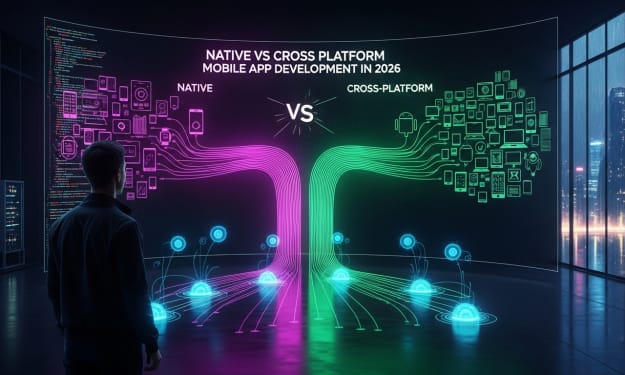
Native vs Cross Platform Mobile App Development in 2026
Google has officially decoupled app visibility from traditional indexing and moved toward a model of Authority Validation through neural weightings. This tectonic shift means your choice of development framework now serves as a primary signal for Entity Accountability.
By Devin Rosario2 days ago in 01
Jeff Bezos vs. Jane Austen: Amazon will deliver its packages to English gardens
The e-commerce giant begins testing the use of drones for order delivery in the UK Amazon has decided to eliminate not only all the businesses on the streets of our towns and cities, but also one of the quintessentially English traits: gardening, which is more than just a hobby; it's a way of life idealized by much of the islands' literature. Among others, and perhaps the most captivating, is that of Jane Austen. Examples abound throughout her work. The very essence of the garden. Austenian It would be the garden of her home in Chawton, a village in Hampshire, in southern England, about 95 km southwest of London. The writer lived there for seven years, and in the garden she cultivated flowers and vegetables.
By Dena Falken Esqa day ago in 01



Comments
There are no comments for this story
Be the first to respond and start the conversation.