
The Hidden Cost of Solar Energy: Environmental and Social Impacts of Large-Scale Solar Farms
How Large-Scale Solar Farms Disrupt Ecosystems and Communities


Introduction
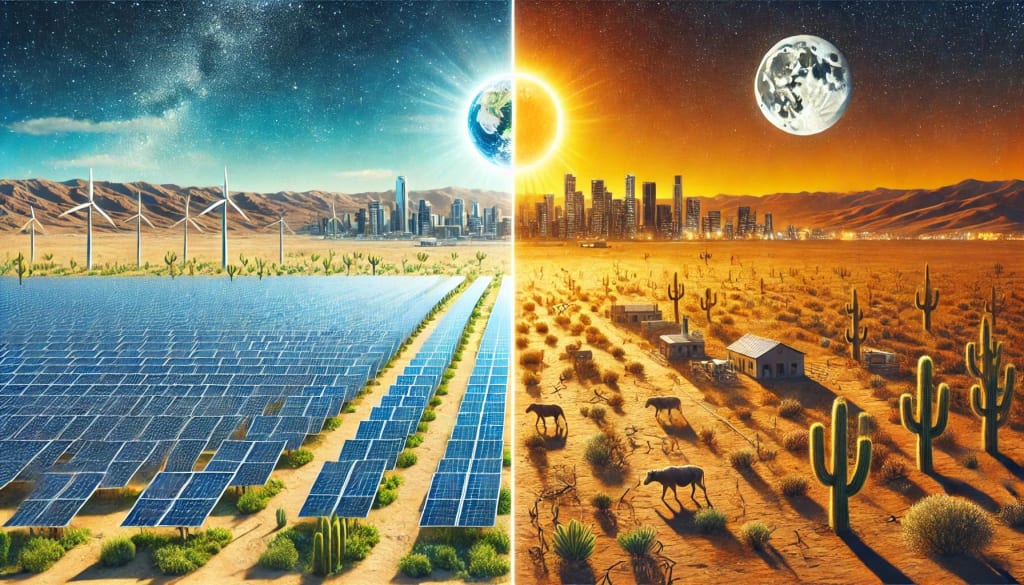
The rapid expansion of solar energy is often celebrated as a solution to climate change and energy security. However, large-scale solar farms can have significant unintended consequences, particularly on biodiversity, local communities, and land use patterns. This article examines the environmental and social effects of solar power plants, with a focus on the Badla region in Rajasthan, India, using satellite imagery, scientific reports, and case studies.
The Rise of Solar Power in Rajasthan
Rajasthan, with its vast desert landscapes and high solar irradiance, has become a major hub for solar energy projects. The Badla Solar Park, spanning over 100 square kilometers, is one of the world's largest solar energy installations. However, this rapid development has led to significant changes in land use, night-time light pollution, and habitat disruption.
Key Facts:
- Rajasthan accounts for over 25% of India's solar power capacity.
- The Badla region, which was largely unlit at night in 2015, now has intense artificial illumination.
- Solar panel reflections and infrastructure block traditional animal migration routes.
- Artificial Light Pollution: A Threat to Migratory Birds
- Siberian Crane (Critically Endangered)
- Great Indian Bustard (Critically Endangered)
- Indian Fox (Vulnerable)
- Desert Monitor Lizard (Threatened)
- How does light pollution impact birds?
- Disrupts natural navigation and migration.
- Increases collision risks with infrastructure.
- Alters feeding and breeding patterns.
Environmental Impact: Disrupting Wildlife and Ecosystems
Satellite data from 2015 to 2025 shows a dramatic increase in night-time illumination in the Badla region, which was previously dark. This has profound effects on nocturnal wildlife and migratory birds such as the Siberian Crane, which follows critical migration routes across Rajasthan.
Species at risk:

Habitat Loss and Land Use Change
The transformation of sandy desert terrain into solar farms alters the natural ecosystem. Key issues include:
- Blocking animal migration routes (e.g., chinkara gazelle and desert fox)
- Loss of natural vegetation, leading to increased desertification
- Reduction in food sources for local predators and herbivores


Reflection from Solar Panels and Heat Islands
Large-scale solar farms increase local temperatures and create heat islands, affecting flora and fauna.
- Panel reflections can confuse birds, leading to fatal crashes.
- Changes in microclimate impact local water availability and plant growth.


Social and Economic Effects of Large Solar Projects
Displacement of Local Communities
While solar farms create jobs, they also displace traditional livelihoods such as farming and livestock grazing. In many cases, land acquisition disputes arise, affecting rural populations.
✔ Pros:
- New job opportunities in solar maintenance and construction
- Increased energy access in nearby towns
✘ Cons:
- Loss of agricultural and grazing land
- Economic inequality due to unequal land compensation
Water Scarcity Issues
Solar plants require large amounts of water for cleaning panels, exacerbating water scarcity in desert regions like Rajasthan.
- Competes with drinking water and irrigation needs.
- Changes local groundwater levels.
Comparison with Conventional Power Plants

Finding a Balance: Can We Have Solar Power Without Harm?
While solar energy is essential for a sustainable future, better planning and mitigation strategies are needed to minimize its environmental and social costs.
✔ Possible Solutions:
- Use of low-reflection panels to reduce bird collisions.
- Zoning regulations to protect key wildlife areas (e.g., Siberian Crane migration routes).
- Community involvement to ensure fair land compensation.
Conclusion
The expansion of solar power is a double-edged sword: it helps combat climate change but can also harm biodiversity and communities if not managed properly. A sustainable energy transition must include eco-sensitive planning, wildlife protection measures, and social equity considerations to ensure that renewable energy remains truly green.
✅ Want to read more? Follow for in-depth environmental and energy analysis.
🌍 Join the conversation! What do you think about the environmental impact of solar farms? Share your thoughts in the comments!
About the Creator
InkForChange
InkForChange explores global issues through well-researched blogs on climate, society, economy, and technology. Our mission is to inform, inspire, and drive change by raising awareness and promoting solutions for a better future solutions.
Keep reading
More stories from InkForChange and writers in 01 and other communities.
The Rising Threat of Digital Financial Fraud in Western Rajasthan
Introduction In recent years, Western Rajasthan has witnessed a significant increase in digital financial fraud, particularly after the COVID-19 pandemic. With the rapid expansion of internet access and digital payment platforms, some individuals have started exploiting vulnerabilities in online trading apps, e-commerce platforms, and financial systems. This growing trend has raised concerns among businesses, financial institutions, and law enforcement agencies.
By InkForChange11 months ago in 01
How to Choose the Best Mobile App Development Company in Canada 2026
Choosing the right app development partner in 2026 isn’t just a procurement decision—it’s a strategic move that can define whether your digital product scales or stalls. The Canadian tech ecosystem has matured rapidly, with agencies offering everything from rapid MVP builds to enterprise-grade platforms powered by AI and cloud-native architectures.
By alan michael5 days ago in 01



Comments
There are no comments for this story
Be the first to respond and start the conversation.