
How to Use Track Jaw Crusher and Track Impact Crusher for Custom Concrete Recycling Solutions
Track Jaw Crusher and Track Impact Crusher for Custom Concrete Recycling Solutions

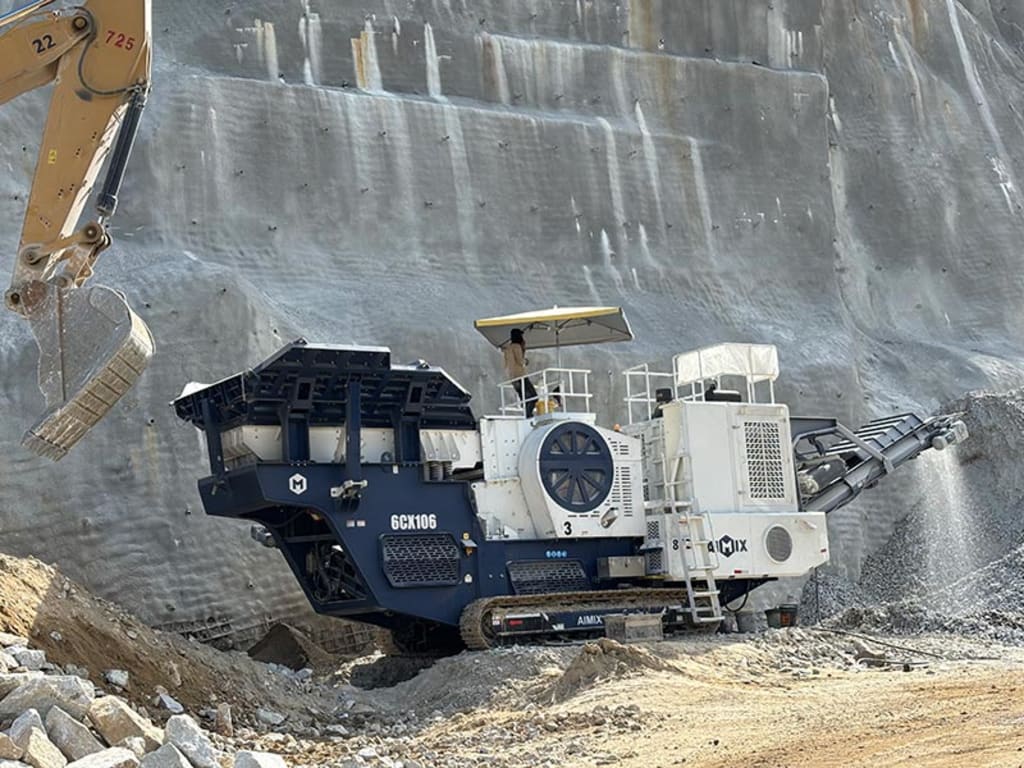
Custom concrete recycling requires a deliberate and technically informed methodology to transform demolition debris into valuable, specification-grade aggregate. The process is not a simple matter of indiscriminate crushing; it demands an understanding of material science, crushing mechanics, and logistical planning to produce a consistent, marketable product. A synergistic combination of track jaw crusher and impact crushers provides a highly effective and flexible solution for this task. Each machine plays a distinct and complementary role within a processing circuit, and their strategic deployment is critical to achieving both high-volume throughput and superior product characteristics. This approach moves beyond basic size reduction to create a controlled, on-site manufacturing process for recycled concrete aggregate (RCA).
Strategic Deployment: Assigning Roles in the Crushing Circuit
The foundation of an efficient custom recycling setup is the correct assignment of primary and secondary crushing duties. The track jaw crusher is engineered for the initial, high-force compression breaking of feed material. Its fundamental design, with a fixed and a moving jaw, creates a V-shaped cavity that applies massive compressive force to fracture large, reinforced concrete slabs, foundations, and curbings into manageable, primary-sized fragments, typically reducing them to minus 150mm to 200mm. This primary stage is crucial for liberating embedded rebar and creating a consistent feed size for downstream processing. The mobility of the track chassis allows the jaw crusher to be positioned directly at the demolition pile, minimizing the need for costly material handling with loaders.
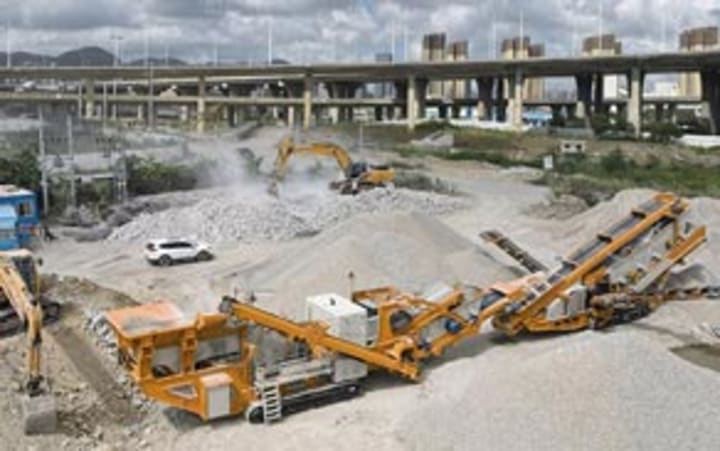
Subsequent processing is handled by the track mobile impact crusher. This unit operates on a fundamentally different principle: accelerated impact crushing. Material from the jaw crusher is fed into a high-speed rotor equipped with blow bars that violently throw the concrete against adjustable impact aprons or anvils. This action is exceptionally effective at secondary and tertiary reduction. More importantly, impact crushing is superior for shaping aggregate particles. The violent fracture along natural cleavage planes produces more cubical, fractured particles with improved angularity compared to the more slabby product sometimes yielded by compression crushers alone. This cubicity is a critical quality metric for RCA, as it ensures better mechanical interlock and density when used as a base or subbase material, directly influencing structural performance.
Process Optimization for Quality Aggregate Production
To produce specification-grade RCA, the process must incorporate deliberate quality control measures from feed to stockpile. Prior to primary crushing, a pre-screening or manual picking station is highly advantageous to remove major contaminants like wood, plastic, and loose asphalt. Following the jaw crusher, a robust electromagnetic separator is non-negotiable for extracting ferrous reinforcement bar (rebar) and wire mesh from the crushed stream. This protects downstream conveyors and the impact crusher's internals from damage.
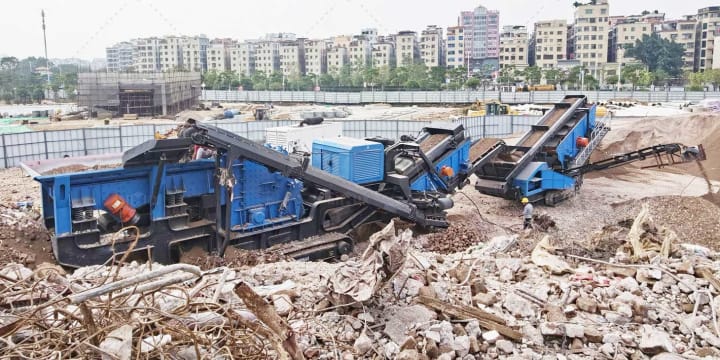
Gradation control is the next critical phase. The output from the impact crusher will be a mixture of sizes. An integrated or separate mobile screening plant is essential for classifying this material into saleable products. Screens with defined mesh sizes separate the aggregate into specified gradations such as 50mm minus, 20mm minus, and crusher dust (fines). The strategic use of closed-circuit crushing—where oversized material from the screens is recirculated back to the impact crusher—ensures complete reduction and optimal control over the top size of the final product. This ability to produce multiple, on-spec products from a single feed stream maximizes the economic yield of the operation and allows the processor to meet various market demands.
Site Logistics and Economic Model for Custom Solutions
The inherent mobility of track mounted crushers is the cornerstone of a viable custom recycling business model. A single set of machines can be sequentially deployed across multiple demolition sites, establishing temporary processing yards. This eliminates the prohibitive cost of transporting low-value, bulky demolition waste to a fixed recycling center. The operational sequence is logical: the track jaw crusher is set up for primary breaking, followed by the track impact crusher and screen for final processing. Once a site is cleared, the entire circuit can be relocated under its own power or with minimal transport, making the operation agile and responsive.
The economic justification is calculated on a dual savings model. First, it directly avoids landfill tipping fees, which are a significant and pure cost for demolition contractors. Second, it creates a new revenue stream from the sale of RCA. The key to profitability lies in maximizing the percentage of feed material converted into high-value, larger-sized aggregate (e.g., 20-50mm) rather than fines. The superior particle shape produced by the impact crusher directly commands a higher market price and ensures better performance, enhancing this revenue. Therefore, the return on investment (ROI) is a function of the machine's uptime, the efficiency of the crushing circuit in producing premium gradations, the local cost of disposal, and the market rate for quality RCA. A well-executed custom solution using this equipment pairing transforms a costly waste liability into a profitable, sustainable material resource, closing the loop on the construction lifecycle.
About the Creator
AIMIX
Construction Machine Manufacturer in China. Find Machines here: https://aimixconcretesolution.com/
How to Choose the Best Mobile App Development Company in Canada 2026
Choosing the right app development partner in 2026 isn’t just a procurement decision—it’s a strategic move that can define whether your digital product scales or stalls. The Canadian tech ecosystem has matured rapidly, with agencies offering everything from rapid MVP builds to enterprise-grade platforms powered by AI and cloud-native architectures.
By alan michaela day ago in 01
Replica Designer Handbags and Luxury Designer Purses: A Cultural Perspective
Handbags are among the most consistently used personal items in modern life. While often discussed in relation to fashion, their significance extends far beyond visual appeal or brand recognition. Handbags function as everyday tools, supporting routine activities such as work, travel, and social engagement. Within this broader context, conversations around Replica Designer Handbags and Luxury Designer Purses reflect changing attitudes toward access, value, and practicality rather than simple questions of trend or status.
By charliesamuel6 days ago in 01


Comments