
The future of artificial intelligence: Where will the latest innovations take us?
SSIE faculty members share their thoughts — and skepticism

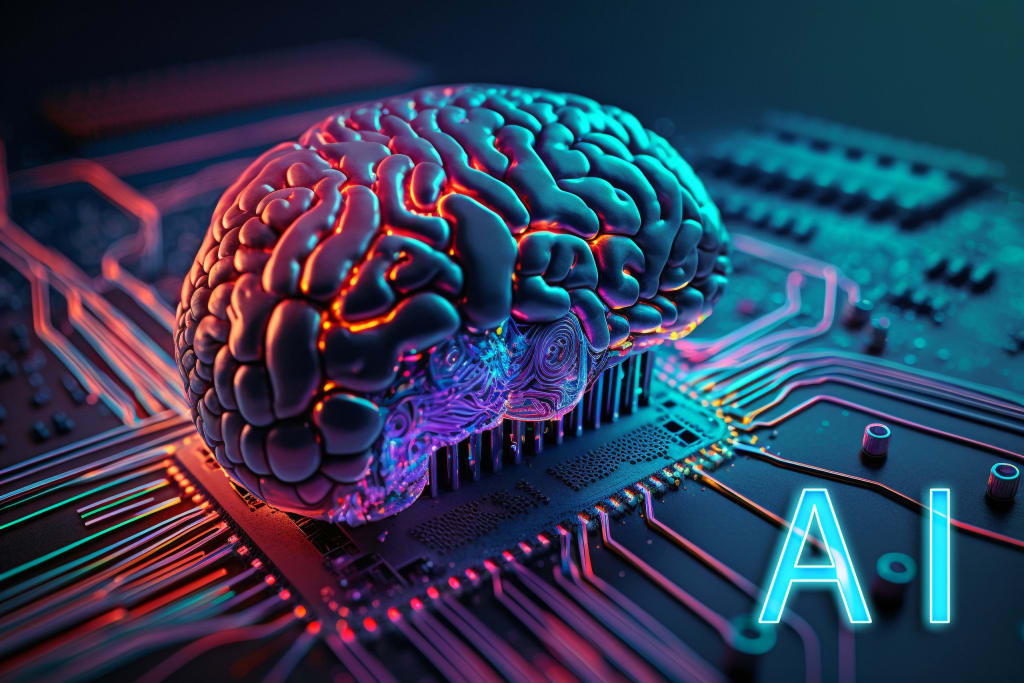
For years, all of us have relied on a certain level of artificial intelligence. Streaming services and social media develop algorithms to suggest content related to what you already like. Businesses use AI to analyze data, predict patterns or automate routine processes. Manufacturers program robots to do the repetitive tasks needed to create cars and other products.
The rise of generative AI, which can create new content, has accelerated both business investments and greater interest for society at large. Rather than just sorting preexisting information, OpenAI’s ChatGPT, Google’s DeepMind and other contenders can generate new text, images and video based on written prompts.
Researchers at the School of Systems Science and Industrial Engineering are examining AI from a variety of angles — the best ways to implement it, what we’re getting out of it and how to improve it.
A new landscape for this ’boom’
Carlos Gershenson-Garcia, a SUNY Empire Innovation Professor, has studied AI, artificial life and complex systems for the past two decades.
When surveying the current “AI boom,” he steps back for a moment and offers some historical perspective: “There always has been this tendency to think that breakthroughs are closer than they really are. People get disappointed and research funding stops, then it takes a decade to start up again. That creates what are called ‘AI winters.’”
He points to frustrations with machine translation and early artificial neural networks in the 1960s, and the failure of so-called “expert systems” — meant to emulate the decision-making ability of human experts — to deliver on promised advances in the 1990s.
“The big difference is that today the largest companies are IT companies, when in the ’60s and ’90s they were oil companies or banks, and then car companies. All of it was still industrial,” he says. “Today, all the richest companies are processing information.”
With breakthroughs in large language models such as ChatGPT, some futurists have speculated that AI can do the work of secretaries or law clerks, but Gershenson-Garcia sees that prediction as premature.
“In some cases, because this technology will simplify processes, you will be able to do the same thing with fewer people assisted by computers,” he says. “There will be very few cases where you will be able to take the humans out of the loop. There will be many more cases where you cannot get rid of any humans in the loop.”
’More noise and detail’
Assistant Professor Stephanie Tulk Jesso researches human/AI interaction and more general ideas of human-centered design — in short, asking people what they want from a product, rather than just forcing them to use something unsuitable for the task.
“I’ve never seen any successful approaches to incorporating AI to make any work better for anyone ever,” she says. “Granted, I haven’t seen everything under the sun — but in my own experience, AI just means having to dig through more noise and detail. It’s not adding anything of real value.”
Tulk Jesso believes there are many problems with greater reliance on AI in the workplace. One is that many tech experts are overselling — AI should be a tool, rather than a replacement for human employees. Another is how it’s often designed without understanding the job it’s meant to do, making it harder for employees rather than easier.
Lawsuits about copyrighted materials “scraped” and repurposed from the internet remain unresolved, and environmentalists have climate concerns about how much energy generative AI requires to run. Among the ethical concerns are “digital sweatshops” in developing countries where workers train AI models while enduring harsh conditions and low pay.
Tulk Jesso also sees AI as too unreliable for important tasks. In 2024, for instance, Google’s AI suggested adding glue to pizza to help the cheese stick better, as well as eating a small rock daily as part of a healthy diet.
Fundamentally, she says, we just don’t know enough about AI and how it works: “Steel is a design material. We test steel in a laboratory. We know the tensile strength and all kinds of details about that material. AI should be the same thing, but if we’re putting it into something based on a lot of assumptions, we’re not setting ourselves up for great success.”
Read Complete Article at https://www.binghamton.edu/news/story/5626/the-future-of-artificial-intelligence-where-will-the-latest-innovations-take-us
About the Creator
Silvie Karson
Passionate storyteller exploring the world of trends. With a background in digital marketing, I craft compelling narratives that inform and inspire. Whether diving into deep-dive features, growth analysis, or trend analysis.
Keep reading
More stories from Silvie Karson and writers in 01 and other communities.
Predictive Power in Medicine: Healthcare Analytics Market Accelerates with Real-Time Intelligence Demand
Within the digital healthcare field data now serves as a strong force that drives precision medicine as well as performance and preventive care. Healthcare analytics stands at the center of the current data revolution while rapidly expanding its market to revolutionize hospital operations, clinical practices and health systems. The increasing requirement for real-time intelligence coincides with the rapid transformation of global healthcare through advanced analytics tools.
By Silvie Karson7 months ago in 01
Winter Clothing: Practical Design, Materials, and Everyday Use
Winter clothing has long served a fundamental role in human survival and daily comfort. As temperatures drop, clothing becomes more than a style choice—it becomes a functional necessity designed to protect the body from cold, wind, and moisture. From traditional wool garments to modern insulated outerwear, winter clothing reflects both environmental demands and evolving lifestyles.
By charliesamuel6 days ago in 01




Comments (1)
AI's everywhere these days. I remember when businesses started using it for data analysis. Now, with generative AI, it's a whole new ballgame. Looking forward to seeing where it goes.