
The Day My Laptop Turned Against Me
They didn’t break into my home. They broke into my voice—and used AI to ransom my entire business.

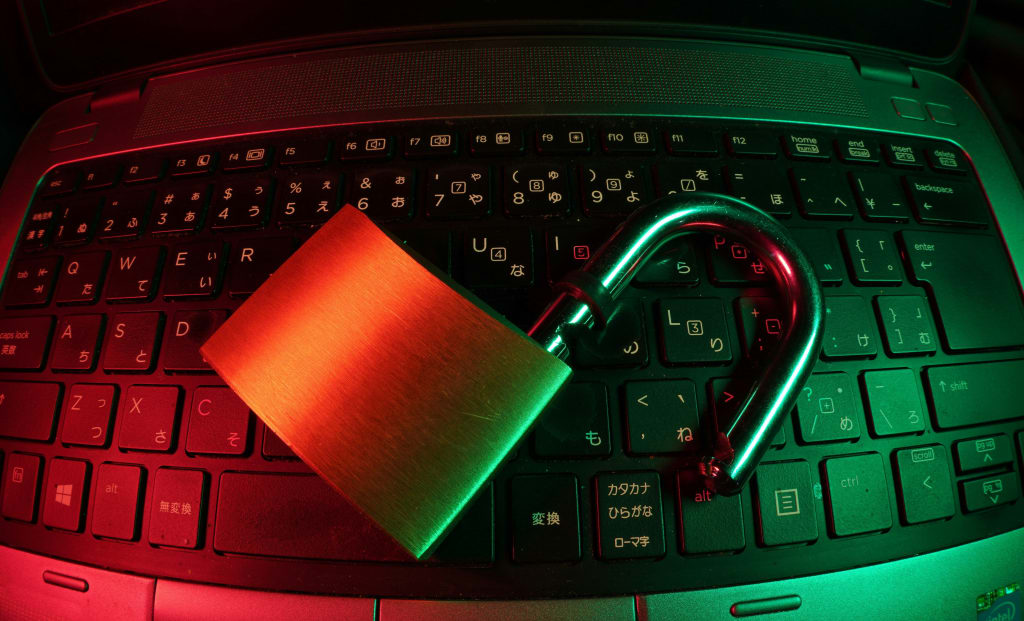
1. Business Was Booming
I run a small but thriving creative agency from my apartment in Austin. Nothing fancy—just me, two part-time designers, and a few loyal clients who liked our clean branding and fast turnarounds.
My laptop was my lifeline.
It held everything: invoices, passwords, client files, contract templates—even private conversations.
I was obsessive about backups, careful with links, and proud of my security habits.
But none of that mattered.
Because this time, the hacker didn’t just get my data.
They became me.
2. The Weird Call from Sarah
On a random Thursday, I got a text from Sarah, one of my top clients:
“Just confirming—should I pay the $1,000 to that new account you mentioned?”
I blinked.
What account?
I called her. She picked up, confused.
“You just left me a voice note on WhatsApp with new payment info. Said your banking platform changed.”
I hadn’t sent anything.
She played the voice note back over the phone.
It was me.
My voice. My tone. My usual “Hey Sarah!” greeting.
A short, casual message about changing banks. Just like I always did when projects wrapped.
But I never said those words.
3. The Lockdown Begins
That night, my laptop froze.
Then the screen went black.
Then this appeared:
“YOUR FILES HAVE BEEN ENCRYPTED.
Pay $4,000 in Bitcoin within 72 hours or lose everything.
[💀 Timer ticking down]"
I stared at the screen in disbelief.
I’d seen this in movies. Read about it on Reddit. But this wasn’t a joke. It was real.
Everything—every folder, every file, every photo—was inaccessible.
And somewhere out there, a deepfake version of my voice was being used to scam my clients.
4. The Rise of AI-Driven Attacks
Turns out, the hackers hadn’t “hacked” anything the old-fashioned way.
They’d followed me online.
Watched my webinars. Listened to podcasts I’d guested on. Scraped my voice from YouTube clips.
Then fed it into an AI voice cloning tool—the kind anyone can use for free now.
That’s all it took.
A few samples of me talking—and suddenly they had a synthetic version of my voice, able to say anything they typed.
And with that voice, they convinced multiple clients I was asking for new payment accounts, early deposits, and access credentials.
I wasn’t just being impersonated.
I was being weaponized.
5. My Entire Business Held Hostage
I didn’t pay the ransom. Not right away.
I called cybersecurity hotlines. I cried. I cursed. I contacted the FBI’s Internet Crime Complaint Center.
But the clock was ticking.
I had three days before everything—client work, tax records, logo files, personal memories—was deleted forever.
The hackers sent follow-up messages:
“Your files are still alive. You have 48 hours.”
“You seem like a smart guy. Just pay, and it’s over.”
Every hour, my anxiety grew.
Every minute, I kept wondering:
What if my voice is scamming someone right now?
6. What I Lost—and What I Learned
On day two, I gave in.
I paid the ransom—through a crypto exchange, to a wallet that vanished seconds later.
Fifteen minutes later, I received a decryption key.
They actually unlocked my files.
But my business was never the same.
I lost two clients who felt “uncomfortable continuing.”
I spent weeks cleaning up financial confusion.
I hired a cybersecurity consultant I couldn’t afford.
And I couldn’t shake the feeling that the internet had cloned part of me—and I couldn’t get it back.
7. The Dark Future We’re Already In
This wasn’t a random virus.
It was an AI-powered attack. Personalized. Precision-crafted.
It didn’t just use malware—it used me as malware.
And the scariest part?
It was cheap. Fast. Easy.
These tools are out there. Anyone with a grudge, curiosity, or a dollar can clone a voice, fake a face, and mimic trust.
This is the future.
And it’s already here.
8. What You Can Do—Now
Here’s how I’m protecting myself today—and how you can, too:
Use zero-trust mindset: Don’t trust any voice note, link, or message—even if it “sounds” like a friend or coworker.
Turn on 2FA: Everywhere. Seriously.
Encrypt your own drives: So if someone does get in, they don’t get everything.
Back up to offline drives: Cloud backups can be targeted too.
Watermark your voice/video content: Even subtle background tones can help prove authenticity.
And most importantly:
Tell people. Talk about it.
If someone had warned me about voice deepfakes, maybe I would’ve caught it sooner.
9. Final Thoughts
They say we live in a digital world.
But what they don’t say is: we live in a world where your voice can be stolen, your trust hijacked, and your identity used as a weapon.
I’m lucky I only lost money.
Some people lose reputations. Or worse—relationships.
So the next time someone sends you a message that sounds just a little off?
Don’t reply. Verify.
Author’s Note:
Based on emerging real-world ransomware and AI voice-cloning cases. Names and situations have been fictionalized, but the attack methods are real—and rising.
About the Creator
Syeed Zeeshan
Software engineer with a passion for coding, digital marketing, and crypto (Binance). Tech-savvy, football lover, and always exploring new trends in tech, finance, and innovation.
Keep reading
More stories from Syeed Zeeshan and writers in 01 and other communities.
The Fake Me: How I Was Hacked by My Own Face
1. My Life, Curated I never considered myself “Instagram famous.” But I had a decent following—around 18,000 people who liked my travel reels, coffee aesthetics, and perfectly filtered life updates. I wasn’t a model. I wasn’t an influencer. I was just Sam Reed, a freelance graphic designer who posted often and styled everything to look just right.
By Syeed Zeeshan10 months ago in 01
The Weight of Envelope
My brother, Mateo, used to say that hope was the heaviest thing a person could carry. He wasn’t being poetic. He was a carpenter, and for him, weight was a literal thing, the heft of a two-by-four, the drag of a toolbox across a job site. But the day he got the thin envelope from the Canadian government, the one with the maple leaf watermark, he stood in our kitchen and held it like it was made of lead.
By Jordan Belforda day ago in 01


Comments (1)
Brilliant ♦️♦️♦️I subscribed to you please add me to yours ♦️♦️♦️🙏