
The Comprehensive Guide to Air Purifiers: Technology, Health Impacts, and Future Innovations
The Invisible Crisis of Indoor Air Quality
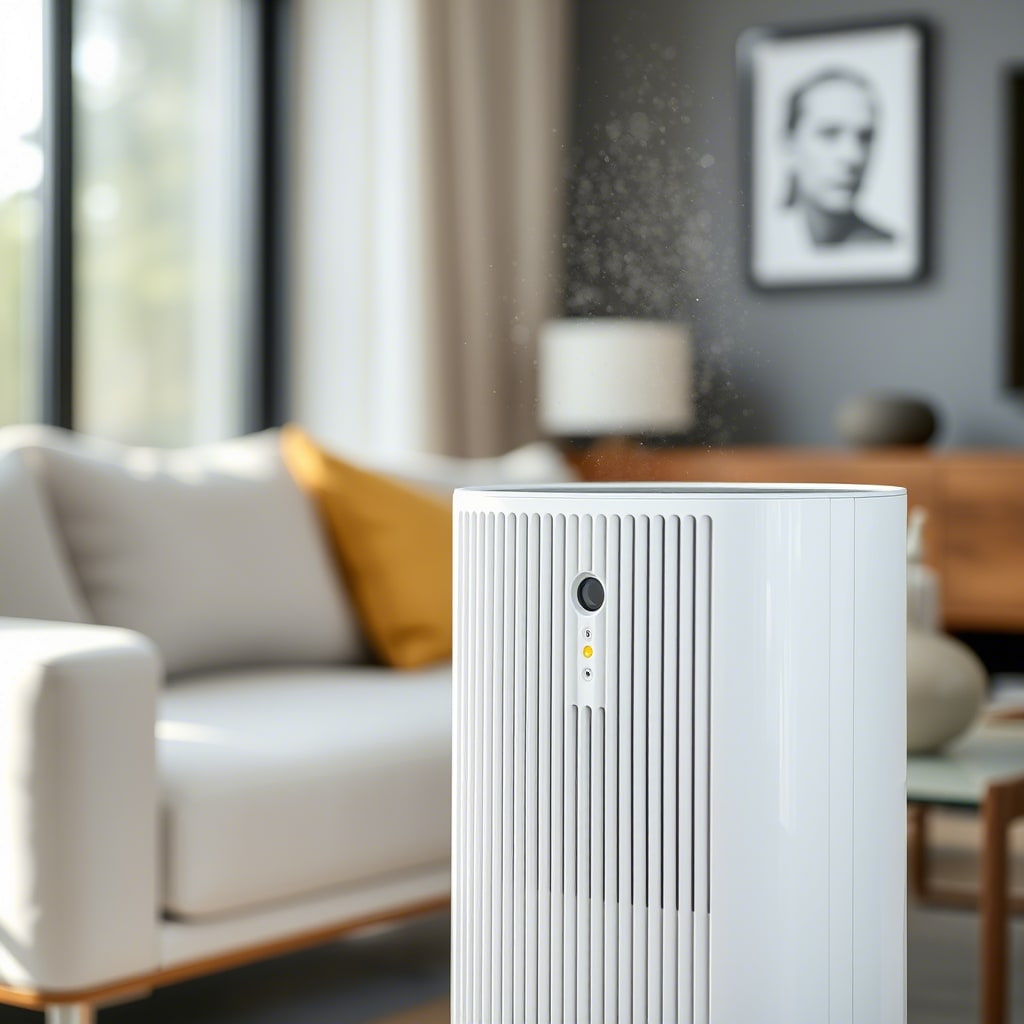
In an era where outdoor air pollution frequently dominates headlines, the quality of the air we breathe indoors remains a silent yet critical concern. The Environmental Protection Agency (EPA) estimates that indoor air can be 2–5 times more polluted than outdoor air, with concentrations of some pollutants reaching up to 100 times higher. This alarming statistic underscores the importance of air purification systems, which have evolved from niche medical devices to essential household appliances. Brands like Blueair , Dyson , and Coway have pioneered innovations to address this challenge, offering solutions tailored to diverse needs. This article delves into the science, history, and transformative potential of air purifiers, providing a definitive guide for consumers, health professionals, and tech enthusiasts.
Understanding Airborne Pollutants
Air purifiers combat a diverse array of contaminants, each requiring tailored filtration strategies:
Particulate Matter (PM2.5/PM10): Microscopic particles from wildfires, vehicle emissions, and dust mites. Brands such as IQAir specialize in hyper-efficient HEPA filters to capture these pollutants.
Volatile Organic Compounds (VOCs): Emitted by paints, cleaning agents, and furniture off-gassing. Austin Air systems use military-grade activated carbon to adsorb VOCs.
Biological Contaminants: Mold spores, pollen, bacteria, and viruses. GermGuardian models integrate UV-C light to neutralize microbes.
Gases and Odors: Smoke, cooking fumes, and pet dander. Winix purifiers combine carbon filters with plasma wave technology for odor elimination.
Recent studies, such as a 2023 report in Nature , highlight how nanoplastics—particles smaller than 1 micrometer—are increasingly found in indoor environments, posing unknown long-term health risks.
A Historical Perspective on Air Purification
The journey of air purification spans millennia:
Ancient Civilizations: Egyptians used charcoal filters for water and air cleansing.
19th Century: John Stenhouse’s charcoal gas masks laid the groundwork for modern filtration.
1940s: The Manhattan Project spurred HEPA filter development to contain radioactive particles.
21st Century: Smart purifiers with IoT integration and AI-driven air quality monitoring.
The 2020 pandemic accelerated innovation, with brands like Dyson and Blueair introducing models validated by institutions like the CDC for virus-trapping capabilities.
How Air Purifiers Work—Core Technologies
Modern purifiers employ a mix of mechanical and electronic systems:
HEPA Filters: Capture 99.97% of particles ≥0.3 microns. Miele and Honeywell use graphene-enhanced filters for improved longevity.
Activated Carbon: Adsorbs VOCs and odors; Alen BreatheSmart offers variants targeting formaldehyde.
UV-C Light: Disinfects by disrupting microbial DNA. Rabbit Air models balance UV-C efficacy with minimal ozone risk.
Ionizers and Electrostatic Precipitators: Charge particles to attract them to plates or surfaces. Sharp Plasmacluster systems comply with CARB regulations.
Photocatalytic Oxidation (PCO): Breaks down pollutants using UV light and catalysts. Air Oasis purifiers leverage PCO for industrial-grade cleaning.
Emerging tech includes cold plasma generators from Vollara and nanofiber membranes by Camfil that promise 99.99% efficiency without pressure drop issues.
Health Benefits and Vulnerable Populations
Air purifiers are not just appliances—they’re health interventions:
Respiratory Conditions: A 2022 meta-analysis in The Lancet found HEPA purifiers reduced asthma attacks by 30% in children. Brands like Levoit or Air Doctor offer medical-grade options for sensitive users.
Allergy Alleviation: Clinical trials show 50% reduction in symptom days for pollen allergy sufferers. Fellowes purifiers are certified asthma- and allergy-friendly.
Viral Transmission: CDC guidelines recommend portable HEPA units like Medify MA-40 in schools to mitigate airborne disease spread.
Cognitive Function: Harvard’s COGfx Study linked improved air quality to 101% faster crisis response times in office workers. Awair devices monitor CO2 and VOCs for workplace optimization.
Case Study: A Tokyo hospital reduced post-surgery infections by 45% using Philips UV-C purifiers in operating rooms.
Navigating the Market—A Buyer’s Guide
Choosing the right purifier requires evaluating:
CADR Ratings: Clean Air Delivery Rate (≥300 for large rooms). Coway Airmega 400S excels with IoT-enabled tracking.
Filtration Stages: Multi-stage systems (pre-filter + HEPA + carbon) outperform single-tech models. Okaysou AirMax8L offers six-stage purification.
Room Size vs. Coverage: AHAM’s 2/3 rule. Blue Pure 211+ covers up to 540 sq. ft.
Noise Levels: <50 dB for bedrooms; Dreo models feature whisper-quiet operation.
Smart Features: Xiaomi Mi Air Purifier 4 Pro integrates with Alexa for voice control.
Maintenance and Longevity
Neglecting upkeep undermines performance:
Filter Replacement: Every 6–12 months; Molekule offers recyclable filters.
Sensor Calibration: Withings Home devices auto-calibrate via app.
Pre-filters: Winix 5500-2 includes washable pre-filters for easy maintenance.
Pro Tip: Use air quality apps like AirVisual to track filter efficacy and schedule maintenance.
Environmental and Economic Considerations
The lifecycle impact of purifiers is under scrutiny:
Energy Use: Average 50–200 watts; Energy Star-certified models like Honeywell HPA300 save $30/year.
Waste: 68 million filters discarded annually in the U.S. Molekule and Austin Air now offer recyclable options.
Cost-Benefit Analysis: A $300 purifier can prevent $1,200/year in allergy medication costs.
The Future of Air Purification
Innovations poised to redefine the industry:
AI and Machine Learning: Aura Air uses predictive algorithms for virus detection.
Self-Cleaning Filters: MIT-inspired Puragen models repel dust via electrostatic nanofibers.
Integration with HVAC Systems: Carrier and Trane offer whole-home purification add-ons.
Sustainability: AirTamer A310 uses biodegradable filters made from mycelium.
By 2030, the market is projected to reach $12 billion, driven by smart city initiatives and climate change-induced pollution spikes.
Conclusion: Breathing Easier in the 21st Century
Air purifiers represent a confluence of necessity and innovation. As urbanization and environmental challenges escalate, brands like Samsung , LG , and Bissell continue to push boundaries, offering smarter, greener solutions. By understanding their mechanics, benefits, and evolution, consumers can transform indoor spaces into sanctuaries of clean air. The future is clear—and breathable.
About the Creator
Keep reading
More stories from writers in 01 and other communities.
How Healthcare Revenue Cycle Management Software Elevates Patient Experience & Organizational Productivity
What happens when a healthcare organization fails to manage its finances? Patient frustration rises, and staff productivity decreases. Healthcare revenue cycle management software provides answers to these challenges at a time when financial stability becomes harder to maintain.
By Sara Suarez3 days ago in 01
iPhone 18: Everything We Know So Far (When is The iPhone 18 Coming Out)
So here’s the big headline right out of the gate: the iPhone 18 is coming — just not when most people expect. Forget 2026. According to the latest leaks and industry chatter, Apple’s next regular iPhone refresh won’t land until early 2027.
By Info Post Gate6 days ago in 01
10 Times Rotten Tomatoes and I Disagreed
***Disclaimer*** I will be ranking these movies in the following manner: The greater the divide between Rotten Tomatoes and I, the higher up on the list (and I am referring to the critic's score, not the audience score). I will also show Rotten Tomatoes' score on each one in addition to my score. I am curious to know what everyone thinks, please let me know in the comments below!
By Madison "Maddy" Newton6 days ago in Geeks
Killing him slowly
There’s an intruder in my house again. He stumbles through the door, wet carrier bags in hand. He’s bought me offerings. I show my appreciation, letting him caress my beautiful body. He wants to touch me. I rub myself against his legs. He sighs, dropping the bags. He can’t resist touching me. Running his hand slowly down my spine, I arch my back towards his caress, let out a low purr. It’s what we both need.
By N J Delmas4 days ago in Horror




Comments
There are no comments for this story
Be the first to respond and start the conversation.