
The B2B iGaming Marketing Playbook for 2026
How the smartest iGaming vendors combine online precision with offline relationships.


B2B iGaming is an ecosystem built on precision. Technology matters, but so do trust, clarity, and communication. Operators don’t just look for great platforms; they look for partners who can explain their value quickly, prove reliability, and demonstrate expertise across highly competitive and regulated markets.
The way operators research suppliers has changed dramatically in the last few years. Visibility now depends on a mix of digital authority, strategic content, offline relationships, and constant alignment between marketing and sales. Suppliers who understand this new environment pull ahead. Those who rely on outdated approaches often become invisible, no matter how strong their product is.
At the center of this shift is a simple truth: Effective marketing in 2026 depends on knowing exactly where decision-makers look and which signals help them separate credible vendors from everyone else. This Vocal version explores that shift in detail and breaks down the strategies that consistently move the needle for B2B iGaming suppliers.
From Events to Online Discovery: The New Reality of iGaming Marketing
In the past, the industry revolved around physical presence. If you had a booth at ICE, appeared in the right magazines, and shook hands with the right people, you were already halfway to a deal. Marketing was largely event-driven and built on the belief that a strong offline presence equaled success.
But by late 2025, the industry had fully transformed into a hybrid model. Operators now begin their search online, long before they schedule a meeting. They scan search summaries, read content, compare case studies, and evaluate how a supplier positions itself digitally. Offline interactions still seal trust, but they no longer start the conversation.
Several major shifts explain how we got here:
- Brands now build authority digitally, not through booth size.
- Operators expect year-round communication, not just event-based peaks.
- Region-specific, regulatory-aware messaging outperforms generic claims.
- Data and CRM integration have merged marketing and sales into one coordinated cycle.
In this new environment, success isn’t about choosing online or offline. It’s about orchestrating both. When a supplier’s digital presence tells a clear story and their offline interactions reinforce it, operators notice.
Online Marketing Strategies Shaping the B2B iGaming Landscape
Operators form impressions early, often before they ever speak with a supplier. That first impression almost always comes from digital touchpoints. Search engines, content, videos, and social channels all influence how operators think about a vendor’s expertise and reliability.
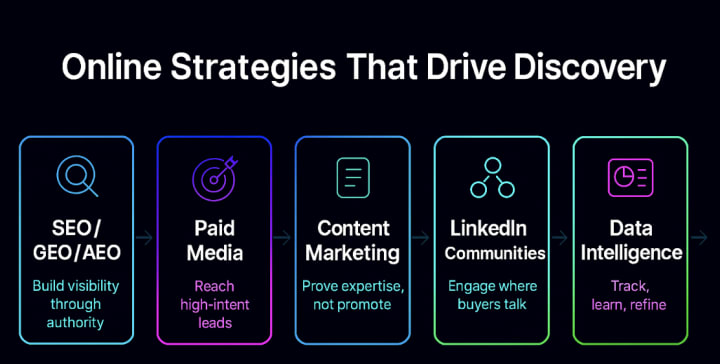
Here are the online strategies defining high performance heading into 2026.
1. SEO, GEO, and AEO Optimization
Search visibility has evolved far beyond keywords. Suppliers now optimize not only for traditional search engines but also for Generative and Answer Engines. These systems rely on structured data, factual clarity, and reliable information.
Schema markup, multilingual content, and transparent licensing details help these engines understand a supplier’s expertise.
Instead of competing for broad keywords like casino software provider, leading brands create deep content ecosystems around specific problems operators face. This might include market expansion tools, compliance automation, risk monitoring, or regional turnkey solutions.
This structure increases the chance of appearing in AI-generated summaries and answer snippets where operators now often form their first impressions.
2. Paid Media and Targeted Lead Generation
Precision matters more than ever. In B2B iGaming, the highest-performing paid strategies target operators who are actively exploring new integrations or searching for specific solutions.
Google Search and LinkedIn are the most reliable channels for this intent-driven traffic. High-performing campaigns send operators to landing pages designed to build credibility quickly and guide them toward demos or conversations.
Automation strengthens this entire system. When someone downloads a resource or attends a webinar, they enter tailored nurture sequences that keep communication relevant throughout long buying cycles.
3. Content Marketing and Thought Leadership
Content is now the clearest indicator of expertise. Operators expect suppliers to help them understand complex technology, regulatory conditions, and operational challenges.
The strongest suppliers publish resources focused on solving real problems rather than promoting features. These include whitepapers, webinars, engineering explainers, compliance updates, or visual case studies.
Distribution is equally important. Publishing insights through EGR Global, iGB, or regional industry media expands reach and lends third-party credibility. Repurposing extends the lifespan of each piece, ensuring one strong asset supports multiple channels.
4. LinkedIn and Community-Based Marketing
LinkedIn has become the daily conversation center for the iGaming B2B world. The suppliers who show up regularly with meaningful insights and thoughtful engagement stay top-of-mind long before direct outreach begins.
Operators respond most strongly to content from real people — founders, CTOs, engineers, product leads — rather than corporate announcements.
Smaller, invite-only communities on Slack, Discord, or WhatsApp add another layer. These spaces allow operators and suppliers to discuss challenges openly. The suppliers who contribute real value here often win warm introductions organically.
5. Automation and Account-Based Marketing
Automation connects every part of the digital journey. Signals such as website activity, new market entries, or regulatory changes trigger personalized messages.
Account-Based Marketing focuses these efforts on a defined list of high-value operators. Every webinar invitation, resource, or message is customized to the account’s context.
This approach turns outreach from generic to strategic — a key advantage in a long-cycle industry.
6. Data and Conversion Intelligence
Data-driven decision-making has become essential to B2B iGaming growth. Unified dashboards that track campaign performance, CRM activity, and sales outcomes reveal what truly influences demos and negotiations.
This clarity shifts marketing from a cost to a predictable revenue driver.
Digital visibility introduces your brand, but human trust closes deals. That is where offline strategy remains essential.
Offline Marketing Strategies That Still Matter
Even with strong digital footprints, operators rely on real-world interactions to make final decisions. In B2B iGaming, trust, familiarity, and expertise still grow fastest through in-person exchanges.
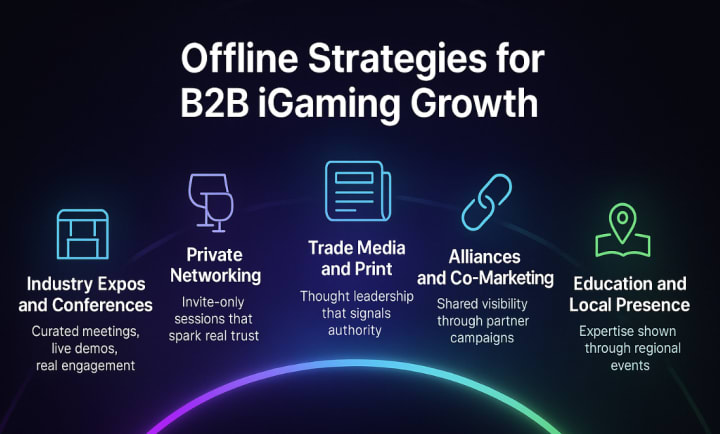
1. Industry Expos and Conferences
ICE London, SiGMA, and SBC Summit remain industry pillars. Their role has changed, though. Exhibitors no longer measure success through foot traffic but through pre-scheduled meetings, targeted demos, and structured follow-ups.
These events now function as extensions of digital campaigns rather than standalone marketing activities.
2. Private Networking and VIP Hospitality
Smaller, curated gatherings deliver deeper conversations. Executive breakfasts, private dinners, and expert roundtables allow decision-makers to speak candidly about challenges and opportunities.
Suppliers who prioritize insight over selling build the strongest relationships here.
3. Trade Media and Print Collaborations
Print still carries weight among senior decision-makers, especially in regions with strict digital advertising rules. Publications like EGR Global or Gambling Insider offer credibility through third-party coverage.
Suppliers increasingly integrate print into unified content strategies, repurposing features across digital channels to maximize impact.
4. Strategic Alliances and Co-Marketing
Co-marketing amplifies visibility for both partners. Joint webinars, shared press coverage, and collaborative panels help suppliers reach broader audiences.
Partners aligned through shared analytics gain insight into actual performance, not assumptions.
5. Education and Local Presence
Workshops, regional events, and compliance briefings help suppliers establish expertise in emerging markets. Presence in regions such as Latin America or Africa significantly boosts reputation and trust.
Actionable Checklist for B2B iGaming Marketers
- Identify your core operator personas across regions.
- Build structured content that performs well in GEO and AEO environments.
- Connect every channel through shared analytics.
- Reinforce digital engagement through events and private conversations.
- Use automation and ABM to create personalized, long-cycle communication.
- Localize messaging for growth markets.
- Track influence and deal progression, not just impressions.
Online Precision Meets Offline Trust
Operators may begin their search online, but they confirm their decisions through real interactions. The strongest B2B iGaming companies design systems where both experiences reinforce each other.
A lead captured through search might receive an invitation to meet at ICE. A contact made at an event might enter a personalized nurture path afterward. Every touchpoint feeds into a shared CRM, giving teams a complete picture of engagement.
This blend of digital authority and human trust defines marketing excellence in 2026.
About the Creator
Max Mykal
I’m Max, a Digital Marketing & SEO specialist with 4+ years of experience. At LenGreo, I help industries like Biotech, Cybersecurity and iGaming grow with tailored strategies. Let’s connect to drive your business forward!
How a Local Exterminator Handles Rodent Infestations: Complete Rodent Control Guide
Rodent infestations are a common problem in both homes and businesses. Mice and rats can enter buildings through very small openings, contaminate food, damage property, and spread harmful diseases. Because rodents reproduce quickly, even a small problem can grow into a serious infestation in a short time. This is why professional rodent control is essential for protecting your property and health.
By Jamal Moore3 days ago in 01
Becca
"Everything is so... flat." Denille said stupidly as she looked around her new neighborhood. She looked around at the muted desert where even the smallest sign of life seemed to have given up. The plant life was shrubs that were half cooked by the heat and where there should have been a lawn, a mess of white rocks laid glistening in the sun. Even the sky looked stretched thin, like the sun had ironed it smooth. She’d moved from Riverside, where at least there were hills, but here in Barstow, everything felt baked and brittle.
By Sara Wilson7 days ago in Fiction




Comments
There are no comments for this story
Be the first to respond and start the conversation.