mobile
The ins and outs of mobile; explore the evolution and future of smartphones and how mobile technology impacts the way we live and communicate.
What are MIDs in payments?
Entering the card payment world introduces a slew of new financial terms into the merchant's vocabulary. The Merchant Identification Number is one of them. This article will go over the meaning of the Merchant ID, how it works in the transaction flow, how to obtain one, and where to find it if you already have your MID.
By Amit Kumar3 years ago in 01
Mobile App Development Trends in 2023
Mobile app development is the process of creating mobile applications that operate on mobile devices. These applications can be pre-installed or downloaded and installed by the user afterward. They operate computing resources remotely by utilizing the device's network capabilities.
By codetrade india3 years ago in 01
How to Register a Mobile App on The Google Play Store?
The popularity and dominance of the Google Play Store account in the world of mobile software and applications cannot be disputed. The facts from the Google Play Store, which reveal that there are more than 3.48 million apps there and that around 3739 apps are released there every day, lends credibility to the domain.
By Delimp Technology3 years ago in 01
11 Laws of Social Media Marketing
In this article, we decided to go back to the origins, to the childhood of marketing, and when everything was just beginning. After all, the knowledge laid down at this time affects our business now in the present. Jack Trout, an American marketer, formulated the basic rules of marketing in the early 20th century. They are very simple, understandable, relevant, and still work. Marketing in social networks (SMM promotion) is no different in its essence from the usual. To achieve success, it is important to know the principles and follow them.
By Bikash Paul3 years ago in 01
Importance of gateway services for gaming industries
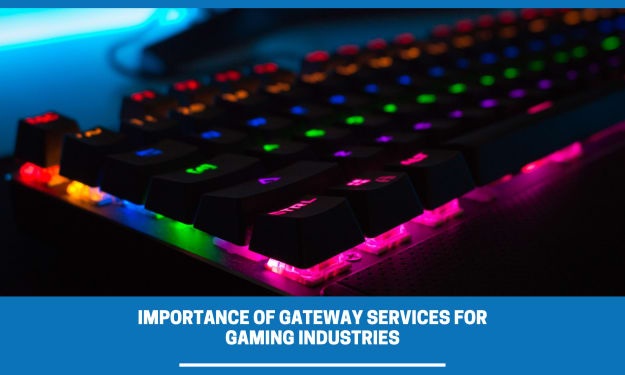
The ability to purchase websites is critical for the online gaming industry. Players from all over the world want the payment methods to be simple, smooth, and all-inclusive. To implement these features, the merchant must first consider the payment gateway. Today, we will discuss why payment gateways are so important in the online gaming industry, as well as the benefits they provide to both merchants and customers.
By Amit Kumar3 years ago in 01
How To Protect Your Personal Information From Hackers
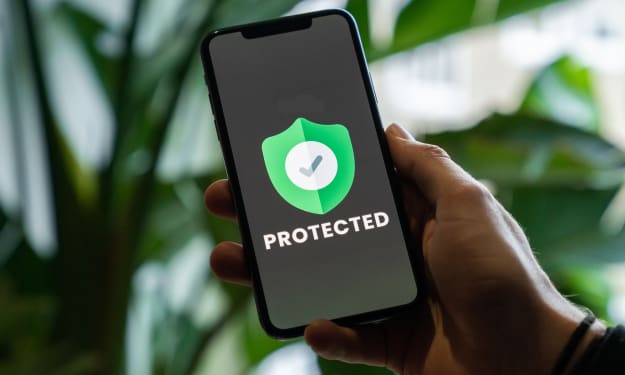
Why is it important to protect your private information? I have learned that everything I do require me to plug in my personal information via the internet or over the phone. I know I am not the only one who gets frustrated with scam emails and harassing robot calls. It seems like every day if you're not paying attention you could be a victim of hackers trying to obtain your personal information.
By AdonShar For Real3 years ago in 01
Fear Not, China Is Not Banning Cryptocurrency
itcoin has captured the world's attention as a use of blockchain technology and as an alternative to fiat currencies and commodities. Dubbed the next best technology after the internet, blockchain has provided solutions to problems that we have left unaddressed or ignored for decades. I won't get into the technical side of things, but here are some articles and videos I recommend. Work?? Fast-forward to today, February 5th, to be precise, the Chinese authorities have released a new cryptocurrency ban rule book. The Chinese government was already doing this last year, but many are avoiding it through foreign exchange. We are now ordering the all-powerful "Chinese firewall" to block access to foreign exchange and prevent citizens from making cryptocurrency transactions. To learn more about the Chinese government's stance, let's go back to 2013, when Bitcoin became popular among Chinese citizens and its price skyrocketed. Concerned about price volatility and speculation, the People's Bank of China and five other government ministries released an official notice in December 2013 titled "Notice on Preventing Financial Risks of Bitcoin" (link is Mandarin). Several points were highlighted: 1. Due to various factors such as limited supply, anonymity and lack of a centralized issuer, Bitcoin is not an official currency and cannot be used on open markets. Virtual assets. 2. All banks and financial institutions are not authorized to provide Bitcoin-related financial services or engage in Bitcoin-related trading activities. 3. All businesses and websites offering bitcoin related services must be registered with the required ministries4. Due to the anonymity and cross-border nature of Bitcoin, organizations providing Bitcoin-related services must implement preventive measures such as KYC to prevent money laundering. Any suspicious activity such as fraud, gambling or money laundering should be reported to the authorities. 5. Organizations providing Bitcoin-related services should educate the public about Bitcoin and the technology behind it, and should not mislead the public with false information. Simply put, Bitcoin is classified as a virtual commodity (such as in-game credit) that can be bought and sold in its natural form and cannot be exchanged for fiat currency. It cannot be defined as money as it serves as a medium of exchange, a unit of account and a store of value. The notice dates back to 2013 but is still relevant regarding the Chinese government's stance on Bitcoin and, as mentioned above, makes no mention of a ban on Bitcoin and cryptocurrencies. Rather, regulation and education on Bitcoin and blockchain will play a role in the Chinese crypto market. A similar notice was issued in January 2017, again emphasizing that Bitcoin is a virtual commodity and not a currency. In September 2017, due to the initial coin offering (ICO) boom, another notice was released entitled "Notice on the Prevention of Financial Risk of Issued Tokens". Shortly thereafter, Icons were banned, and Chinese exchanges were investigated and eventually shut down. (hindsight is 20/20. They made the right decision to ban his ICO and stop stupid gambling). In January 2018, another blow was dealt to the Chinese cryptocurrency community when mining operations faced serious raids due to excessive power consumption. While there is no official explanation for cracking down on cryptocurrencies, capital controls, illegal activities, and protecting citizens from financial risks are some of the main reasons given by experts. In fact, Chinese regulators have introduced tighter controls, such as foreign withdrawal caps and restrictions on foreign direct investment, to limit capital outflows and secure domestic investment. The anonymity and ease of cross-border transactions also make cryptocurrencies a popular means of money laundering and fraud. At its peak, China accounted for over 95% of her global bitcoin trading volume and her three-quarters of mining operations. As regulators stepped in to control trading and mining operations, China's dominance has dwindled significantly in exchange for stability. The future of cryptocurrencies is being cast a shadow as countries such as South Korea and India lag behind in cracking down. (Here I repeat my point: States regulate cryptocurrencies, not ban them). No doubt more countries will join in the coming months to help contain the turbulent crypto market. Indeed, some orders were long overdue. Over the past year, cryptocurrencies have experienced unprecedented price volatility, with IOS happening literally every other day. The 2017 market capitalization increased from $18 billion in January to an all-time high of $828 billion. Despite the crackdown, the Chinese community is surprisingly thriving. The online and offline communities are thriving (I personally attended some events and visited some companies), and blockchain startups are booming all over China. Leading blockchain companies such as NEO, TUM and Chains have attracted a lot of attention in the country. Startups such as Nebulae, High Performance Blockchain (HUB) and Bib ox are also gaining momentum. Even giants like Alibaba and Tencent are exploring the potential of blockchain to power their platforms. The list goes on and on, but you get my point. Be Buggy! The Chinese government has also adopted blockchain technology and has stepped up its efforts in recent years to help build a blockchain ecosystem. China's 13th Five-Year Plan (2016-2020) calls for the development of promising technologies such as blockchain and artificial intelligence. We also plan to strengthen our research on the application of fintech in regulation, cloud computing and big data. Even the People's Bank of China is testing a prototype blockchain-based digital currency. However, it has yet to see acceptance by the Chinese public as it is likely to be a centralized digital currency with cryptographic technology. The Blockchain Technology and Industry Development Forum is part of other initiatives by the Chinese government to support blockchain development in China. A recent report by the China Blockchain Research Center titled "China Blockchain Development Report 2018" details the development of the blockchain industry in China in 2017. In a separate section, the report highlights the optimistic outlook for the blockchain industry and the significant attention it received from VCs and the Chinese government in 2017. In summary, despite its enforcement, the Chinese government has taken a more positive stance on blockchain technology than on cryptocurrencies and mining businesses. China wants to control cryptocurrency and China will control it. Repeated enforcement by regulators should protect citizens from cryptocurrency economic risks and limit capital outflows. Currently, it is legal for Chinese citizens to own cryptocurrencies, but they are not allowed to conduct transactions. Hence, the ban on exchanges. There is no doubt that the Chinese cryptocurrency market will make a comeback once the market stabilizes in the coming months (or years). Blockchain and cryptocurrencies go hand in hand (except for private chains that don't require tokens)
By Bhagirath Roy3 years ago in 01
How to avoid problems with online payments
Online payments are the dominant payment force in the twenty-first century. Offering them, but also establishing them well, makes a customer happy with their purchase and a merchant more secure. Today, we will discuss how to avoid some common issues with internet payments and what the key factors are.
By Amit Kumar3 years ago in 01
Tips to ensure online payments security
Security is a two-way street, just like payments. That is, both merchants and customers must address this issue. But don't worry! There are numerous technologies available to assist you in securing payments and keeping transactions secure. Of course, banks, PSPs, and online payment gateway service providers can help to make the experience more secure for all parties involved.
By Amit Kumar3 years ago in 01
Contactless Payment Systems vs Online Payments
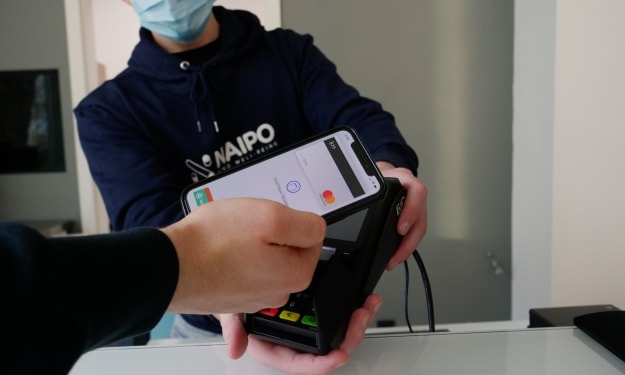
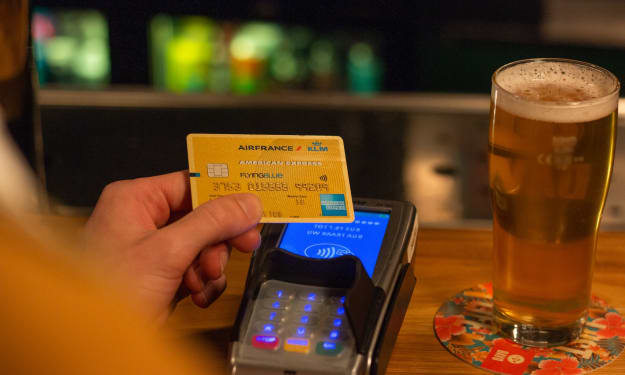
Contactless payments and online payments will be at their peak in 2022. Nonetheless, these two systems have very different origins and purposes. Today, we'll go over each payment method in depth, explaining how they work and how they differ.
By Amit Kumar3 years ago in 01