gadgets
The future is here; discover the latest gadgets and electronics on the market making life a whole lot simpler and cooler.
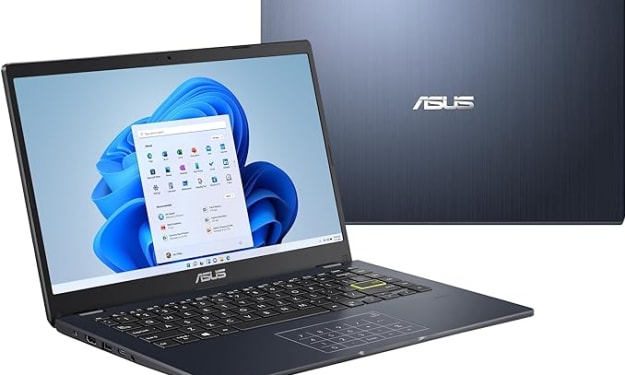
Best laptop to buy right now
Introduction: In a world that thrives on mobility and versatility, the choice of a laptop has evolved into a decision that can greatly impact our daily lives. The laptop you choose becomes an extension of your digital self, influencing how you work, study, and connect with the world. As we navigate the vast landscape of portable computing, it's crucial to explore the myriad options available to ensure that your chosen laptop aligns perfectly with your unique needs and preferences.
By Miss Kendra2 years ago in 01
Best Stand Up Desk You Can Buy
Introduction In the dynamic landscape of the modern workplace, the “SHW Memory Preset Electric Height Adjustable Standing Desk, 40 X 24 inches, Maple” has become a symbol of progress and adaptability. With a growing emphasis on employee wellness, productivity, and the pursuit of a healthier lifestyle, standing desks have surged in popularity.
By Marselis Scott2 years ago in 01
The Latest Israel and Palestine News: A Comprehensive Analysis. Content Warning.
The Historical Context To understand the current situation in Israel and Palestine, it's crucial to delve into the historical context. The roots of this conflict trace back to the late 19th century when both Jewish and Arab populations inhabited the region known as Palestine. The emergence of Zionism, a political movement advocating for the establishment of a Jewish homeland in Palestine, intensified tensions.
By Explore the Universe2 years ago in 01
To Be A Vocal Resource
Introduction Today I wrote something that may become a Vocal Resource if they think it fits the bill. I have one ten-month idea that was taken up by Vocal but because of its age, when it was published, it appeared on Page three of the Vocal Resources "Tips and Guides" which you can check out here.
By Mike Singleton 💜 Mikeydred 2 years ago in 01
Is Refurbished Laptops Better Than Original ?
In the world of technology, the pace at which new gadgets are introduced is nothing short of astounding. The laptop market, in particular, is flooded with options ranging from brand-new models to refurbished ones. If you're in the market for a laptop, you might be wondering if a refurbished laptop is a better choice than a brand-new one. This article will delve into the intricacies of refurbished laptops and help you make an informed decision.
By Used Store2 years ago in 01
Best iPhone 15 Phone Cases Right Now
In a world where our smartphones are not just devices, but extensions of ourselves, protecting them has become an essential part of daily life. With the release of the much-anticipated iPhone 15 Pro and iPhone 15 Pro Max, the need for reliable and stylish protection has never been more apparent. The delicate design and cutting-edge technology packed into these devices make safeguarding them a top priority for users.
By Jayleen Guillen2 years ago in 01
Why your phone battery gets worse over time
A drop of gasoline, a match, and a battery, all store energy— but, after each expends its energy, only the battery is recyclable. That's because, chemically speaking, a dead battery is actually not that different from a fresh one. Most of the batteries we use today take advantage of the fact that some metals like to release electrons and others like to accept them. For example, in a typical alkaline double-A battery, zinc metal reacts with hydroxide ions, changing into zinc oxide and releasing electrons at the negative terminal. The electrons travel through, say, a light bulb, and then return to the battery at the positive terminal, where they’re accepted by manganese dioxide. Different batteries use different combinations of metals, and sometimes non-metals like graphite, but the basic idea is to use a pair of chemical reactions to generate a stream of electrons. Almost all batteries, even single-use batteries, are theoretically rechargeable. That's because the metals and other chemicals are still right there. That’s very different than in, say, gasoline, where the liquid hydrocarbon molecules are converted to gases. You can't convert exhaust back into gasoline, but, with some work you can convert, say, zinc oxide back to zinc. So then what's the difference between these and these? The short answer is that trying to recharge a single-use battery doesn’t just force these reactions to run in reverse. It also results in a bunch of side reactions that produce useless contaminants, reducing a battery’s capacity; and it could even damage the internal structure of the battery, leading to a loss of electrical contact and failure. Rechargeable batteries are engineered to avoid these issues. Look at this lithium-ion battery. Both sides have an atomic-level structure that you can imagine as lots of docks. So when the battery is powering something, the lithium “ships” give up their electrons to power the circuit, and then sail over to the other side of the battery, dock in an orderly, organized way, and meet up with their now-lower-energy electrons. When the battery is being charged, the opposite happens. Over the course of hundreds, sometimes thousands, of charge cycles, some of the lithium ion ships sort of veer off course and engage in side reactions, producing stuff that increases the internal resistance of the battery, which in turn makes it lose efficiency and power until it inevitably dies. Even when that happens, you can bring dead batteries back to life— whether they’re rechargeable or not— by recycling them. The heart of most battery recycling is a process called smelting, which is basically just melting the metallic parts. This drives off impurities, returning metals back to their initial, orderly state. Unfortunately, in many countries you can’t just toss household batteries in with your regular recycling. You have to take them to a battery collection point or recycling center. Same goes for more complicated rechargeable batteries: you need to bring them to a collection point or send them back to the company you bought them from. It’s a pain, but absolutely worth the time and effort, because recycling batteries is critical. Not only does it prevent potentially toxic battery metals from leaking into the environment, it conserves scarce— and vital— resources. Earth has about 22 million tons of lithium— enough for about 2.5 billion EVs. That sounds like plenty, but it’s only 25% higher than the number of EVs experts believe it’ll take to reach net zero emissions by 2050, and that doesn’t even account for laptops, phones, and anything else that uses a lithium-ion battery. Currently, though, most lithium-ion batteries are not manufactured with recycling in mind. The designs are intricate and non-standard, and the components are held together by almost indestructible glues. So today, less than 5% of lithium-ion batteries are recycled. Regulations that clearly define who is responsible for a spent battery and what should happen to it can boost recycling dramatically. For example, lead-acid batteries are generally subject to stringent regulations and are recycled at much higher rates than lithium-ion batteries. Over the next century, we’ll need to recycle huge numbers of EV batteries, so scientists are working on making the battery recycling process cheaper and more environmentally friendly. Smelting uses a lot of energy and, depending on the type of battery, can release harmful by-products. In addition to regulations, industrial processes, and our own individual choices, battery tech will also continue to evolve.There are proof-of-concept batteries being developed that can convert physical force, ambient sound, and even pee into electricity. But if your top priority is to make your number one source of power, number one, sorry to say, but urine for a long wait.
By Antonín Valda2 years ago in 01
Understanding Building Management Systems (BMS)
In today's fast-paced world, efficient management and sustainability are crucial factors in the functionality of any commercial or residential building. One way to achieve these objectives is through the implementation of a Building Management System (BMS). A BMS, also known as a Building Automation System (BAS) or Building Control System (BCS), is a sophisticated solution that integrates and centralizes various building operations to enhance efficiency, control, and sustainability.
By Mohamed Haneef2 years ago in 01