cybersecurity
Our personal, digital, national and military security depend on a safe cyber space.
The Digital Shift
The article explores the rise of remote work and its technological implications, including the benefits, popular collaboration tools, infrastructure requirements, trends, challenges, employee well-being, implications for businesses, work-life balance, software efficiency, adoption strategies, and the conclusion on remote work technology advancements.
By Timothy A Rowland2 years ago in 01
The Ethics of Technology: What Are Our Responsibilities?
In the digital age, technology has become a ubiquitous part of our lives. From the moment we wake up to the moment we go to sleep, we interact with a variety of devices and digital platforms that impact every aspect of our existence.
By Jose Mejia2 years ago in 01
Navigating Social Media Bans
This article explores the impact of social media bans on digital marketing, including how bans can affect marketing strategies, recent instances of bans, strategies to adapt to bans, the impact on online advertising budgets and ROI, alternative platforms for digital marketing, the effects on marketing objectives, analyzing the consequences of bans, recommendations for policymakers and businesses, balancing traditional and digital marketing, and the future outlook for digital marketing.
By Timothy A Rowland2 years ago in 01
Navigating Tech Regulation
An in-depth exploration of the global landscape of tech regulation, covering topics such as the impact of regulations on consumer protection and data privacy, regulatory trends and challenges faced by tech companies, the role of international organizations in harmonizing regulations, and the implications of tech regulations on innovation and the digital economy.
By Timothy A Rowland2 years ago in 01
Navigating User Data Protection in the Era of Social Media Bans
The article explores the impact of social media bans on user privacy, including effects on targeted advertising, user behavior, data breaches, data protection measures, user reactions, legal implications, censorship, data security measures, online privacy, risks of monitoring, and public perception.
By Timothy A Rowland2 years ago in 01
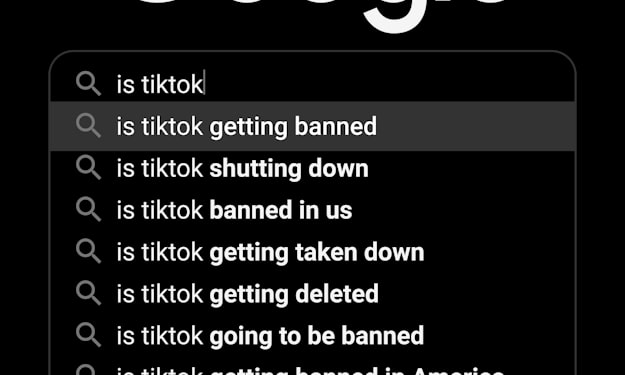
The TikTok Ban Saga
The House of Representatives passed legislation to potentially ban TikTok in the US due to concerns about data privacy, national security risks, and Chinese government influence, sparking discussions on the impact, alternatives, security concerns, legislative process, and legal implications of the ban.
By Timothy A Rowland2 years ago in 01
Centralized Network Management: A Security Fortress for Organizations
In today's digital landscape, where cyber threats are constantly evolving, organizations of all sizes require robust network security. A critical component of this security posture is centralized network management. This approach offers a holistic network view, enabling administrators to identify and mitigate vulnerabilities, ultimately enhancing overall security proactively.
By Pankaj Kumbhar2 years ago in 01
The Power of Technology
In the busy city of Metronia, where skyscrapers towered above and neon lights lighted the streets below, technology was more than a convenience; it was way of life. Among the crowds running through the streets was a young woman named Maya, whose existence was inextricably linked to technological marvels.
By Jonathan Rose2 years ago in 01
Business CPL. Content Warning.
No keyword ideas for “Rising gasoline costs kept inflation elevated in February, underscoring that the road to more modest consumer price increases following a pandemic-induced spike may continue to be bumpy. The climb in fuel costs and rent offset flat food prices. Overall prices rose 3.2% from a year earlier, up from 3.1% in January, according to the Labor Department’s consumer price index. On a monthly basis, costs increased 0.4% following a 0.3% gain the previous month. No keyword ideas for “What is the core inflation rate right now? Core prices, which exclude volatile food and energy items and are watched more closely by the Federal Reserve, increased 0.4% after a similar rise in January. That still lowered the annual increase from 3.9% to 3.8%, the smallest since May 2021. Protect your assets: Best high-yield savings accounts of 2023 No keyword ideas for “By the end of the year, Barclays expects overall inflation to slow modestly to 2.9% while the core reading drifts down to 3.1% - both still notably above the Fed’s 2% goal. Will the Fed lower interest rates in 2024? Fed Chair Jerome Powell told Congress last week that the central bank will likely trim its key interest rate this year but not until officials see more evidence that inflation is moving sustainably toward the Fed’s target. Since March 2022, the Fed has hiked its benchmark short-term rate from near zero to a 22-year high of 5% to 5.25% to corral inflation, though officials have paused since July.” No keyword ideas for “Inflation has been a major worry for many Americans, but a growing number have recently begun to feel more positive about the economy according to a poll conducted by The New York Times and Siena College. The survey, taken in late February, found 26% of registered voters nationwide felt the economy was good or excellent, a 6% jump from July. The increased optimism was most common among older Democrats. President Joe Biden still faces significant backlash over inflation from voters, and a slower-than-anticipated return to normal price increases could hurt his reelection chances. In a statement after the release of Tuesday's index report, Biden said, "Inflation is down two-thirds from its peak and annual core inflation is the lowest since May 2021. Wages are rising faster than prices over the last year and since the pandemic." However, he added, "As I said in my State of the Union, we have more to do to lower costs and give the middle class a fair shot." He said the federal budget he proposed Monday would address inflation by lowering prescription drug costs and rent, among other measures. Biden’s top economic adviser said the question of affordability will be a top priority for the president. “It is going to center on health care. It's going to center on housing. If you look in terms of the sources of affordability challenges, health care and housing are two of the biggest," Lael Brainard, director of the National Economic Council, told USA TODAY on Tuesday. "Of course, the president also is going to continue focusing on inflation at the grocery store where actually we saw prices being flat over the month.” It's unclear how much Biden will benefit from improved inflation numbers at the ballot box. For example, although grocery prices overall have risen modestly in the past year, "voters are wanting even lower prices at the grocery stores," says Gabriel Mathy, an economic professor at American University. "This could lead to them feeling nostalgic for the prices" under former President Donald Trump, Mathy added. And most voters' perceptions of the economy are influenced more by their partisan leanings than objective economic data, says Todd Belt, director of the political management program at George Washington University. But Mark Zandi, chief economist of Moody's Analytics, says Biden's argument for reelection will strengthen among independent voters if inflation numbers continue to improve in coming months. Contributing: Swapna Venugopal Ramaswamy, Rachel Looker”
By Ranjit Ray2 years ago in 01