
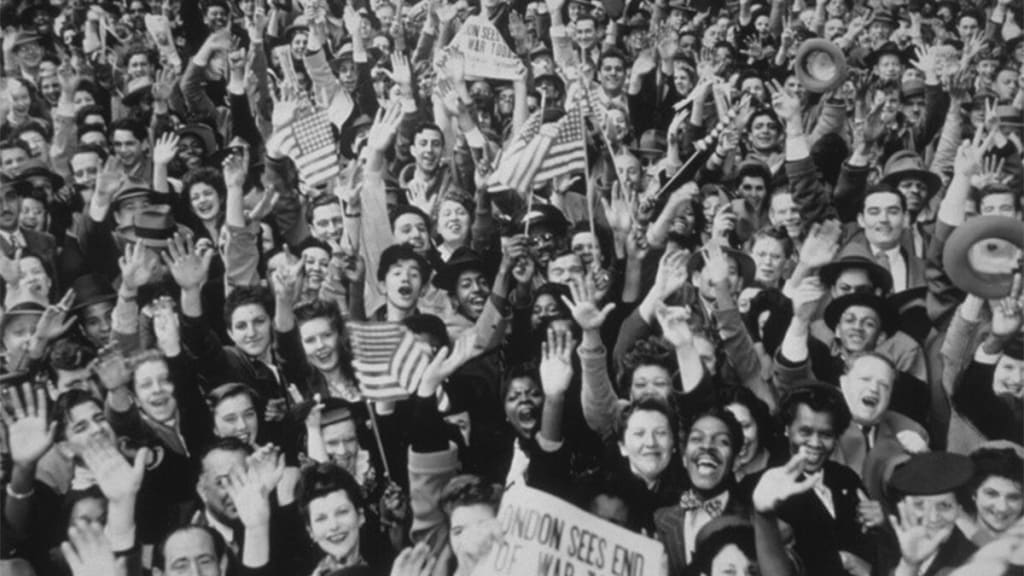
World War II was a global conflict that lasted from 1939 to 1945 and involved the majority of the world's nations, including all of the great powers, organized into two opposing military alliances: the Allies and the Axis.
The root causes of the war can be traced back to the Treaty of Versailles, which ended World War I. The treaty placed harsh economic and territorial sanctions on Germany, which ultimately led to the rise of the Nazi Party and the eventual outbreak of World War II. The treaty imposed heavy reparations on Germany, which led to economic hardship and political instability in the country.
The rise of Nazi Germany
The Nazi Party, led by Adolf Hitler, came to power in Germany in 1933. Hitler's ideology was based on a belief in the supremacy of the Aryan race and the need for Lebensraum, or living space, for the German people. He sought to expand Germany's borders and create a new order in Europe based on Nazi principles.
Hitler's aggressive foreign policy led to the annexation of Austria in March 1938 and the occupation of Czechoslovakia in September of the same year. These actions led to the signing of the Munich Agreement, in which Britain and France agreed to allow Germany to annex the Sudetenland region of Czechoslovakia in exchange for a promise of peace.
However, Hitler's ambitions were not limited to Czechoslovakia. In August 1939, Nazi Germany and the Soviet Union signed a non-aggression pact, in which they agreed to divide up Eastern Europe between them. This paved the way for Germany's invasion of Poland on September 1, 1939, which triggered the start of World War II.
The war spreads
Britain and France, who had guaranteed Poland's security, declared war on Germany two days later. The war quickly spread throughout Europe, with Germany invading Denmark, Norway, Belgium, Luxembourg, the Netherlands, and France. The fall of France in June 1940 marked a major turning point in the war, as Germany gained control of Western Europe.
The Axis powers, led by Germany, Japan, and Italy, quickly gained the upper hand in the early years of the war. Japan launched a surprise attack on the United States at Pearl Harbor, Hawaii, on December 7, 1941, bringing the United States into the war.
The tide turns
However, the tide of the war began to turn in 1942, with the Allied victories at the battles of Stalingrad and El Alamein. The industrial might of the United States and the vast manpower of the Soviet Union were crucial factors in the Allied victory.
The war was fought on multiple fronts, including Europe, Africa, Asia, and the Pacific. It involved all aspects of modern warfare, including air, land, and sea battles. The war also witnessed some of the deadliest battles in human history, including the Battle of Stalingrad, the Battle of the Bulge, and the Battle of Normandy.
The Holocaust
The Holocaust, which was the systematic extermination of six million Jews by Nazi Germany, is considered one of the most heinous crimes in human history. The Nazi regime also targeted other groups, including homosexuals, disabled people, and Roma, among others.
The war also witnessed the first and only use of nuclear weapons in warfare, with the United States dropping atomic bombs on the Japanese cities of Hiroshima and Nagasaki in August 1945.
The aftermath
The war had a profound impact on the world, with Europe and Asia left in ruins and the political landscape of the world forever changed. It marked the end of the era of colonialism, with many countries achieving independence in the aftermath of the war. The United States emerged as the world's dominant economic and military power, and the Soviet Union
About the Creator
Hassan Irfan
I'm 18 years old college student and I'm here to provide you all some of the best articles
Keep reading
More stories from Hassan Irfan and writers in 01 and other communities.
TOURISM IN PAKISTAN
Pakistan is a land of diverse cultures, breathtaking landscapes, and historic sites. Over the past few years, the country has made significant strides in promoting tourism, and as a result, more and more people are discovering the beauty of Pakistan. From snow-capped mountains to ancient cities, there is something for everyone in this country.
By Hassan Irfan3 years ago in 01
Generative AI Market Size and Forecast 2025–2033: The Technology Redefining Creativity, Productivity, and Intelligence
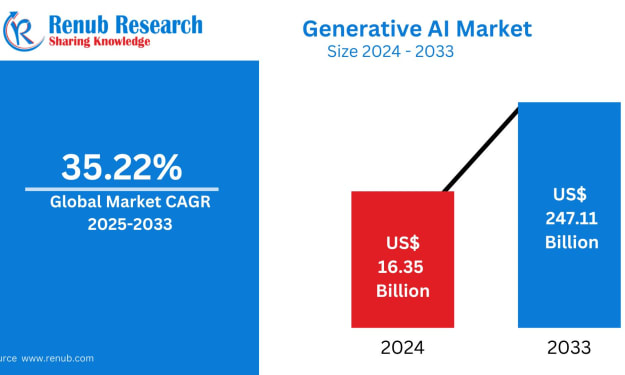
Generative AI Market Overview The Generative AI Market is expected to reach US$ 247.11 billion by 2033, expanding rapidly from US$ 16.35 billion in 2024, at a remarkable CAGR of 35.22% from 2025 to 2033. This explosive growth reflects a fundamental shift in how businesses, governments, and consumers interact with technology. No longer limited to analyzing data or predicting outcomes, generative AI systems now create—producing original text, images, videos, music, software code, and even scientific hypotheses.
By Renub Research4 days ago in 01
HubSpot Onboarding Challenges Most Teams Face Without Consulting
I still remember the day our team finally signed off on HubSpot. There was a sense of relief mixed with excitement. We believed the platform itself would fix our scattered CRM data, improve follow ups, and bring calm to our marketing chaos. No one said it out loud, but we all assumed onboarding would be simple.
By Jane Smith3 days ago in 01



Comments
There are no comments for this story
Be the first to respond and start the conversation.