
Spain Arrests Suspected Hacker Targeting US and Spanish Military Agencies
ZeroDay

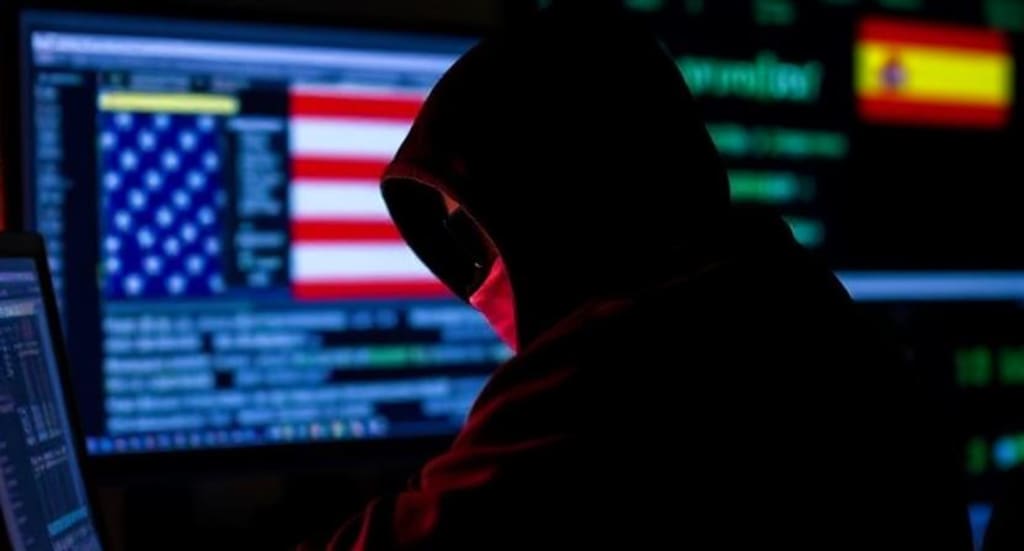
Alicante, Spain In a landmark cybersecurity operation, Spanish police have arrested a suspected hacker in Alicante, accused of orchestrating a series of cyberattacks against high-profile public and private institutions, including the Guardia Civil, the Ministry of Defense, NATO, the US Army, and various universities. This arrest marks a significant milestone in Spain's fight against cybercrime, reflecting the growing international collaboration required to combat sophisticated digital threats.
The arrest took place following an extensive investigation launched in early 2024, triggered by a report of a data breach involving a business association in Madrid. The breach led investigators to dark web forums where the suspect had been active, operating under multiple aliases to conceal his identity. Spanish media reports confirm that after his court appearance, the suspect was released under strict conditions, including the confiscation of his passport to prevent international flight.
The Investigation Unfolds
The probe into the hacker's activities was spearheaded by the Spanish National Police, in collaboration with the National Cryptologic Center (CCN) of the National Intelligence Center (CNI), Europol, and the US Homeland Security Investigations (HSI). This multinational cooperation was crucial in tracking the suspect, who employed advanced anonymization technologies to obscure his digital footprint.
The suspect allegedly used up to three different pseudonyms to carry out his cyberattacks. According to the Spanish police's official statement, "Using up to three different pseudonyms, the suspect attacked international governmental organizations, accessing databases containing personal information of employees and customers, as well as internal documents that were later sold or freely published on forums."
Investigators utilized cutting-edge digital forensic techniques to trace the suspect's activities, including IP address tracking, blockchain analysis to follow cryptocurrency transactions, and deep packet inspection. Despite the suspect's use of VPNs, encrypted communication channels, and dark web platforms, law enforcement agencies managed to connect the dots through metadata analysis and international intelligence-sharing.
High-Profile Targets
Authorities have confirmed a wide range of victims targeted by the hacker throughout 2024. These include:
- The National Mint and Stamp Factory
- The State Public Employment Service
- The Ministry of Education, Vocational Training and Sports
- Various Spanish universities
- NATO and US Army databases
- The Directorate-General for Traffic
- The Generalitat Valenciana
- The United Nations
- The International Civil Aviation Organization (ICAO)
- Guardia Civil
Ministry of Defense
Each breach exposed sensitive data, from personal employee information to classified internal documents. These data troves were then either sold or leaked on dark web forums, particularly BreachForums, a notorious marketplace for stolen data.
The Role of BreachForums
BreachForums played a central role in the distribution of the stolen data. Posts linked to the suspect, under aliases such as 'natohub,' appeared frequently on the platform. In some instances, the hacker claimed successful sales of sensitive data to other threat actors, particularly information related to NATO, the US military, and Spain's Ministry of Defense.
One notable breach occurred on January 5, 2025, when the hacker posted data stolen from the International Civil Aviation Organization. This data dump, shared under the 'natohub' alias, was later verified as authentic, raising alarms about potential risks to global aviation security.
The suspect reportedly used sophisticated social engineering techniques to infiltrate systems, exploiting human vulnerabilities as well as technical flaws. Phishing emails, spear-phishing attacks targeting high-level officials, and the use of malicious attachments were common tactics employed to gain initial access.
The Arrest and Seizure
During a coordinated raid on the suspect's residence, Spanish police seized multiple electronic devices, including computers and smartphones, alongside 50 cryptocurrency accounts containing various digital assets. The discovery of these accounts underscores the growing intersection between cybercrime and the use of cryptocurrencies for laundering illicit proceeds.
Investigators have not ruled out the possibility of additional charges or the involvement of accomplices. "The investigation remains open, and we are exploring all potential links to other cybercriminal networks," stated an official from the National Police.
The suspect's apartment reportedly contained sophisticated equipment, including hardware wallets, encrypted communication devices, and servers believed to have been used as command-and-control centers for coordinating the attacks. Digital evidence retrieved from these devices is expected to play a critical role in the upcoming legal proceedings.
Legal Repercussions
- The suspect faces multiple charges under Spanish law, including:
- Discovery and disclosure of secrets
- Illegal access to IT systems
- Computer-related damages
- Money laundering
If convicted on all counts, the hacker could face up to 20 years in prison. These charges reflect the serious nature of cybercrimes in Spain, particularly when they threaten national security and involve international victims.
Spanish legal experts suggest that the complexity of the case could lead to additional charges, depending on the outcomes of forensic analyses. Potential international legal implications might also arise, especially if evidence connects the suspect to cybercrimes committed in other jurisdictions.
Global Implications
This case highlights the transnational nature of cybercrime and the necessity for international cooperation. The involvement of Europol and the US Homeland Security Investigations demonstrates the global stakes of cybersecurity breaches and the shared responsibility to address them.
Cybersecurity experts warn that while arrests like this are significant, they represent just the tip of the iceberg. The digital underground is vast, with countless actors exploiting vulnerabilities in governmental and private systems worldwide.
Cybersecurity firms emphasize the importance of proactive defense strategies, including continuous monitoring, threat intelligence sharing, and investment in advanced cybersecurity technologies to detect and mitigate threats in real-time.
Strengthening Cyber Defenses
In response to this and similar incidents, Spanish authorities are advocating for stronger cybersecurity measures across both public and private sectors. Enhanced data protection protocols, employee training, and international intelligence-sharing are key components of Spain's evolving cybersecurity strategy.
Meanwhile, organizations targeted in these attacks are conducting thorough security audits to assess the full extent of the breaches and implement remedial actions. This includes updating security infrastructures, patching vulnerabilities, and revising incident response plans.
The Spanish government is also considering new legislation to tighten cybersecurity regulations, increase penalties for cybercriminals, and mandate stricter compliance standards for organizations handling sensitive data.
A Wake-Up Call
The arrest of the suspected hacker in Alicante serves as a stark reminder of the persistent threats lurking in the digital realm. For governments and corporations alike, cybersecurity is no longer a peripheral concern but a central pillar of national and economic security.
As the investigation continues, the international community watches closely, recognizing that in the battle against cybercrime, no nation stands alone. The case underscores a critical message: in an interconnected world, cybersecurity is a collective endeavor, requiring vigilance, collaboration, and constant innovation.
This incident also raises important questions about the ethical responsibilities of technology providers, the role of education in fostering cybersecurity awareness, and the need for a coordinated global response to the evolving cyber threat landscape.
Ultimately, while the arrest represents a victory in the fight against cybercrime, it also serves as a call to action for all stakeholders governments, businesses, and individuals to remain vigilant and proactive in defending against the ever-changing landscape of digital threats.
About the Creator
WIRE TOR - Ethical Hacking Services
WIRE TOR is a Cyber Intelligence Company that Provides Pentest & Cybersecurity News About IT, Web, Mobile (iOS, Android), API, Cloud, IoT, Network, Application, System, Red teaming, Social Engineering, Wireless, And Source Code.
Keep reading
More stories from WIRE TOR - Ethical Hacking Services and writers in 01 and other communities.
Justice Department Charges Canadian Hacker for $65M DeFi Exploit
The world of decentralized finance (DeFi) has once again found itself in the spotlight following the U.S. Justice Department's announcement of charges against a Canadian man accused of stealing approximately $65 million through the exploitation of vulnerabilities in DeFi protocols. This incident underscores the critical importance of robust security measures within the rapidly evolving DeFi ecosystem.
By WIRE TOR - Ethical Hacking Services12 months ago in 01
2026 Reality How Mobile Apps Are Developed Now
In 2026, the question how are mobile apps developed no longer describes a linear build process. It reflects a structural shift inside the Google ecosystem where AI Retrieval, Zero Click discovery, and entity-level evaluation now determine whether apps gain visibility, authority, or fade into functional obscurity.
By Mary L. Rodriquez4 days ago in 01



Comments
There are no comments for this story
Be the first to respond and start the conversation.