
Soviet Kosmos 482 spacecraft crashes into an unknown site on Earth
The craft was last detected over Germany and is believed to have completed an uncontrolled re-entry after a botched mission to Venus left it orbiting Earth for more than fifty years.

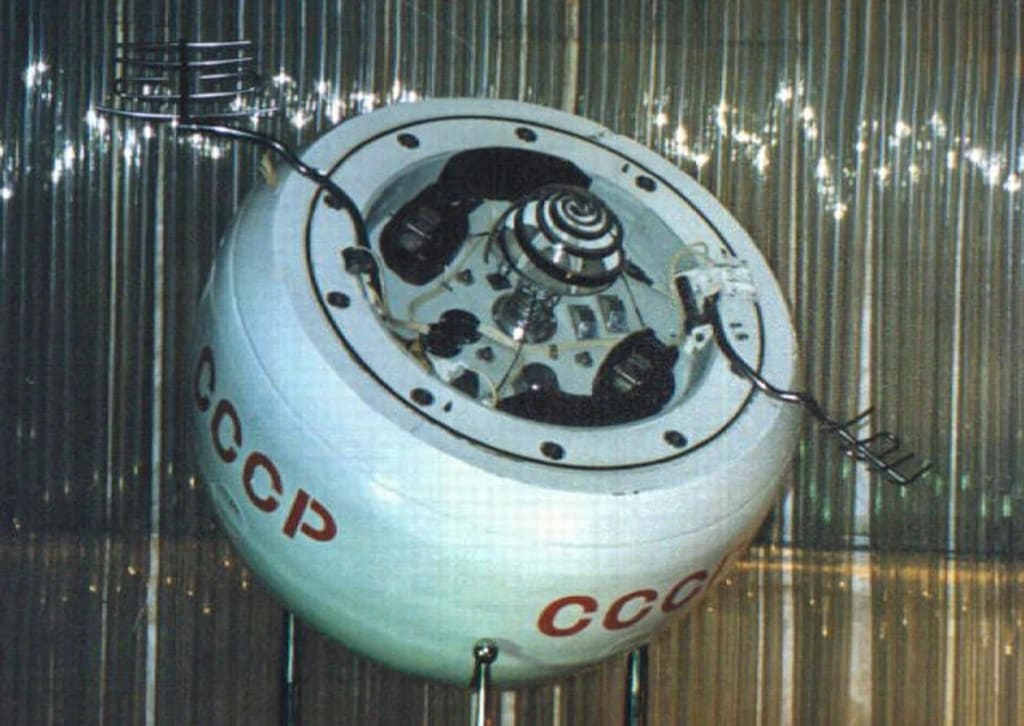
So, on May 10, 2025, the old Soviet spacecraft Kosmos 482 finally came crashing down to Earth. I’m talking about this thing that had been silently floating around for over fifty years! The way it re-entered wasn’t exactly graceful, though. I mean, it wasn’t like they planned it. Launched in 1972, it was supposed to go to Venus—pretty ambitious, right? But, of course, things didn’t go according to plan. The engine failed, and instead of going to Venus, it just ended up stuck in Earth's orbit. It’s kinda wild to think about, but this thing just hung out up there, forgotten, for decades.
Honestly, I remember when the news broke about it finally crashing. It was super early in the morning when I saw it, and it just hit me in a weird way. I mean, this old spacecraft—this thing that had been floating up there for so long—was finally coming down. Like, after all that time, it was getting its moment. They said it crashed in the Indian Ocean, near Indonesia. No one really knew exactly where, but somehow, it felt like the end of an era.
Kosmos 482 was originally part of the Soviet Union's Venera program. The whole point was to study Venus, you know, the atmosphere, the surface—all that good stuff. But like so many things in space exploration, it hit a snag right out of the gate. A malfunction in the rocket’s upper stage, and boom—mission over. It never even made it to Venus. Instead, it just spent fifty years circling Earth like some accidental space tourist. Kinda ironic, don’t you think?
But here’s where it gets even crazier. In 1972, not long after the launch, some debris from the spacecraft started falling down in Ashburton, New Zealand. Picture this: four super-hot titanium spheres just dropping out of the sky, landing on farmland and leaving scorched patches on the ground. Imagine the farmers’ reactions. I mean, who wouldn’t freak out? Authorities got involved, and it turned out the debris came from Kosmos 482. But here’s the kicker—the Soviets straight-up denied it. Like, “Nope, not ours.” So these poor landowners were left with some pretty weird space junk, and, well, that was pretty much the end of it.
Meanwhile, Kosmos 482 just kept floating around. Space agencies knew about it, but it wasn’t really newsworthy. For decades, it just kept orbiting Earth, unnoticed by most of us. But then, in 2025, news reports started popping up, saying it was about to finally re-enter Earth’s atmosphere. And, get this: no one knew exactly when or where it was gonna crash. I’ll admit, I kind of got obsessed. I was checking the news all the time, just waiting to see what happened to this forgotten chunk of space history.
And when it finally came down in the Indian Ocean, I have to say—I felt a weird mix of emotions. On one hand, I was relieved. Like, “Okay, that’s finally over.” But on the other hand, I couldn’t help thinking, “Wow, this thing was up there for so long.” I mean, it started as part of a failed mission, drifted around as space junk, and yet it just kept going. Honestly, that’s kinda impressive. Fifty years of being basically forgotten, and it just stuck with it. That's some real endurance.
Thinking about Kosmos 482 made me think about space exploration in general. It's not all about shiny rockets or high-tech gadgets. A lot of the time, it’s about trial and error, learning from failure. Plans don’t always work out. But even though this spacecraft didn’t do what it was supposed to, it hung in there, silently orbiting Earth for half a century. That says a lot about the people who built it, you know? They had big dreams, but they had to deal with failure. They still pushed through—determined to make something happen, even when things didn’t go their way.
And here’s the thing that really hit me: We’re all kind of connected to space in some way. Even if no one talks about it, Kosmos 482 left a mark. Yeah, it was “just” space junk. But over time, it became part of our story. It’s a reminder that exploration isn’t always about hitting the target. Sometimes, it’s the detours, the surprises, the mess-ups, that matter more than anything. Those unexpected moments of failure? They teach you stuff no success can.
So, when I think about Kosmos 482, I don’t just think of it as a failed mission. I think of it as a symbol of the whole exploration thing. It’s a reminder that, no matter who we are or where we’re from, we’re all looking up at the same sky, wondering what’s out there. Maybe that’s the real point of exploration—the messiness, the unpredictability, and the way it all connects us, even when we don’t expect it.
About the Creator
Md Motiur Rahman
Hey, I’m Md Motiur Rahman! I write about motivation, self-improvement, and the little mindset shifts that can make a big difference in life. My goal? To help people grow, push past their limits, and live with purpose.
Keep reading
More stories from Md Motiur Rahman and writers in 01 and other communities.
A United Front for Pope Leo Among American Cardinals
So, this week was a pretty wild one for the Catholic Church — especially for the American side of it. After the big, secretive papal conclave in the Sistine Chapel, the American cardinals came out saying it actually wasn’t all that intense. No major drama. No one was twisting arms or playing politics. Just a bunch of guys trying to listen to the Spirit — or at least, that’s how they put it.
By Md Motiur Rahman10 months ago in 01
How GenAI Workflow Automation is Redefining SaaS Product Engineering in 2026
The landscape of software-as-a-service is undergoing a tectonic shift. We are moving rapidly from static, reactive applications to intelligent, self-optimizing ecosystems. In 2026, the competitive moat for SaaS platforms is no longer just feature availability or aesthetic interfaces, it is the underlying velocity and intelligence of the workflows within.
By ViitorCloud Technologies6 days ago in 01
Trading at Lightning Speed: Why Crypto Arbitrage Bots Dominate Modern Exchanges
Cryptocurrency markets never sleep. Unlike traditional stock exchanges that close at the end of the trading day, crypto exchanges operate 24/7 across different countries and time zones. Prices of the same digital asset can vary slightly from one exchange to another due to liquidity differences, demand-supply imbalance, and transaction speeds. These tiny price gaps create opportunities—and in today’s high-speed digital environment, crypto arbitrage bots are the tools that seize them.
By Nayel Basim Al Shehhi6 days ago in 01


Comments
There are no comments for this story
Be the first to respond and start the conversation.