
Solving Crimes Through Google Earth and Street View
How Technology Is Uncovering the Truth Behind Unsolved Mysteries
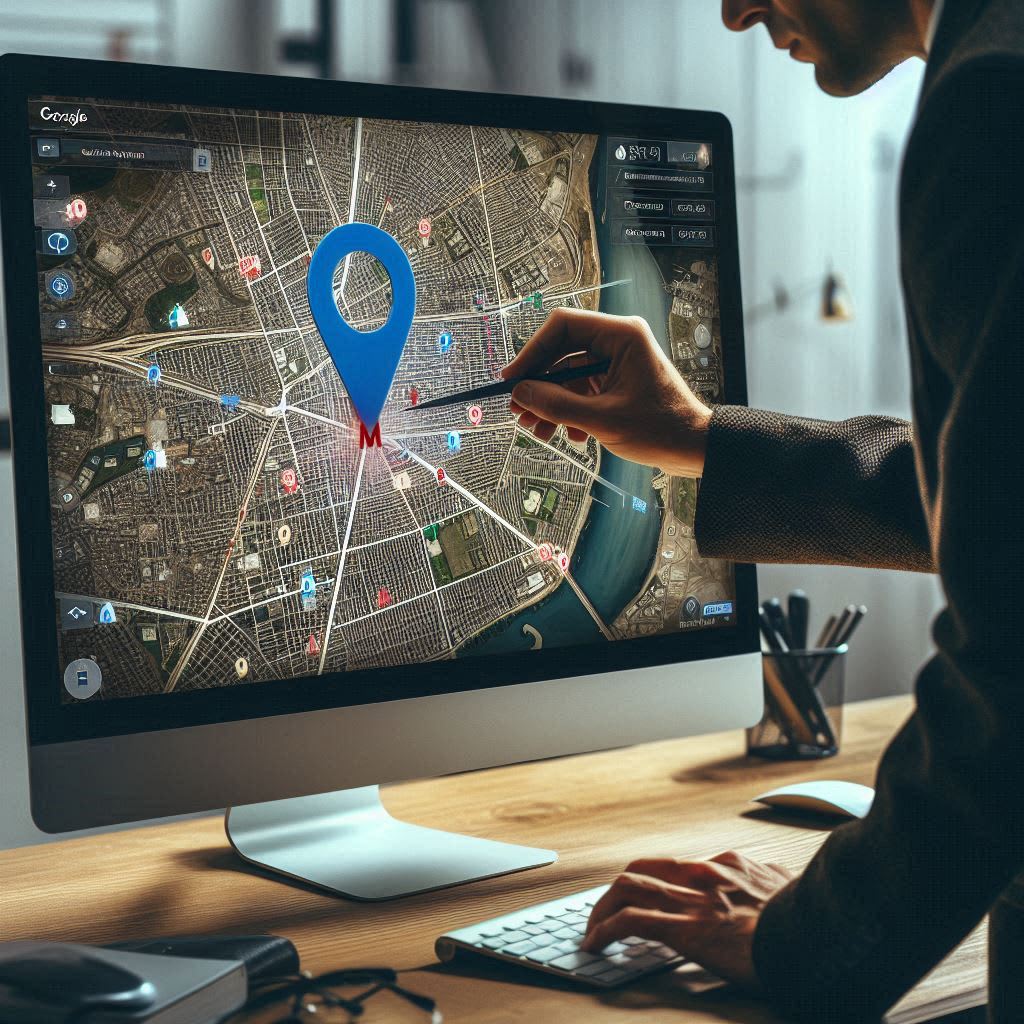
In recent years, Google Earth and Google Street View have become invaluable tools for more than just navigation or exploring the world from the comfort of our homes. These technologies have aided in solving numerous crimes by providing investigators with detailed visual evidence of crime scenes, tracking suspects, and even locating missing persons. While the use of these tools for law enforcement purposes may raise concerns about privacy, the cases they’ve helped resolve highlight the significant role that digital technologies play in modern criminal investigations.
The Case of the Disappearance of a Woman in New Orleans
One of the most chilling examples of Google Street View's role in crime-solving occurred with the case of a woman who went missing in New Orleans. In 2009, the woman, who was walking away from a bar, was captured on Street View images, walking down a street on the night of her disappearance. Her body was discovered days later, but it was the Street View image that provided key evidence. The street image not only confirmed her last known location but also helped to pinpoint the area where her body was found, aiding investigators in uncovering important details about the crime scene.
What made this case particularly eerie was the discovery that in the images, the woman's husband could be seen working in his garden in the background. Unaware of his wife’s tragic fate, he was photographed on the very same day, completely oblivious to the looming danger behind him. This stark contrast between the mundanity of everyday life and the looming tragedy exemplifies how Google’s Street View captured a snapshot of a critical moment in time, revealing hidden truths about the crime.
The Murder in Columbia, South Carolina
Google Earth has also assisted in locating criminals who thought they could flee to avoid capture. Take the case of Leslie Todd Parvin Jr. in Columbia, South Carolina. After murdering Edgar Lopez and Pablo Gutierrez Guzman, Parvin fled to Texas. However, one key piece of evidence—a witness who memorized the license plate of Parvin’s minivan—proved crucial. The license plate was later tracked using Google Street View and was found on an image of a house in Texas, where Parvin had been staying with family. The vehicle was registered to his name, leading authorities directly to his location.
Thanks to the combination of a diligent witness and Google’s vast image database, Parvin was arrested and later sentenced to 35 years in prison. This case highlights the power of Google’s services, not just for finding locations but for using visual data to help law enforcement track down dangerous criminals who might have otherwise escaped justice.
The Mafia Boss on Google Street View
Perhaps one of the most surprising cases involved the capture of Gino Gamino, an infamous Sicilian mafia boss who had been on the run for 20 years. Gamino had been sentenced for his role in mafia-related crimes in the 1980s, and after escaping from a Barcelona prison in 1998, he disappeared without a trace. But in 2014, Google Street View caught him in a snapshot while working at a grocery store outside Madrid. His image was recognized by authorities, who had been tracking him for years. This accidental capture on Street View led to his arrest and the end of his long-running fugitive status.
Gamino’s arrest shows how technology—once thought to be simply a tool for convenience—can provide real-time surveillance opportunities that investigators never expected. In this case, the intersection of modern technology and old-fashioned law enforcement proved to be a powerful combination in bringing a criminal to justice.
The Dark Side of Visibility
While these cases demonstrate the positive impact that Google Street View and Google Earth have had on solving crimes, they also raise important concerns about privacy. As these tools gather and display images of public places, they unknowingly capture individuals in vulnerable situations, including moments of criminal activity. While Google blurs faces and license plates to protect privacy, the ability to access these images globally highlights the ethical dilemmas of a hyper-connected world where privacy and surveillance can sometimes collide.
In conclusion, the role of Google Earth and Street View in solving crimes represents a powerful new frontier in law enforcement, offering investigators an invaluable resource in their quest for justice. From capturing the final moments of missing persons to tracking down fugitive criminals, these digital tools have shown that technology, when used responsibly, can be a force for good. However, as we continue to embrace these advancements, it's crucial to maintain a balance between transparency and privacy to ensure that the power of digital surveillance is used ethically.
About the Creator
Keep reading
More stories from Ganiyat Lawal and writers in 01 and other communities.
A Global Witness – Human Rights Violations Exposed Through Google Earth
In a world where information is power, Google Earth has become an unexpected yet crucial tool in the fight for human rights. Through its detailed satellite imagery, Google Earth has revealed hidden truths about atrocities and human rights violations taking place around the globe. Its ability to capture images of remote regions and provide detailed, real-time maps has helped expose crimes, from genocide to forced displacement, giving voices to those who have suffered in silence.
By Ganiyat Lawalabout a year ago in 01
Cloud Migration: Powering the Future of Digital Transformation
Cloud migration is no longer just an IT upgrade—it’s a practical way to move faster, scale safely, and modernize systems that hold digital transformation back. When done with a clear plan, cloud migration and modernization turn legacy constraints into a foundation for new digital products and better customer experiences.
By ViitorCloud Technologiesa day ago in 01




Comments
There are no comments for this story
Be the first to respond and start the conversation.