
Singing Bowls from Nepal and Their Global Spiritual Harmony
Known as Tibetan bowls, Himalayan bowls, singing bowls, or healing bowls, these simple yet powerful instruments have carried centuries
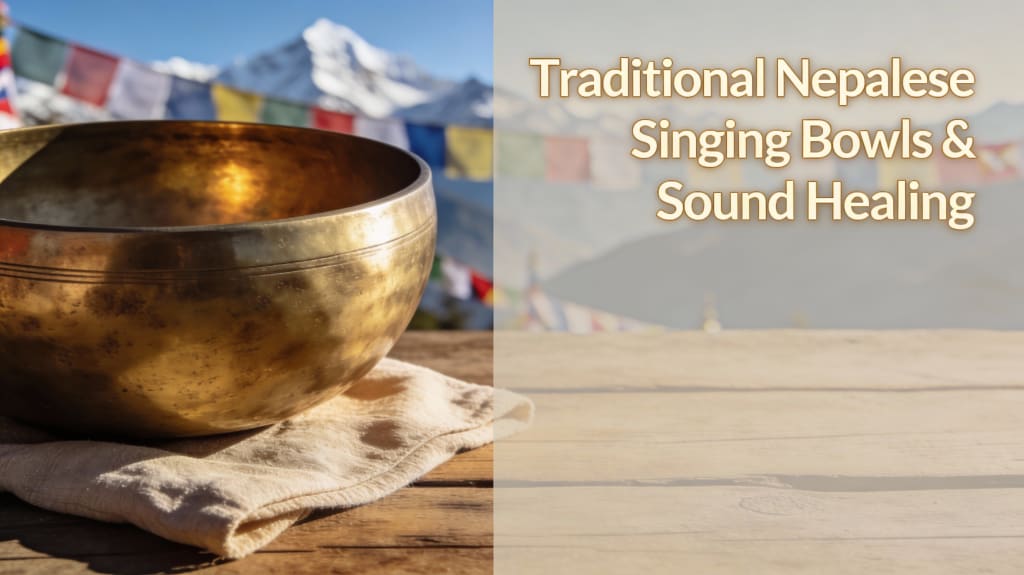
In the heart of the Himalayas—where snow-capped peaks kiss the clouds and prayer flags ripple with the mountain wind—Nepal holds a treasure of sound and serenity: the singing bowl. Known as Tibetan bowls, Himalayan bowls, singing bowls, or healing bowls, these simple yet powerful instruments have carried centuries of cultural, spiritual, and meditative tradition. Today, they resonate in yoga studios, therapy rooms, and homes across the world, helping people reconnect with stillness in a noisy era.
The Ancient Origins of the Singing Bowl
Though commonly called Tibetan singing bowls, their true roots can be traced deep into the cultural and metallurgical history of the Kathmandu Valley and surrounding Himalayan regions of Nepal. Ancient artisans are believed to have crafted these bowls over 2,000 years ago using a secret blend of seven sacred metals—each representing a celestial body: gold (Sun), silver (Moon), mercury (Mercury), copper (Venus), iron (Mars), tin (Jupiter), and lead (Saturn).
Traditionally, the bowls were used by monks, shamans, and healers in ritualistic ceremonies, meditation, and energy balancing. The sounds were said to echo the “Om”—the universal sound of creation. Over generations, this art of metal blending and sound crafting has been passed down quietly from master artisans to apprentices. Many modern singing bowls made in Nepal still carry that same essence of ancient metallurgy and mindful craftsmanship.
The Craftsmanship: A Labor of Spirit and Skill
Walk through the narrow alleys of Patan or Bhaktapur, and you’ll often hear rhythmic hammering echoing from small workshops. Here, Nepali artisans continue the age-old tradition of hand-hammering singing bowls—each stroke shaping not just the metal, but its unique tone and spiritual vibration.
While machine-made bowls exist, a hand-hammered singing bowl from Nepal possesses an earthy authenticity. It begins as raw metal discs, heated over fire, then shaped and refined by skilled hands over several hours. Each bowl is then individually tested for sound quality, ensuring its notes align with specific brainwave states—alpha, theta, or delta—associated with deep relaxation, meditation, and healing.
No two bowls are ever identical. Subtle variations in thickness or curvature create slightly different tonal ranges, much like fingerprints. That’s why genuine Nepali singing bowls are prized by sound healers worldwide—they carry a soul, not just a sound.
The Science of Sound Healing
Beyond their mystical allure, singing bowls have found their way into modern wellness spaces for scientific reasons too. Studies have shown that the harmonic overtones produced by these bowls can help synchronize brain waves, reduce stress, lower heart rate, and promote emotional balance.
When a mallet glides along the bowl’s rim, it creates a continuous “singing” vibration—what experts call sound entrainment. This process helps bring the mind into a meditative state, aligning neural activity and allowing relaxation to deepen naturally.
Many therapists now integrate singing bowls into practices such as sound baths, yoga Nidra, chakra balancing, and even trauma healing. The frequencies target subtle energy pathways and help clear emotional blockages, similar to acupuncture—only through vibration, not needles.
The Cultural and Spiritual Essence of Nepali Bowls
For spiritual practitioners in Nepal, singing bowls are far more than instruments; they’re vessels of intention. They accompany daily rituals, prayers, and offerings at Buddhist monasteries and Hindu temples alike.
In Buddhist philosophy, sound is a means to dissolve ego and awaken consciousness. Monks often use bowls to mark the beginning and end of meditation sessions, symbolizing the cycle of existence—from birth to enlightenment.
Even today, in remote Himalayan monasteries, one can witness monks using antique singing bowls in complex sound pujas (rituals). The vibration is said to cleanse spaces, calm restless minds, and invoke divine blessings. This continuity of ancient tradition within modern Nepal stands as a testament to how culture and spirituality evolve while preserving their essence.
How Singing Bowls from Nepal Differ from Others
With the rising global interest in meditation tools, singing bowls are now produced in countries like India, China, and Japan. Yet Nepali bowls retain a distinctive appeal because of three key factors:
Traditional Hand-Hammering Techniques: Nepali artisans preserve the method of forging bowls entirely by hand using sacred metal compositions rather than industrial molds.
Sound Quality: The tone of a Nepali bowl is warmer, deeper, and more layered. Many produce a long-lasting resonance that vibrates through the entire body.
Cultural Authenticity: Each Nepali bowl carries spiritual heritage; it’s not just a product but an embodiment of generations of mindfulness and devotion.
To ensure authenticity, buyers should look for marks of handwork—subtle hammer imprints, uneven rims, and genuine variations in color. These are signs that a bowl was made by human touch, not factory machines.
Singing Bowls in the Modern World
As more people turn to mindfulness, singing bowls from Nepal have become symbols of balance between the ancient and the modern. Celebrities, wellness coaches, and therapists incorporate them into breathing workshops, reiki practices, and guided meditations.
In Western countries, “sound baths” have become especially popular. During a session, multiple singing bowls of varying sizes and tones are played in harmony, enveloping participants in an ocean of sound. The experience is deeply relaxing, helping people release emotional tension and mental fatigue.
For travelers visiting Nepal, purchasing a singing bowl directly from local artisans is more than shopping—it’s an encounter with living culture. Many stores in Thamel, Boudhanath, and Patan even offer live demonstrations, allowing visitors to experience their personal sound connection before choosing one.
Choosing the Right Singing Bowl
Finding your perfect bowl is an intuitive process. Here are a few tips when selecting one:
Listen to the Sound: Strike the bowl gently and sense the tone. Does it make you feel calm or uplifted? The right bowl resonates with your energy.
Size Matters: Smaller bowls (4–6 inches) produce higher pitches—perfect for travel or personal meditation. Larger ones create deeper, grounding tones used in sound therapy.
Inspect Craftsmanship: Look for subtle imperfections—these are often natural results of hand hammering.
Buy Ethically: Whenever possible, purchase directly from Nepalese artisans or verified fair-trade businesses to support local craftsmanship.
Beyond Healing: Singing Bowls as Art and Heritage
A Nepali singing bowl’s beauty extends beyond spiritual function. Many artisans carve mantras like Om Mani Padme Hum or intricate mandala designs on their surfaces. These etchings enhance both sound and symbolism, turning each bowl into a blend of visual and auditory art.
Collectors often value antique bowls for their deep, aged tones and sacred patina developed over decades of use in monasteries. These antique singing bowls carry energy from countless chants and meditations—a resonance that seems to transcend time itself.
Why Singing Bowls from Nepal Matter Today
In a world often dominated by speed, screens, and noise, the pure, lingering sound of a singing bowl reminds us to pause and breathe. It embodies what Nepal stands for—peace, mindfulness, and connection.
Each bowl tells a story of earth and spirit, of ancient wisdom born from the Himalayas. Whether used for personal meditation, healing therapy, or simple appreciation of art, a singing bowl from Nepal invites us to rediscover the power of listening—not just to sound, but to silence between sounds.
About the Creator
Can You Send a Fax from Your Phone, and How?
We primarily associate faxing with sending necessary documents using a special device connected to a telephone line. Indeed, until recently, this was the standard practice, and businesses relied heavily on bulky fax machines that dominated office spaces. But the world of document transmission has evolved significantly. What does faxing look like in today's mobile-first environment? Is the process truly simpler? Most importantly, can you accomplish this task directly from your smartphone?
By Arooj Manoor3 days ago in 01
How Missing API Visibility Creates Security Gaps in FinTech
Introduction In the fast-paced world of financial technology, APIs power almost every transaction, integration, and customer interaction. They connect internal services, third-party partners, and external platforms to deliver seamless experiences. However, with this complexity comes a critical risk: missing API visibility. When organizations cannot see or fully understand all their API endpoints, undocumented APIs, or dynamic connections, hidden security gaps emerge that can be exploited by attackers.
By Sam Bishop6 days ago in 01
The Duelist
The rays of a dying red sun flashed against the onrushing blade. The grey beards say the key to dueling lies in size, speed, reach, righteous fury, whatever the person in front of them pays them to say. Matteo knew better than any it was none of these and had an undefeated record on these sands to prove it.
By Matthew J. Fromm3 days ago in Fiction


Comments
There are no comments for this story
Be the first to respond and start the conversation.