
SEO Website Structure Made Simple: 13 Proven Tips for Small Businesses in Canada
Build a strong online foundation with smart website architecture that improves SEO, user experience, and conversions for your Canadian small business.
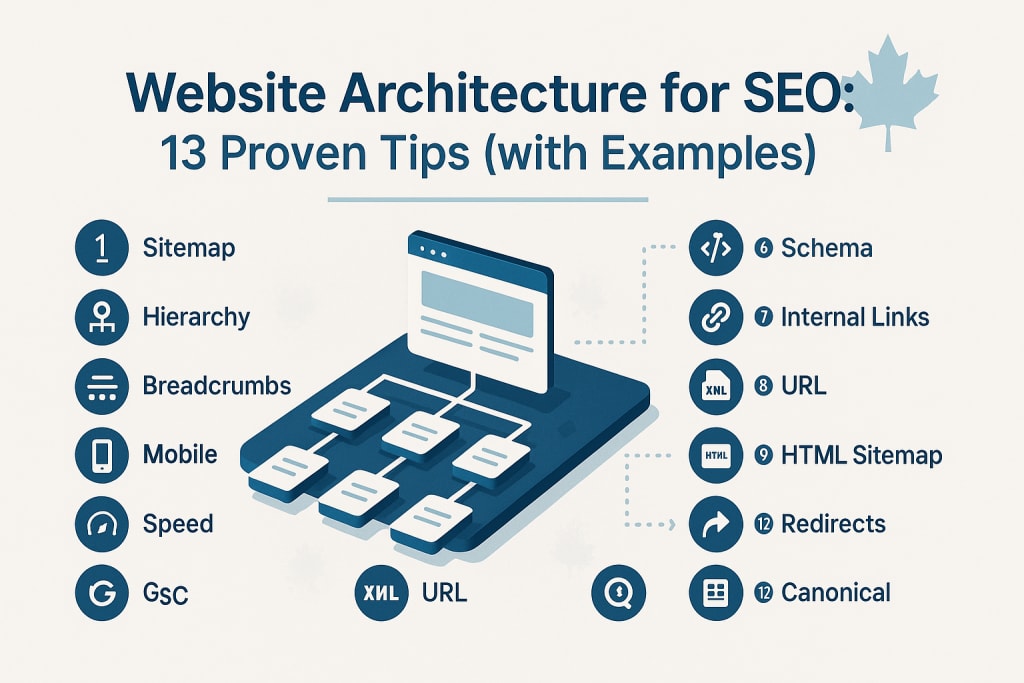
As a small business owner – whether you run a plumbing company, an accounting firm, or a boutique retail shop – you know your trade inside and out. But when it comes to your website, is it just a random bunch of pages, or a well-organized machine that drives growth and leads? Building an SEO-friendly website design for small businesses isn’t just about appeasing search engines; it’s about helping your customers find what they need quickly and easily.
Imagine a plumbing company’s site that's messy: broken links everywhere and important service pages buried deep where clients can’t find them. Visitors would get frustrated and your business could lose out on potential calls and sales. In contrast, a well-structured website isn’t only about SEO – it also ensures a smooth experience for visitors. For example, a local plumbing business can benefit hugely from a clean menu, a logical page hierarchy, and smart internal links that guide users to key services.
If you’re planning to build or revamp your plumbing website, understanding how to organize it for both people and search engines is crucial. This guide will walk you through practical steps to create pages that load fast, rank well, and win local customers – covering everything from intuitive navigation design to choosing reliable hosting. Whether you’re searching for the best website design agency Canada has to offer or looking for the best web hosting service for your site, a strong site architecture will set the foundation for online success.
Ready to lay the groundwork for your digital success? Let’s dive into 13 proven tips to structure your website for better SEO and user experience.
Section 1: The Blueprint – Foundation and Hierarchy
Think of your website’s architecture like a pyramid. At the broad base you have many specific sub-pages, which then support a few main sections above them, all leading up to the tip of the pyramid – your homepage. This clear hierarchy guides your visitors seamlessly and sends strong signals to search engines about which pages are most important. Getting this fundamental blueprint right is critical for long-term SEO success.
Tip 1: Use a "Flat" Site Structure (The Three-Click Rule)
One core principle of SEO-friendly site architecture is to make your important content easy to reach. The goal is to maximize how authority from your homepage flows down to all your other pages. In practice, this means structuring your site so that no important page is buried more than a few clicks from the homepage.
• What it is: A “flat” site structure means any significant page on your website can be reached in just 3-4 clicks from the homepage. In other words, no page with valuable content is hidden deep in a maze of menus. If a human visitor can get to a page easily, then search engine crawlers (like Googlebot) can reach it easily too.

• Why it matters: A flatter structure helps both users and search engines navigate your site efficiently:
• Better crawling: Google and other search engines have a limited “crawl budget” (the number of pages they’ll crawl on your site in a given visit). If pages are too deep, Google might not find them at all. Keeping everything within a few clicks ensures your crucial pages get discovered and indexed.
• Stronger link authority: Each additional click from the homepage tends to dilute the SEO authority (sometimes called "link juice") passed to a page. Pages that are many layers deep receive only a trickle of your homepage’s ranking power, making it harder for them to rank well. By structuring your site flatly, you give important pages a bigger share of link authority so they have a better chance to shine in search results.
Tip 2: Format Your URLs to Be Clean and Descriptive
URLs might seem technical, but they’re an important part of your site’s first impression – for both users and search engines. A clean, descriptive URL gives visitors a quick idea of what a page is about and can even improve click-through rates from search results.
Best practices for small business URLs:
• Use readable words separated by hyphens. For example, a plumbing company might use a URL like example.com/services/emergency-drain-cleaning instead of example.com/page?id=123. The former is easy to read and remember.
• Keep URLs short and include relevant keywords when it makes sense. If the page is about drain cleaning, a URL with “drain-cleaning” is more informative than a generic string of numbers.
• Use lowercase letters consistently in your URLs. (example.com/services is better than mixing cases like example.com/Services.)
• Avoid dates or odd parameters in URLs, especially for evergreen content. For instance, don’t hard-code a year into a services page URL – if you ever update or reuse the page, an out-of-date year can be confusing (and you’d have to redirect the URL, which is extra work).
• Logical structure and SEO value: Make sure your URL structure mirrors your site’s hierarchy and content organization. This reinforces to search engines how your pages relate to each other. For example:
• example.com/services/drain-cleaning/ – a clear services category and specific service page.
• example.com/locations/ottawa-plumbing/ – a page targeting a specific service area (useful if your business serves multiple cities).
• example.com/blog/2025/water-heater-buying-guide/ – a blog post URL that includes a category (or year) and descriptive title.
These kinds of URLs immediately tell someone (and Google) what to expect on the page, and they fit naturally into your site’s overall layout.
Tip 3: Keep Your Main Navigation Focused and Simple
Your main menu is the roadmap that helps visitors (and search engines) navigate your website. It defines your primary content categories and is the first place people look to find key information. A well-thought-out navigation menu also dictates how link authority flows from your homepage to other pages. The rule here is to keep it simple and intuitive.
• Limit the main menu to 5–7 core items: Too many menu options can overwhelm visitors (this is sometimes called the “paradox of choice”). Stick to the essentials – for example: Home, Services, About Us, Blog, Contact. If you have a lot of content, use drop-downs or mega-menus to structure sub-pages rather than putting dozens of items on the top menu bar.
• Use a hub-and-spoke model for pages: For a plumbing website, a primary menu item like “Services” might lead to a main Services page (the hub) that briefly lists or links out to all your individual service pages. Those individual pages (the spokes) could be things like “Drain Cleaning,” “Water Heater Installation,” etc. This way, the “Services” hub page gives an overview and directs people to whatever specific service they need. It also concentrates SEO authority on that hub page, which then distributes it to all the specific service pages.

• Don’t overload or hide important pages: Keep your top navigation focused on what matters most to your customers. Secondary pages like Privacy Policy or Terms of Service can be placed in the footer menu. If you have a large number of pages that don’t fit in the main navigation (for example, dozens of blog posts or minor pages), consider using well-organized sub-menus or a sitemap page (more on that later) rather than cramming everything into the main menu.
Tip 4: Include Breadcrumb Navigation for Clarity
Breadcrumbs are those small, clickable text links usually shown at the top of a page that indicate where you are in the site’s hierarchy. For example, on a service page you might see: Home > Services > Drain Cleaning. Implementing breadcrumbs can improve navigation and context for users, and even give you an SEO boost when done right.
• User benefit: Breadcrumbs instantly show visitors the path from the homepage to their current page. This orientation is super helpful – if someone landed directly on your “Drain Cleaning” page from Google, the breadcrumb trail lets them know that page is part of your “Services.” They can click “Services” to see other offerings, or go back to the Home page easily. It’s a convenient way for users to navigate without relying on the browser’s back button. A clear breadcrumb trail can reduce frustration and lower your bounce rate by encouraging people to explore other pages.
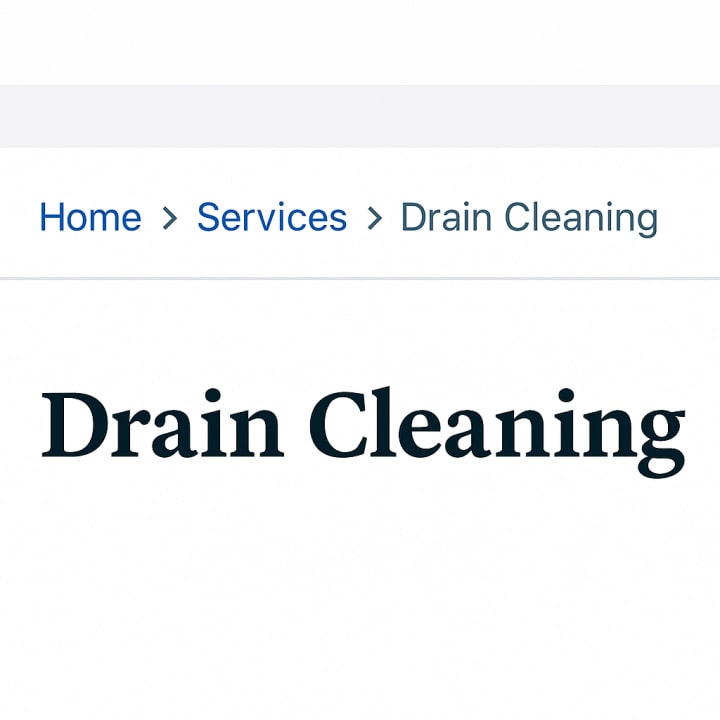
• SEO benefit: Adding breadcrumb structured data (a small piece of code on your site) helps search engines understand your site’s hierarchy. In fact, Google often displays breadcrumbs in the search result snippets instead of full URLs. This means a search listing might show “Home > Services > Drain Cleaning” as the clickable path. That not only looks neat, it also gives users more context on your page before they click, which can improve your click-through rate. Overall, breadcrumbs reinforce the logical structure of your site to search engines, which is great for SEO.
Section 2: Technical SEO Essentials – Crawl Efficiency and Indexing
Having great content and a logical layout is important, but you also need to ensure search engines can access and understand all that content. This section covers the technical side of site architecture: making sure that Google’s crawlers can efficiently find and index your pages. If search engines get stuck or waste time crawling unnecessary stuff, your key pages might not get the attention they deserve.
Tip 5: Manage Your Crawl Budget Efficiently
“Crawl budget” refers to the number of pages search engine bots (like Googlebot) will crawl on your site in a given time period. Small websites (say a few dozen pages) usually don’t have to worry about hitting a limit. However, ensuring an efficient crawl can still benefit you – it means Google focuses on your important pages rather than getting bogged down in the weeds. Plus, if your site grows larger, these practices will become essential.
• What is crawl budget? It’s essentially how frequently and how many pages Google’s bot will crawl on your site. If Googlebot can only spend a certain amount of time or hits a certain number of pages on your site per day, you want it spending that time wisely – on your service pages and blog posts, not on duplicate or unimportant pages.
• How to optimize your crawl budget:
• Use a robots.txt file to block unimportant pages: Robots.txt is a simple text file in your website that tells search engines which pages or folders they should not spend time crawling. For example, you might disallow the /wp-admin/ section of your site or something like /temp-pages/ if you have staging content. By blocking off areas that users don’t need to see in search results, you free up Googlebot to focus on the pages that matter. (In plain terms, you’re saying “Hey Google, no need to enter these rooms in the house – stick to the main areas.”) Just be careful not to block pages that you do want indexed – robots.txt is a blunt instrument.
• Use “noindex” for low-value pages: For pages that users can reach but you don’t want in search results (think thank-you pages after a form submit, or archive pages that duplicate content), add a meta noindex tag. This tag tells Google, “You can crawl this page, but don’t include it in search results.” It’s a cleaner way to hide pages from search without blocking them outright.
• Fix broken links (404 errors): Every broken page or dead link on your site is a wasted opportunity. If Google hits a 404 Not Found page, that’s a crawl slot used up with nothing to show for it. Regularly use tools like Google Search Console or external site audit tools to find 404 errors. Then either redirect those URLs to appropriate pages (more on redirects next) or remove the broken links. Keeping your site free of dead-ends makes crawling more efficient and improves user experience.
• Improve your site speed: Faster websites let Google crawl more pages in the same amount of time. If your pages load slowly, Googlebot’s going to crawl fewer of them on each visit (not to mention real users might get impatient). Speed up your site by compressing images, enabling browser caching, minimizing unnecessary scripts, and using a good web hosting service for solid performance. Not only will your human visitors appreciate it, but search engines will be able to zip through your content more quickly.
Tip 6: Use Redirects Wisely (and Favor 301 Redirects)
Website content isn’t static – you’ll occasionally remove pages, move them, or change their URLs (maybe you renamed a service, or you consolidated two blog posts into one). When that happens, you must use redirects so that both users and search engines get seamlessly sent to the new page instead of the old address. Redirects are your best friend for preserving the SEO equity of your pages during such changes.
• Always set up a 301 redirect for permanent moves: A 301 redirect is a signal that a page has moved permanently to a new URL. For example, if /services/kitchen-plumbing is now merged into /services/plumbing, you'd put a 301 redirect on the old page so that anyone trying to visit it (and any search engine crawling it) will automatically end up at the new page. The beauty of a 301 redirect is that it passes the majority of the original page’s “link juice” or ranking power to the new page, so you don’t lose the SEO you've built up.
• Use 302 redirects only for temporary changes: A 302 redirect indicates a temporary move. You might use this in special cases – say you have a page that’s down for maintenance for a day or you’re running a seasonal promotion on a different URL but will switch back later. In general, do not use 302s for permanent page changes. Search engines won’t transfer SEO authority with a 302 because they expect the original page to come back. Misusing 302s can hurt your rankings, as Google might keep looking for the old page and not fully credit the new one.
• Avoid redirect chains: This happens when Page A redirects to Page B, and then Page B redirects to Page C (maybe due to multiple changes over time). These “chains” can slow down page loading and confuse crawlers (some bots might not follow beyond a couple of hops). Whenever possible, point your old page directly to the final new page. If you notice a chain (A -> B -> C), update the first redirect (A) to go straight to C and clean up the intermediate step.
Tip 7: Use Canonical Tags to Consolidate Duplicate Content
Sometimes the same content on your site might be accessible through different URLs. This is common with things like tracking parameters, print versions of pages, or e-commerce filters (for example, a page that lists all plumbing products sorted by price vs. another URL sorted by name might show the same items). Duplicate content can confuse Google and dilute your SEO efforts, since backlinks or content value might get split between multiple URLs. The solution is canonicalization – essentially telling Google which URL is the “main” one that should get credit.
• What is a canonical tag? It’s a small snippet of HTML code in the <head> of your page that looks like: <link rel="canonical" href="https://example.com/preferred-page-url" />. In non-technical terms, it’s you saying to search engines: “I know there are other URLs that look like or serve similar content as this page, but this URL is the one you should treat as the primary version.” By doing so, all the SEO value (links, content signals, etc.) consolidates on that primary page rather than being split.
• When to use canonical tags:
• If you have different URLs showing the same content. For instance, imagine your site has example.com/products?category=plumbing&sort=asc and example.com/products?category=plumbing&sort=desc – two URLs for the same list of products just sorted differently. Pick one as the canonical (or even a clean URL like example.com/plumbing-products/) and mark it as such. The other URL will then point to that canonical URL.
• If you have duplicate pages for print or tracking. For example, example.com/service-page?ref=facebook vs example.com/service-page are identical content-wise. You’d canonicalize the ?ref=facebook one to the main service page URL.
• Ensure one home URL: Decide if your site’s home is going to be https://yourwebsite.com or https://www.yourwebsite.com (and similarly, always use HTTPS over HTTP). Then set your site so that whichever version is not primary redirects to the primary one, and use canonical tags as a safeguard. This prevents a scenario where Google thinks http:// and https:// versions (or WWW vs non-WWW) of your site are different sites with duplicate content.
In short, canonical tags help clear up any confusion for search engines when the same or similar content appears under multiple URLs, ensuring your pages don’t compete with each other.
Tip 8: Monitor Your Site’s Health with Google Search Console
Google Search Console (GSC) is a free tool from Google that is invaluable for anyone doing SEO on their website. It’s like a health dashboard for your site’s search performance – it tells you which pages are indexed, alerts you to errors, and provides data on how your site is showing up in search results. If you’re not using it yet, set it up as soon as possible!
• Index Coverage Report: This report in GSC shows you which pages Google has indexed successfully, and which it hasn’t. It will list pages that were excluded from indexing and the reason (for example, “Excluded by ‘noindex’ tag” or “Page with redirect” or “Crawl anomaly”). By reviewing this, you can catch problems: maybe you accidentally noindexed a page you want public, or perhaps Google can’t access some pages due to a crawl issue. It’s essentially a report card for how well Google can crawl and index your site.
• Sitemaps: GSC has a section where you can submit your XML sitemap (we’ll talk about sitemaps in a moment). After submitting, you can see if Google encountered any errors reading it and how many pages it discovered from your sitemap. This is a direct way to feed Google your site’s URLs and check on their status.
• Core Web Vitals: This is where Google provides data on your site’s user experience metrics, specifically loading speed, interactivity, and visual stability (the Core Web Vitals metrics: LCP, FID, CLS). For example, if your pages are slow on mobile devices or elements shift around as they load, GSC will flag it here. These factors affect SEO because Google wants to promote sites that offer a good user experience. GSC gives you a pulse on how your site measures up and even suggestions on what to fix.
• URL Inspection Tool: If you ever want to check a specific page, you can use this feature to see when Google last crawled it, what it saw, and if there were any issues fetching it. After you’ve made important changes to a page, you can even request Google to re-crawl and re-index that page via this tool, rather than waiting for Google’s next visit on its own.

Using Google Search Console regularly is one of the best ways to catch structural or technical problems early and understand how your SEO improvements are paying off.
Section 3: User-First Architecture – Mobile Optimization and Speed
When talking about website “architecture,” it might sound technical and dry. But it directly impacts user experience – particularly on mobile devices. Google has moved to a mobile-first indexing approach, which means it predominantly uses your site’s mobile version to decide rankings. If your site isn’t mobile-friendly, both your users and your search rankings will suffer. In this section, we focus on making your site mobile-friendly and fast, so visitors have a great experience and Google rewards you for it.
Tip 9: Prioritize Mobile Users (Design for Mobile-First & Test Mobile-Friendliness)
These days, the majority of people visiting small business websites (like local plumbing services) are likely doing it from their phones. Google knows this, so they prioritize the mobile experience when indexing and ranking sites. You need to design your website with mobile users in mind first, and then double-check that it meets Google’s criteria for mobile friendliness.
• Make your site mobile-friendly by design: Ensure your website uses a responsive design that automatically adapts to different screen sizes. This way, whether someone visits on a desktop, tablet, or smartphone, they see all the important content in a layout that fits their device. It’s crucial that your mobile site contains all the key content and pages that your desktop site has. Don’t hide essential information or links on mobile thinking you can get away with a slimmed-down version – if something is missing on mobile, Google might assume it doesn’t exist at all. Everything from service descriptions to call-to-action buttons should be easily accessible on a phone screen. Also, design with touch in mind: menus and buttons should be large enough to tap without zooming, and avoid layouts that make people scroll sideways or pinch-zoom to read text.
• Optimize for speed on mobile: Mobile users are often on slower networks, so site speed is even more critical. A fast, lightweight site keeps users from bouncing away and can improve your search rankings (Google considers speed, especially on mobile). To boost mobile speed, use compressed images (don’t upload huge image files straight from a camera), leverage browser caching so returning visitors load faster, and consider a performance-oriented hosting solution. A reliable, high-performance hosting provider can make a big difference in load times. Also, minimize heavy scripts or fancy animations on the mobile version if they aren’t absolutely necessary – simplicity and speed should be the priority for mobile user experience.
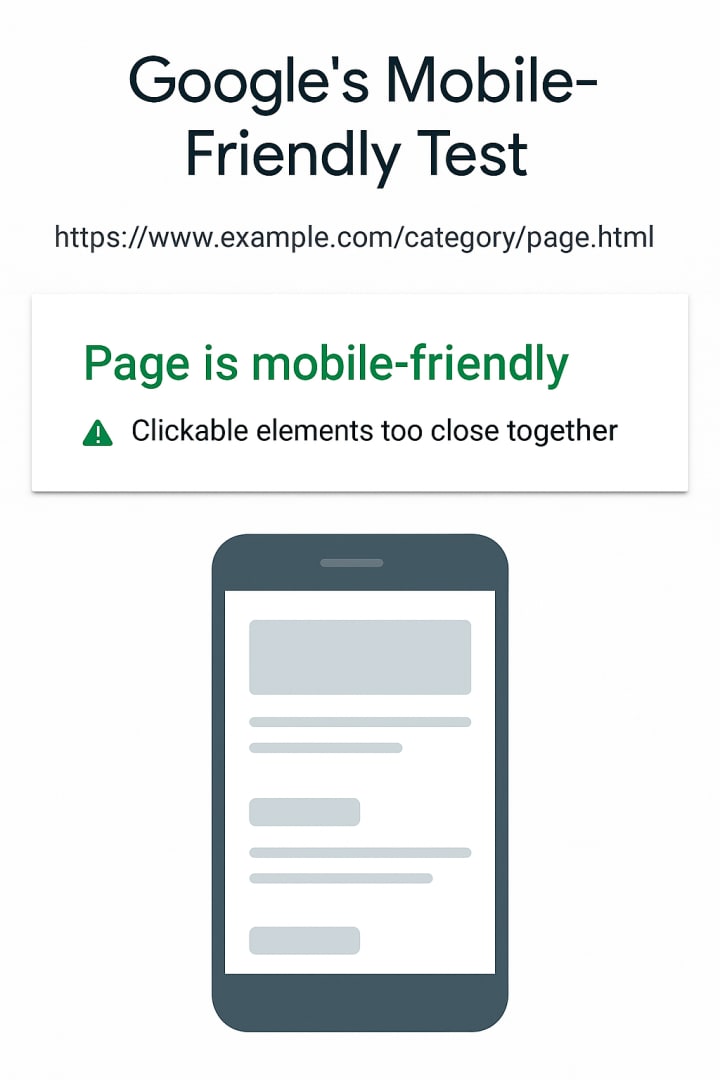
• Test your pages with Google’s Mobile-Friendly tools: Don’t just assume your site is mobile-friendly – test it. Google offers a Mobile-Friendly Test tool where you can plug in your page URL and get a quick verdict. Google Search Console also has a Mobile Usability report for your site. These tools will flag common issues: for example, if your text is too small to read on a phone, if clickable elements (links/buttons) are too close together (so a user’s finger might accidentally hit the wrong one), or if parts of the page are cut off on a small screen. Pay attention to these results. Fixing the flagged issues can be straightforward (often it involves adjusting your site’s CSS or using a better mobile-responsive theme). Making your site pass the mobile-friendly test not only pleases Google but also ensures that any visitor on a phone has a good experience. Google tends to reward sites that are easy to use on mobile with higher visibility on mobile search results.
Tip 10: Optimize Internal Links (and Use Descriptive Anchor Text)
Internal links are the hyperlinks within your website that connect one page to another page on the same site. Think of them as the roads or pathways between the pages of your website. A smart internal linking strategy helps distribute “link equity” (ranking power) throughout your site and guides users to relevant information, keeping them engaged longer.
• Link strategically to your key pages: Identify the most important pages on your site – these might be your main service pages or high-value product pages (your “money pages,” so to speak). Make sure that other pages on your site link to these important pages, especially pages that already get a lot of traffic or have authority (for example, a popular blog post or your homepage). For a plumber’s website, you might have a well-performing blog article about “How to Prevent Pipes from Freezing” – within that article, you could include an internal link to your “Emergency Plumbing Services” page using relevant anchor text. By doing this, you’re funnelling some of the blog post’s SEO strength to the service page, and also nudging readers of the blog post to check out your services.
• Use clear, keyword-rich anchor text: The anchor text is the clickable text of a link. Instead of saying “click here” or “read more,” make the anchor text descriptive of the page it’s linking to. For example, "Learn more about our **water heater installation services**" is a much more informative link than "Learn more about our services, click here". Descriptive anchor text helps users know what to expect when they click, and it tells Google exactly what the target page is about. This can reinforce the relevance of the target page for those keywords. Just make sure it flows naturally in the sentence – it should sound helpful, not like you’re just stuffing keywords. Vary your anchor text phrases too; you don’t need to use the exact same phrase every time you link to a page, but keep it relevant.
Internal linking is something you can control 100%, so take advantage of it. It costs nothing and can significantly boost how search engines discover and prioritize your pages, all while improving navigation for your readers.
Section 4: Sitemaps and Scalability – The Final Pieces of the Puzzle
By now, we’ve covered structuring your site and optimizing it for both users and crawlers. In this final section, we’ll discuss a couple of tools and practices to ensure everything on your site can be found easily, and that your website’s architecture remains solid as your business grows. This includes using sitemaps to catalog your pages and performing regular audits to catch any issues before they hurt your SEO.
Tip 11: Maintain and Submit an XML Sitemap
An XML sitemap is like a list of all the important pages on your website, formatted in a way that search engines can quickly read. It’s not something users see (it’s an XML file, usually accessible at something like yourwebsite.com/sitemap.xml), but it’s a direct channel to tell Google and other search engines, “Here are all the pages on my site I want you to know about.” While having an XML sitemap doesn’t guarantee indexing or higher ranking, it definitely helps search engines discover your content, especially if your site is new or has pages that aren’t easily reached by crawling links.
• Keep the sitemap focused on important pages: You should include all your primary pages that you want indexed: your main pages, important sub-pages, key blog posts, etc. Do not include pages that you don’t want search engines to index. For instance, exclude pages that are noindexed, duplicate versions of pages (like those with URL parameters or session IDs), admin or login pages, or any broken (error) pages. A clean sitemap tells Google, “These are the pages that represent my site.” For a plumbing business, that might mean including your home page, service pages, about/contact, and major blog posts – but excluding things like old promo pages that are expired, or tag archives that don’t need to show up in search.
• Automate updates if possible: The best approach is to have your website’s content management system (CMS) or a plugin generate and update your sitemap automatically. For example, if you’re on WordPress, plugins like Yoast SEO or Rank Math can handle sitemap generation and keep it up to date whenever you add or remove a page. This way, you don’t have to manually edit the sitemap file. Once your sitemap exists, submit it in Google Search Console under the Sitemaps section. After that, monitor it occasionally – Search Console will tell you if it was able to read the sitemap and if there are any issues (like “URL not found” errors for pages in your sitemap that no longer exist, which would mean you should update the sitemap or fix the link). Having a submitted sitemap also allows you to see how many of the listed pages have been indexed by Google, which is a nice overview of your indexing status.
The XML sitemap is basically a safety net ensuring Google knows about all your critical pages. Think of it as handing Google a checklist of your site’s content.
Tip 12: Consider an HTML Sitemap for Large Sites
An HTML sitemap is a visible page on your website that lists links to (usually) every page on the site, organized hierarchically. It’s like the directory of a book, but for your website. Not every site necessarily needs an HTML sitemap, but it can be very useful, especially if your site is large or complex.
• When an HTML sitemap helps: If you have a relatively small website with a clear menu structure (like a simple 5-page site or a small blog), a visible sitemap page might not be needed because users can find everything via the navigation. However, if you run a large site – say an online store with hundreds of products and categories, or a blog with hundreds of articles – an HTML sitemap gives visitors one more way to find what they’re looking for. It’s also helpful for SEO: it creates a single page that links out to all your important pages, which means no page is too deep in your site because at worst, it’s one click from the sitemap (which is usually linked in the footer).
• User and SEO benefits: For users, an HTML sitemap is like a comprehensive index. If someone can’t find a topic via your menus or search bar, they might scroll through the sitemap page which lists everything. It can be a lifesaver for the odd visitor who just can’t locate a page that they think should exist. For search engines, an HTML sitemap is another crawling road: Googlebot can hit the sitemap page and find links to every section of your site from there. This is especially useful for very deep sites. Just like an XML sitemap, you want the HTML sitemap to be well-organized – often grouped by categories or sections, so it’s not just a raw list of hundreds of links. Many websites put a link to the sitemap in the footer (e.g., “Sitemap” alongside the Privacy Policy and Contact links) so it’s accessible from any page.

For a small plumbing website with maybe 20-30 pages, an HTML sitemap might be overkill. But as your site grows, keep this in mind as a way to enhance crawlability and user navigation.
Tip 13: Regularly Audit and Tidy Up Your Site Structure
Your website isn’t a “set it and forget it” part of your business. Over time, you’ll add new pages (new services, new blog posts, new location pages, etc.) and things will change. It’s important to periodically review your site architecture to ensure everything still makes sense and nothing is broken or becoming unwieldy. Think of it as routine maintenance for your website, just like maintaining a home or a piece of equipment.
• Perform routine site audits: Every so often (for a small business site, perhaps once a quarter or at least a couple of times a year), run an audit of your website. You can use tools like Semrush, Ahrefs, or Screaming Frog SEO Spider to crawl your site similarly to how Google would. These tools will surface a lot of useful insights about structural issues. For instance, they can report:
• Orphaned pages: These are pages on your site that aren’t linked to from anywhere else on your site, making them hard to find for users and search engines. If you have any orphan pages, you’ll want to link to them from some other relevant page, or decide if they’re even needed at all.
• Broken links or misdirected links: The audit might show links that go to pages that don’t exist (anymore), or that redirect somewhere unexpected. Clean these up so that every link on your site points to a live, relevant page.
• Redirect chains: As mentioned earlier, you might discover some redirect chains (like Page A -> Page B -> Page C). If the tools flag these, fix them by linking A directly to C if A is still around, or updating outdated links.
• Very deep pages: The audit can reveal if any pages are more than three clicks away from the homepage (indicating a breach of the “flat architecture” principle). If so, consider rearranging your site structure or adding internal links to surface those deep pages higher up.
• Duplicate content or title tags: Sometimes as your site grows, you might unintentionally create pages that overlap in topic. An audit tool can catch similar title tags or headings that hint at redundant content. If you find overlaps, think about merging those pages.
• Keep your navigation and links updated: When you add a new important page, make sure to slot it into the site’s structure in an appropriate place. For example, if you launch a new service, don’t forget to add it to your Services page list and perhaps the main menu if warranted. If you stop offering something and remove a page, remove or update any links pointing to it (and set up a redirect from that old page to a relevant alternative). Regular housekeeping like this prevents the build-up of errors and confusion over time.
By regularly auditing your site architecture, you’ll catch issues early – before they hurt your SEO or user experience. It ensures your website remains an organized, well-oiled machine as it grows, rather than turning into a chaotic sprawl of pages.
Common Website Architecture Mistakes to Avoid
We’ve gone over what to do for a strong site structure. Equally important is knowing what not to do. Many common pitfalls can undermine your SEO and user experience. Here are a few major architecture blunders that small business websites (including plumbing sites) should steer clear of:
1. Overlapping or redundant pages targeting the same thing: Avoid creating multiple pages or posts that target the same keyword or topic. For example, having one page for “Emergency Plumbing Services” and another for “24/7 Plumbing Help” will likely confuse visitors and search engines since those are essentially the same service. It’s better to have one authoritative page on emergency plumbing than to split your content (and backlinks) between two pages. Merge similar content into a single page so all your SEO efforts funnel into one place.
2. Neglecting internal linking in your content: Some business websites have a blog full of great articles but fail to link those articles to their main service pages. If you write a blog post about “5 Signs You Need Drain Cleaning” but never link it to your “Drain Cleaning Service” page, you’re missing an opportunity. Internal links are the pathways that tell Google which pages on your site are related and important. Always be thinking: “Does this new page or post link to another relevant page on my site? And does it make sense for it to?” Don’t leave your important pages orphaned or isolate your content in silos.
3. Using large, unoptimized images or media files: Uploading huge images (like a 5 MB photo straight from your phone camera) will slow down your page load times dramatically. Similarly, auto-playing a high-definition video in the background can make your site crawl. These slowdowns frustrate users (especially on mobile) and can harm your search rankings (remember, Core Web Vitals include loading speed). Always compress and resize images before using them on your site. There are many tools and plugins that can do this. Also, if you have videos, consider hosting them on YouTube or another platform and embedding them, rather than hosting the video files on your own server. This way, the heavy lifting is done by the video platform, and your site stays fast.
4. Ignoring local site structure for multi-location businesses: If your business serves multiple distinct areas (say you’re a plumber with services in different cities or neighborhoods), don’t just list all locations on one page without any structure. It can be very beneficial to create a logical hierarchy for location-specific pages. For example, you might have a section of your site for “Locations” and under that, individual pages for each city: yoursite.com/locations/calgary and yoursite.com/locations/edmonton for instance. This way, each location page can be optimized for that area (with relevant content like addresses, testimonials, etc.), and customers in those areas can find a page tailored to them. It also helps your local SEO since Google can tell you have dedicated content for each service area. Not doing this – i.e., stuffing all location info on one generic page – could make it harder for you to rank in each specific locale.
5. Relying solely on JavaScript for navigation and content loading: Modern websites often use JavaScript for interactive features, but be cautious about using it for critical navigation or content. If your main menu or links to important content are only generated by a script after the page loads, search engine bots might not see them. Google’s crawler can process some JavaScript, but it’s not foolproof and can be slower to index JS-heavy content. A common mistake is having a fancy dropdown menu or link that isn’t in the HTML by default. Always have basic HTML links to your important pages somewhere on the page (like in the header, footer, or an HTML sitemap). If you use interactive elements, make sure they degrade gracefully – meaning if the scripts don’t load, the user (and crawler) can still navigate through plain links. In short, cool web design effects should never come at the cost of basic crawlability.
Avoiding these pitfalls will ensure your site’s architecture remains robust and beneficial for your SEO. A clean, well-planned structure paired with great content is a recipe for long-term success in search rankings.
Final Thoughts: Build for Longevity and Future Success
The architecture of your website is more than just an IT concern or a box to tick for SEO – it’s the backbone of your entire online presence. A strong site structure supports every other digital marketing effort, from targeted keyword optimization to content marketing and user experience enhancements. It affects how fast your pages load, how authority flows through your site, and ultimately how easily your business can grow online.
When your site’s architecture is well-designed, it acts as a form of future-proofing. Search engine algorithms change over time (often without warning), but core principles like fast, user-friendly, and logically structured websites tend to withstand those shifts. By focusing on clear user journeys – logical navigation paths, intuitive content organization, and speedy access to information – you’re not only keeping visitors happy, you’re also aligning with what search engines prioritize. In other words, what’s good for the user is good for SEO.
For a small business aiming for local success, a clear and SEO-friendly website design for small businesses with solid architecture can truly be a game changer. It ensures that both your human visitors and the Googlebot understand exactly what you offer, where you offer it, and how to find it. Your site’s structure should serve as a roadmap that highlights your service areas and core offerings without confusion. Don’t let a tangled, confusing website hold you back – an unusual or disorganized architecture can quietly sabotage all your other marketing efforts (for instance, by wasting your precious crawl budget on unnecessary pages, or causing visitors to give up and leave).
If you’re unsure whether your current site structure is up to par, take some time to review it using the tips above. Sometimes, a few tweaks – reorganizing a menu here, adding a breadcrumb there, fixing a handful of broken links – can significantly improve both your traffic and user engagement. And if you’re ever in doubt, consult with professionals or look at successful competitors’ sites to see how they structure things.
In the end, building a strong website architecture is about being proactive. It’s much easier to build it right from the start (or rebuild it properly now) than to continually fight against a flawed structure. So invest the effort in your “digital foundation.” Ensure you have a rock-solid hosting platform and a well-thought-out design that can scale as you grow. Don’t waste time continually optimizing a broken setup. By starting with a sound structure and keeping it maintained, you’ll be setting your website up to thrive – not just today, but for years to come. Here’s to a future where your website is not just pretty to look at, but also an efficient, high-performing engine driving your business forward!
About the Creator
Keep reading
More stories from Steve Oscar and writers in 01 and other communities.
10 Reddit-Approved VPS Hosting Providers for Speed and Reliability in 2025
Scrolling through Reddit threads for web hosting advice can feel like falling down a rabbit hole. One person will swear by a particular host, while the next calls it a nightmare. With so many clashing opinions and varied experiences, the signal-to-noise ratio on those subreddits can be overwhelming. Sifting through it all for reliable insights takes a lot of patience (and maybe a bit of caffeine).
By Steve Oscar3 months ago in 01
Where's the Glory?
In breaking news, rehabilitated Republican Senator Johnnie Johnson (Pronouns: HE, HIM, HIS) called a press conference from the Men’s room of the New Orleans Louis Armstrong International Airport, Concourse B, across from the Ignatius Reilly’s Lucky Dog stand. The Senator had just returned from a sexual reorientation rehabilitation program in Memphis, TN after being publically disgraced at a Buckee’s Truckstop restroom soliciting sex from an undercover cop three months ago. He is a founding member of the Reformed Christians for Christ, a conservative, pro-family and ex-gay advocacy group. In the spirit of being reborn, Senator Johnson invited reporters to marvel at his plans for a major remodeling of airport bathrooms.
By Cathy Schieffelin6 days ago in Humor




Comments
There are no comments for this story
Be the first to respond and start the conversation.