
Selecting the Optimal Chassis for a Mobile Concrete Pump in Malaysia
Aimix Concrete Pumping Solution

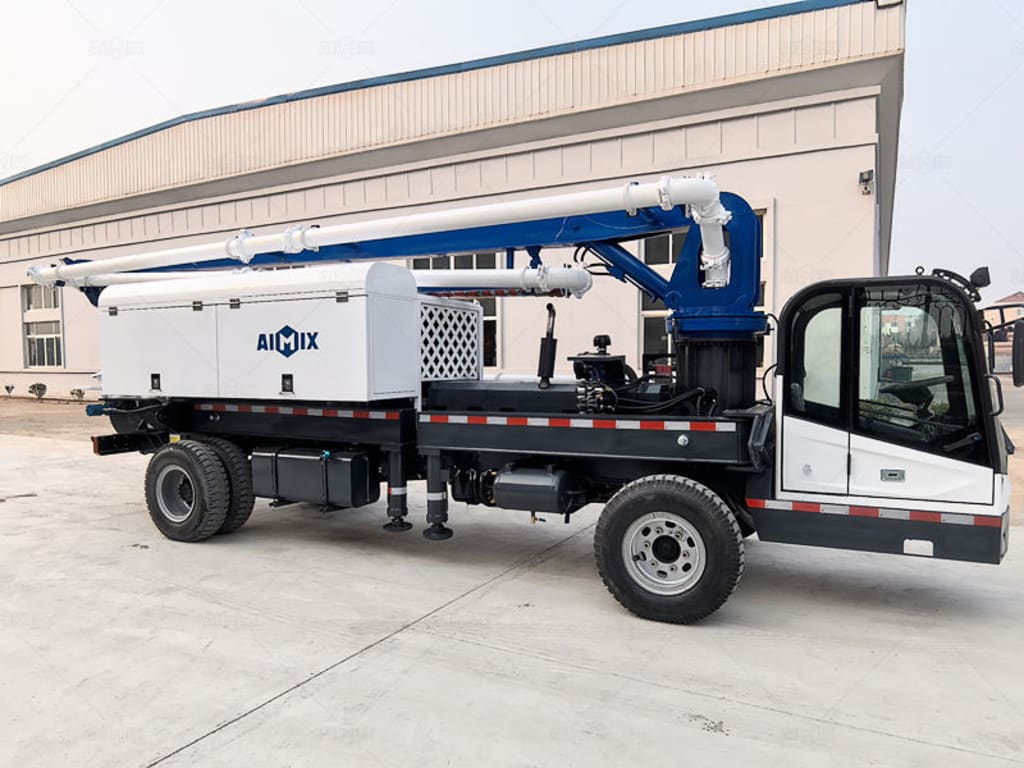
The decision to acquire a concrete pump mobile unit represents a substantial investment and a significant step forward in operational capability for any construction firm operating within Malaysia's dynamic and varied building sector. From the soaring towers that redefine the skylines of Kuala Lumpur and Penang to the expansive residential townships in Johor and the critical infrastructure projects linking East and West Malaysia, the ability to place concrete efficiently, precisely, and reliably is a cornerstone of modern construction. However, the true efficacy of a concrete pump mobile is not solely dictated by the specifications of its pumping mechanism or the length of its boom; it is fundamentally grounded in the performance and suitability of its truck chassis. This critical component is far more than a simple transportation vehicle; it is the engineered foundation that determines whether the pump can physically reach the job site, establish a stable and safe operating base, and perform consistently under the specific environmental and logistical pressures unique to the Malaysian context. Selecting an inappropriate chassis—one with insufficient power for mountainous terrain, an overly long wheelbase for the tight confines of historic urban centers, or a drive configuration incapable of negotiating monsoon-softened ground—can transform a powerful piece of equipment into an immobilized liability, leading to project delays, spiraling costs, and severe safety compromises. Therefore, the process of choosing a chassis must be a deliberate, analytical exercise, moving beyond a simple review of manufacturer brochures to a comprehensive evaluation that aligns engineering specifications with the practical, on-the-ground realities of Malaysian construction sites. This guide provides a detailed, phase-by-phase framework for this evaluation, focusing on the critical interplay between chassis design and site conditions to ensure your concrete pump mobile is an agile, robust, and dependable partner capable of maximizing productivity across the full spectrum of your projects.
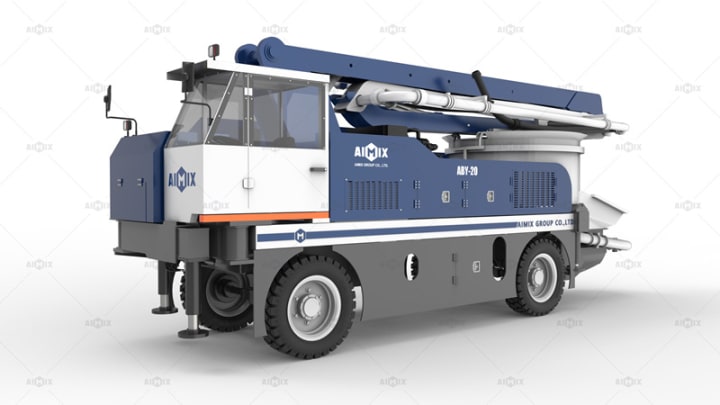
Phase One: Comprehensive Analysis of Site Access and Geographic Terrain
The initial and most crucial phase in selecting a chassis for your concrete pump mobile involves conducting a rigorous and honest assessment of the typical site access conditions and geographic terrains your business encounters. Malaysia's construction landscape is remarkably diverse, and a one-size-fits-all approach to chassis selection is a recipe for operational failure. For contractors whose work is predominantly located within urban and dense semi-urban environments, such as the bustling commercial hubs of the Klang Valley, the historic streets of George Town, or the developing centers of Kuching, the primary constraints are spatial. Navigating these environments requires a chassis engineered for superior maneuverability and compact dimensions. Key specifications become paramount: a short wheelbase (the distance between the front and rear axles) is essential for navigating tight corners and roundabouts commonly found in Malaysian townships and city centers. This must be coupled with a minimized turning radius, allowing the concrete pump mobile to execute sharp turns without requiring multiple attempts that block traffic and delay site entry. Furthermore, the overall vehicle height and width must be carefully considered to avoid conflicts with low-hanging signage, overhead cables common in older neighborhoods, and narrow gates or site entrances. A chassis that is too tall or too wide may simply be unable to access certain sites, nullifying its utility entirely.
Conversely, for operations focused on rural development, plantation infrastructure, large-scale industrial projects, or highway construction in regions like Sabah, Sarawak, or the interior of Pahang, the challenges shift dramatically from spatial constraints to surface conditions and traction. Unpaved laterite roads, logging tracks, temporary site access roads, and ground softened by Malaysia's frequent tropical rainfall present a completely different set of demands. In these conditions, the chassis's axle configuration and drive system move to the forefront of the decision matrix. A standard 4x2 chassis (two axles with only the rear wheels driven), while cost-effective and efficient for paved highways, may quickly become immobilized in mud or on loose, uneven surfaces. For consistent operation in such challenging terrain, a 6x4 chassis (three axles with dual tires on the rear bogie for improved weight distribution and flotation) is often considered the minimum viable configuration for a concrete pump mobile. It provides greater stability and reduces ground pressure, decreasing the likelihood of becoming stuck. For the most extreme conditions, such as steep, slippery inclines on hilltop developments or perpetually soft ground in coastal and riverine areas, a 4x4 or 6x6 all-wheel-drive chassis may be a non-negotiable requirement. This system delivers power to all wheels, dramatically improving traction and ensuring the pump can reach its designated setup point regardless of adverse ground conditions, thereby safeguarding project timelines against weather-related access delays.
Phase Two: Ensuring On-Site Stability and Adherence to Regulatory Standards
Successfully delivering the concrete pump mobile to the site perimeter is only half the battle; the chassis must then provide an immovably stable platform for the pumping operation itself. The forces generated during concrete placement, particularly when the boom is fully extended and under load, are immense. The chassis is the primary structure that must absorb and counteract these forces to prevent a catastrophic tip-over. This stability is a product of two integrated systems: the inherent strength and rigidity of the chassis frame and the design of the outrigger stabilization system. The chassis frame must be constructed from high-tensile steel and designed as a rigid, reinforced ladder to resist twisting and flexing under dynamic loads. This robust foundation is non-negotiable for safety. The outriggers, which are essentially hydraulic extensions of the chassis frame, then create the necessary footprint for stability. Their design is critical for Malaysian sites, where variable and often soft ground conditions are prevalent. A chassis equipped with long-span, independently controllable outriggers is essential. These outriggers allow the operator to create a wide, stable base even on uneven ground, and their individual vertical control lets the crew level the pump truck perfectly on sloped sites—a common scenario in hilly urban areas or terraced developments. For operations on particularly weak substrates, such as reclaimed land or areas with high water tables, specifying outriggers with large, removable steel or polymer "pads" or "floats" is a wise investment to further distribute the load and prevent sinking.
Simultaneously, the selection process must be governed by strict adherence to Malaysian regulatory standards for vehicle weight and dimensions. Every chassis has a certified Gross Vehicle Weight (GVW) rating, which is the absolute maximum allowable weight for the fully loaded vehicle, including the chassis, pump body, boom, operator, fuel, and a full hopper of concrete. Exceeding this rating is illegal, voids insurance, and poses extreme safety risks, particularly to the braking and suspension systems. Furthermore, Malaysian road authorities enforce strict per-axle load limits. Therefore, the chosen axle configuration (4x2, 6x4, 8x4) must not only provide traction but also legally distribute the pump's total operational weight. A reputable concrete pump mobile supplier will provide a detailed weight distribution analysis for their unit mounted on a proposed chassis. It is the buyer's responsibility to verify that this configuration complies with JPJ (Jabatan Pengangkutan Jalan) regulations. Overlooking this step can result in heavy fines, the vehicle being impounded, and severe project disruptions. A chassis that is correctly rated and configured ensures not only on-site safety but also uninterrupted legal road travel between projects.
Phase Three: Evaluating Performance Specifications and Long-Term Operational Viability
The final phase of chassis selection focuses on performance characteristics that affect daily operation and the long-term economic viability of the concrete pump mobile asset. The engine specification is a primary concern. The power unit must serve a dual purpose: providing motive power for road travel and, via a power take-off (PTO) system, driving the high-pressure hydraulic pumps that operate the concrete pumping cylinder and the boom. In the Malaysian context, where projects can involve long highway transits followed by demanding pumping work, a high-torque, durable diesel engine is standard. Sufficient horsepower and torque are necessary not just for merging onto highways like the North-South Expressway, but also for maintaining pumping pressure when placing high-strength concrete mixes or pumping over long vertical distances on tall structures. Engine reliability and fuel efficiency are also key economic considerations that impact the total cost of ownership.
Beyond the powertrain, practical cab configuration impacts operational flexibility. A standard day cab is suitable for contractors working within a localized region. However, for firms that service projects across multiple states—for example, a base in Selangor with projects in Perak or Melaka—a sleeper cab can be a significant logistical advantage. It allows for compliant driver rest periods during long hauls, enhancing safety and enabling more flexible scheduling without the immediate need for hotel accommodations. From a long-term perspective, perhaps one of the most critical economic decisions is the choice of chassis brand and its associated support network. Opting for a chassis from a manufacturer with an extensive, well-established dealer and service network across Malaysia (such as Isuzu, Hino, Mitsubishi Fuso, or Mercedes-Benz) pays continuous dividends. This ensures ready access to genuine spare parts, factory-trained technicians, and scheduled maintenance services from Peninsular Malaysia to Sabah and Sarawak. This widespread support drastically reduces potential downtime due to mechanical issues, protecting your project timelines and ensuring your concrete pump mobile maintains high resale value. In contrast, a chassis from a manufacturer with limited local presence may offer a lower initial purchase price but can lead to exorbitant costs and prolonged delays when repairs are needed, ultimately undermining the reliability and profitability of your entire concrete placement operation. By synthesizing the findings from all three phases—site access, stability, and long-term support—you can specify a chassis that transforms your concrete pump mobile from a mere piece of equipment into a finely tuned, site-ready asset that delivers consistent performance, safety, and return on investment throughout its working life in Malaysia.
About the Creator
Aimixmachine
AIMIX is a customer-center-oriented heavy equipment manufacturer and supplier, devoted to production, innovation, combination, one-stop solution, etc.
Keep reading
More stories from Aimixmachine and writers in 01 and other communities.
What Factors Influence Cost of Concrete Pump Stationary Shipment
When planning to buy and transport a stationary concrete pump, one of the main considerations that every contractor or project manager faces is the cost of concrete pump shipment. The shipping process for a stationary model is more complicated than for smaller, portable versions, as it involves heavy machinery, specialized packaging, and careful logistics management to ensure the equipment arrives safely at its destination. Since the stationary type is widely used in large-scale construction projects like bridges, tunnels, and high-rise buildings, understanding what influences its shipment cost can help buyers budget more effectively, avoid hidden expenses, and make informed purchasing decisions.
By Aimixmachine3 months ago in 01
Global Security Market Size and Forecast 2025–2033: Protecting a Digitized World in an Era of Rising Threats
Global Security Market Overview The global security market is entering a decisive phase of expansion as governments, enterprises, and institutions confront an increasingly complex risk environment. According to Renub Research, the Security Market is expected to grow from US$ 142.66 billion in 2024 to US$ 264.71 billion by 2033, registering a strong CAGR of 7.11% from 2025 to 2033. This growth reflects the convergence of digital transformation, rising geopolitical tensions, urbanization, and escalating cyber and physical threats worldwide.
By Renub Research2 days ago in 01
Google Billionaire Larry Page Snaps Up 2 Miami Mansions for $173 Million
Billionaire and Google co-founder Larry Page has shelled out more than $173 million in recent weeks, snapping up a pair of luxury estates tucked deep within Miami's discreet Coconut Grove enclave. Page made the high-dollar moves as speculation intensified over his broader departure from California, where a proposed ballot measure targets billionaires with a sweeping one-time wealth tax.
By Dena Falken Esq7 days ago in 01



Comments
There are no comments for this story
Be the first to respond and start the conversation.