
Saudi Arabia Medical Ceramic Market Size and Forecast 2025–2033
Saudi Arabia’s Healthcare Revolution: Medical Ceramics Pave the Way for Advanced Surgical and Dental Solutions


Saudi Arabia Medical Ceramic Market Outlook
According to Renub Research, the Saudi Arabia Medical Ceramic Market is expected to reach US$ 340.42 Million by 2033, rising from US$ 188.15 Million in 2024, growing at a CAGR of 6.81% from 2025 to 2033.
The rapid transformation of Saudi Arabia’s healthcare sector, combined with growing investment in advanced medical technology, is setting the stage for sustained growth in the country’s medical ceramics market. These materials—renowned for their biocompatibility, strength, and wear resistance—are crucial in modern healthcare, particularly for orthopedic implants, dental restorations, and surgical instruments.
As Saudi Arabia accelerates its Vision 2030 healthcare goals, the emphasis on developing world-class medical infrastructure and fostering technological innovation continues to drive the adoption of high-performance ceramic materials.
Industry Overview: The Role of Medical Ceramics in Modern Healthcare
Medical ceramics play an indispensable role in advanced healthcare systems due to their unique combination of properties—non-toxicity, resistance to corrosion, and ability to integrate seamlessly with biological tissues. In Saudi Arabia, their applications span across orthopedic implants, dental crowns and bridges, prosthetic devices, and surgical tools.
The increasing prevalence of chronic diseases and bone-related conditions, coupled with an aging population, has intensified demand for durable and reliable implant materials. Furthermore, the country’s commitment to local manufacturing, technology partnerships, and R&D investment positions Saudi Arabia as an emerging hub for medical innovation in the Middle East.
Key Factors Driving Market Growth
1. Rise in Minimally Invasive Surgeries (MIS)
The shift toward minimally invasive surgery has been one of the defining trends in Saudi Arabia’s medical sector. Patients and healthcare professionals alike are favoring procedures that reduce recovery time, minimize scarring, and lower infection risk.
Medical ceramics—owing to their mechanical strength and biocompatibility—are increasingly being integrated into surgical instruments and implantable devices used in MIS. Their high precision and resistance to wear make them ideal for orthopedic and dental applications, driving adoption among leading hospitals and specialized surgical centers.
As MIS becomes more mainstream across Saudi hospitals, the demand for high-performance, precision-engineered ceramics will continue to accelerate.
2. Rising Healthcare Spending and Infrastructure Development
Saudi Arabia’s healthcare expenditure has surged in the past decade, with the government allocating billions toward medical infrastructure expansion, hospital construction, and digital health technologies. The nation’s Vision 2030 roadmap emphasizes healthcare modernization, advanced treatment facilities, and domestic production of medical materials.
This surge in investment has created fertile ground for medical ceramics manufacturers. The push for localizing production—through collaborations between global firms and Saudi-based research institutions—is aimed at reducing dependence on imports while ensuring access to high-quality biocompatible materials.
3. Growing Aging Population and Chronic Disease Burden
Saudi Arabia’s demographic profile is undergoing a significant shift, with a rapidly aging population contributing to higher cases of osteoporosis, arthritis, and dental disorders. These conditions often require joint replacements, dental prosthetics, and orthopedic implants, where medical ceramics play a pivotal role.
Ceramic-based implants offer long-lasting performance, superior resistance to wear, and natural tissue compatibility—making them ideal for elderly patients. Additionally, age-related dental issues such as tooth loss have increased the demand for ceramic crowns, bridges, and implants.
As the senior population grows, the need for biocompatible, durable, and aesthetic solutions will drive market expansion across both public and private healthcare sectors.
Challenges Restricting Market Expansion
1. Limited Local Manufacturing Capabilities
While Saudi Arabia has made progress in building domestic healthcare manufacturing, the production of medical-grade ceramics remains limited. Most advanced materials and processing technologies are imported, increasing costs and exposing the market to supply chain vulnerabilities.
This dependency can delay project timelines and make finished products more expensive for hospitals and patients. Furthermore, insufficient R&D and technical expertise in high-precision ceramics manufacturing restrict the country’s ability to innovate locally.
To mitigate this challenge, public-private partnerships and technology transfer agreements are being explored to enhance Saudi Arabia’s self-sufficiency in medical ceramics production.
2. Competition from Alternative Materials
Medical ceramics face competition from metals (such as titanium and stainless steel) and polymers that are widely used in implants and surgical tools. Metals, for instance, offer superior strength and flexibility, while polymers are lightweight and cost-effective.
However, ceramics excel in biocompatibility, corrosion resistance, and long-term stability, giving them an advantage in sensitive or high-performance medical applications. The challenge lies in balancing cost-efficiency with quality—a trade-off that continues to influence purchasing decisions in both public and private healthcare institutions.
Market Segmentation Overview
By Material Type
Bioinert Ceramics: Including alumina and zirconia, these materials are widely used for orthopedic and dental implants due to their stability and tissue compatibility.
Bioactive Ceramics: Known for promoting bone growth and integration, commonly used in bone graft substitutes.
Bioresorbable Ceramics: Gradually absorbed by the body over time, ideal for temporary implants.
Piezo Ceramics: Utilized in diagnostic devices and surgical equipment for their electro-mechanical properties.
By Application
Surgical Instruments: Precision tools used in orthopedic, cardiac, and cosmetic surgeries.
Plastic Surgery: Advanced ceramics used for facial reconstruction and aesthetic applications.
Orthopedic Applications: Hip and knee replacements, bone graft substitutes, and joint repair devices.
Dental Applications: Crowns, bridges, veneers, and dental implants made of zirconia and alumina ceramics.
Key Market Players
Several multinational and regional companies are shaping the competitive landscape of the Saudi Arabia Medical Ceramic Market:
CeramTec GmbH
Kyocera Corporation
Morgan Advanced Materials
3M
DSM
NGK Spark Plug Co., Ltd.
DePuy Synthes
Zimmer Biomet Holding Inc.
Straumann
BioMérieux SA
These players are investing heavily in product innovation, biocompatible materials research, and strategic partnerships to cater to the Saudi healthcare sector’s evolving demands. Collaborations between global leaders and local healthcare manufacturers are expected to accelerate domestic production capabilities over the forecast period.
Future Outlook: Toward a High-Performance Medical Future
The Saudi Arabia Medical Ceramic Market is on a transformative growth trajectory, fueled by rising healthcare needs, an aging population, and ongoing public investment. The increasing focus on advanced medical devices, dental innovation, and orthopedic care provides immense opportunities for both global and local manufacturers.
Furthermore, the integration of smart materials, nanotechnology, and additive manufacturing (3D printing) is expected to redefine the production and design of medical ceramics. These advancements will enable the creation of customized implants that align perfectly with patient anatomy, improving surgical precision and recovery outcomes.
Government initiatives supporting healthcare localization and foreign investment will further enhance Saudi Arabia’s competitive edge in the global medical ceramics landscape.
Final Thoughts
Saudi Arabia’s medical ceramics market stands at the intersection of technological innovation and healthcare excellence. As the country continues to strengthen its medical ecosystem, ceramics will play an increasingly vital role in delivering safer, longer-lasting, and more effective medical solutions.
By overcoming manufacturing constraints and encouraging innovation, Saudi Arabia has the potential to become a regional leader in advanced biomaterials production, driving not only local healthcare transformation but also contributing significantly to global medical innovation.
Source: Renub Research, Saudi Arabia Medical Ceramic Market Report by Material Types (Bioinert, Bioactive, Bioresorbable, Piezo Ceramics), Application (Surgical Instruments, Plastic Surgery, Orthopedic Application, Dental Application), and Company Analysis, 2025–2033.
About the Creator
Sushant. Renub Research
I’m Sushanta Halder, Digital Marketing Manager at Renub Research with 15+ years in SEO, content, PPC & lead generation. Passionate about data-driven growth strategies.
Keep reading
More stories from Sushant. Renub Research and writers in 01 and other communities.
Global Online Travel Market Size and Forecast 2025
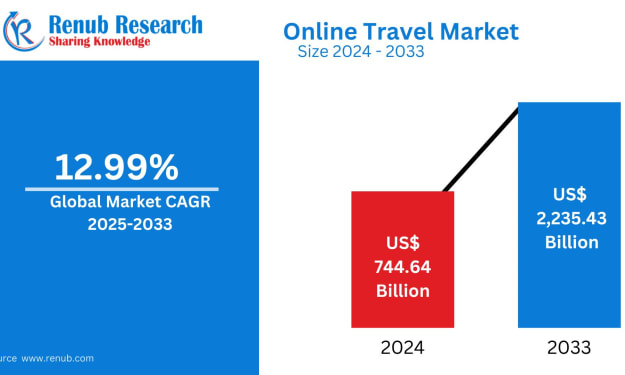
Global Online Travel Market — A Transformational Decade Ahead The Global Online Travel Market is entering its most transformative era, driven by rapid digitalization, rising consumer confidence in online transactions, and a new generation of travelers that prioritize mobility, personalization, and speed. According to Renub Research, the market is projected to reach a massive US$ 2,235.43 billion by 2033, rising from US$ 744.64 billion in 2024, and expanding at a strong CAGR of 12.99% between 2025 and 2033.
By Sushant. Renub Research2 months ago in 01
Blockchain Tracing: A Key Tool in Crypto Asset Recovery
The cryptocurrency ecosystem has expanded rapidly, with billions of dollars in digital assets now in circulation across thousands of blockchains. However, this growth has been accompanied by significant risks, including hacks, scams, phishing attacks, and user errors such as lost private keys or forgotten seed phrases. In 2025, reported losses from crypto-related incidents exceeded several billion dollars, highlighting the persistent vulnerability of digital assets. Unlike traditional banking systems with reversible transactions and centralized oversight, blockchain's decentralized and immutable nature makes recovery difficult once funds are transferred. As a result, blockchain tracing has emerged as an essential method for identifying fund flows, attributing activity, and supporting recovery efforts in actionable cases.
By Garry Oneal6 days ago in 01


Comments
There are no comments for this story
Be the first to respond and start the conversation.