
Role of MLOps in Biomedical Research
What is MLOps?


Biomedical Research with its cutting edge innovations and futuristic outlook can positively utilize MLOps for successful drug discovery. In sync with current times, research in this field is proactively driven by a need to offer timely and qualitative healthcare solutions. How can Machine Learning Operations (MLOps) transform the way biomedical researchers predict ADMET properties and identify promising drug candidates?
The intensifying reliance on data-driven approaches in research and clinical applications, necessitates the utilization of MLOps in Biomedical Research. In this context, machine learning models need to be robust, scalable, and reproducible for advancing medical research and improving patient outcomes. One of the key applications of MLOps in biomedical research is ADMET property prediction, which involves assessing the Absorption, Distribution, Metabolism, Excretion, and Toxicity of chemical compounds. Accurate ADMET predictions are vital for drug discovery and development, helping researchers identify promising drug candidates and avoid costly failures at later stages.
Another significant use case is predicting the efficacy of a particular drug for a specific individual, known as personalized medicine. By leveraging patient-specific data and advanced ML models, researchers can foretell how different individuals will respond to a given treatment, leading to more effective and tailored therapies.
Additionally, MLOps play a crucial role in stratifying patients, grouping them based on genetic, phenotypic, or clinical characteristics. This stratification enables precise diagnosis, targeted treatment, and improved disease management.
MLOps practices enhance the effectiveness and scalability of these applications by ensuring that ML models are continuously updated with new data, rigorously tested, and efficiently deployed. In the realm of biomedical research, this implies reliable predictions, faster insights, and greater ease to handle large-scale data sorting and analysis.
MLOps encompasses the principles, practices, and tools necessary to streamline the lifecycle of ML projects-from data preparation and model training to deployment and monitoring. It also offers significant benefits in terms of operational effectiveness, reducing overhead, enabling more reliable predictions and accurate insights in biomedical research.
Lately, ML has become increasingly pervasive across industries. However, deploying ML models into production environments entails a set of challenges. Traditionally, the development and deployment of software applications have been governed by DevOps practices, emphasizing collaboration, automation, and continuous integration/continuous deployment (CI/CD). MLOps extend these principles to machine learning, ensuring that ML systems are developed, deployed, and maintained efficiently and reliably.
The steps in an ML project typically include the following:
Data Preparation: Collecting, cleaning, and preprocessing data to make it suitable for training ML models.
Model Training: Developing and training ML models using the prepared data.
Model Evaluation: Assessing the performance of the trained models to ensure they meet the required standards.
Deployment: Deploying the models into production environments where they can be used for making predictions.
Monitoring and Maintenance: Continuously monitoring the performance of deployed models and making necessary updates to maintain their effectiveness.
By adopting MLOps practices, biomedical researchers can ensure that their ML models are not only accurate and reliable but also scalable and maintainable, thereby accelerating the pace of medical advancements and improving healthcare around the globe.
Challenges in MLOps and Maintaining the Infrastructure
MLOps encounter a wide range of challenges spanning across different domains, including those unique to machine learning as well as issues common in software engineering. The most prevalent ones include:
Data Preparation
Data Quality: Ensuring availability of clean, consistent, accurately labeled data for model training can be a challenging task.
Data Integration: Integrating diverse data sources (e.g., clinical data, genomic data) can be complex and requires robust data harmonization techniques.
Model Training
Availability of High-Quality Labeled Data: Obtaining sufficient labeled data for training ML models in biomedical applications is often challenging due to the high cost and effort required in data annotation.
Computational Resources: Training models, especially deep learning models, can be computationally expensive and time-consuming, requiring significant computational power and infrastructure.
Model Evaluation
Defining Appropriate Metrics: Selecting the right performance metrics which accurately reflect model efficacy in biomedical contexts can be difficult.
Generalization: Ensuring that model generalizes new, and unseen data correctly, requires rigorous validation and testing processes.
About the Creator
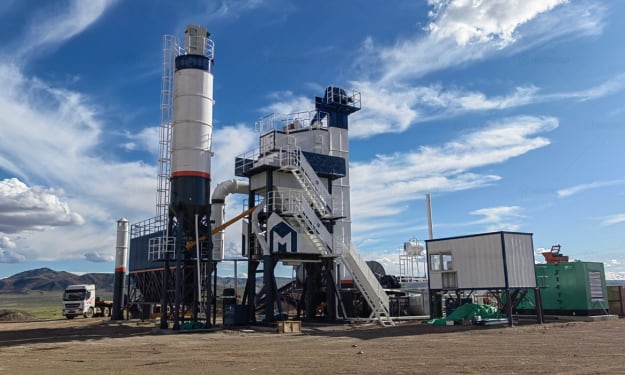
Configuring Asphalt Drum Mix Plants for Optimal Construction Demand
Understanding the difference between batch mix plant and drum mix plant is crucial for determining the appropriate configuration and application scenario for asphalt drum mix plant. The flexibility in production and adaptability to raw materials are key factors in this decision-making process. By evaluating these differences, construction companies can effectively match their plant configurations to various project demands, optimizing efficiency and outcomes.
By Macroad Asphalt Plant3 days ago in 01
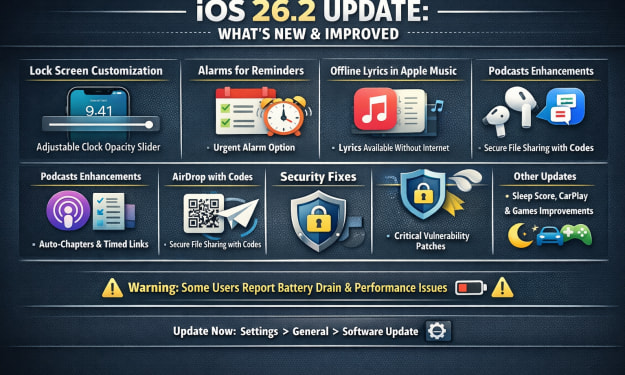
Apple iOS 26.2 Update
Apple officially released iOS 26.2 in December 2025 as a free over-the-air update for compatible iPhones (iPhone 11 and newer, plus second-generation iPhone SE). This second major point update for iOS 26 brings a mix of new features, system enhancements, customization options, security patches, and app upgrades aimed at refining the user experience following the launch of iOS 26 earlier in the year.
By USA daily update 4 days ago in 01
Killing him slowly
There’s an intruder in my house again. He stumbles through the door, wet carrier bags in hand. He’s bought me offerings. I show my appreciation, letting him caress my beautiful body. He wants to touch me. I rub myself against his legs. He sighs, dropping the bags. He can’t resist touching me. Running his hand slowly down my spine, I arch my back towards his caress, let out a low purr. It’s what we both need.
By N J Delmas5 days ago in Horror


Comments
There are no comments for this story
Be the first to respond and start the conversation.