
Recent Bank Failures and Government Bailouts
Banks Are Collapsing...Here's Why

Recent Bank Failures and Government Bailouts
Two of the largest bank failures in history happened this week, sparking fear and concern among depositors and investors. Before delving into the reasons behind these collapses, let's first address a burning question: why is Jim Cramer so good at being so bad at his job?
Just months before the bank failures, Cramer had recommended Signature Bank as his favorite, stating "watch out for Signature Bank, that's my fave." Meanwhile, he dismissed the other two failed banks as "too boring" to discuss. This statement was proven wrong as the banks collapsed, leaving many wondering about the reliability of financial advice from supposed experts like Cramer.
However, Cramer was not entirely off the mark. He had correctly identified that fear was in the air and that many were worrying about the safety of their banks. In this article, we will break down the recent bank failures, the government's special bailout, and the reactions of different people to this situation.
The Facts
Three major banks in the United States have failed in a short period of time: Silvergate, Signature Bank, and Silicon Valley Bank. While these banks had different areas of focus, they all failed for similar reasons. They experienced a "run on the banks" when too many people demanded too much money too fast, and the banks did not have enough cash on hand to meet these demands.
It's important to note that these banks were illiquid, meaning they had the money, but when they had the bank run, some of it was locked up in long-term assets like bonds. As a result, they were forced to sell these long-term assets, which they didn't want to sell, and took losses because of these bank runs.
What started as a liquidity crisis became an insolvency crisis, leading to the banks' collapse.
The Government Bailout
Many people wondered if the government would step in to guarantee bank deposits. While the FDIC insures up to $250,000 per account, many accounts in Silicon Valley Bank had much more than that. This triggered a huge response from many in Silicon Valley to call for depositors to have their money guaranteed.
Ultimately, the US government stepped in to save both Silicon Valley Bank and Signature Bank, citing a systemic risk exception. The US Treasury announced that depositors would have access to all of their money, reassuring many that their bank deposits were safe.
However, not everyone saw this as a win. Critics pointed out that once again, the government seemed to help a certain type of person. Some executives and shareholders had already cashed out, and some had lobbied to deregulate their own bank. The idea that systemically risky banks should get special treatment sends a clear signal that if you're rich, you should move your money into banks that are too big to fail.
The Difference Between Liquidity and Insolvency
It is important to note that this is not the same as the crypto crash in 2022, when several crypto companies like FTX collapsed due to insolvency. When there was a run on their banks, they had no money to give. The banks that failed were illiquid, meaning they had the money, but when they had the bank run, some of it was locked up in long-term assets like bonds. When a bank run happens, what can start as a liquidity problem can become an insolvency problem if the bank has to sell what they have for cash.
The Role of Treasury Bonds
One of the safest investments is considered to be Treasury bonds. Banks invest in them because they provide a stable rate of return. However, when interest rates rise quickly, the value of these bonds on the open market drops. Banks were forced to sell long-term assets that they did not want to sell, like bonds, and they took losses because of these bank runs. Because of that, what started as a liquidity crisis became an insolvency crisis, and that is why they got shut down.
The FDIC and Bank Deposits
The FDIC insures up to $250,000 per account. However, at places like Silicon Valley Bank, they had a lot of accounts with a lot more than that because they hosted a lot of venture capital startups that might have had anywhere from $10 to $50 million in there. This triggered a huge response to call for depositors to have their money guaranteed. Ultimately, the U.S. government stepped in to save not only Silicon Valley Bank but also Signature Bank as well, citing a systemic risk exception. Depositors will have access to all of their money, and the U.S. government does not want citizens worried about their bank deposits.
The Debate Over Government Intervention
Regardless of whether you believe there should have been a bailout or not, the idea that systemically risky banks should get special treatment while regular banks do not sends a pretty clear signal. If you are rich, you should move your money into banks that are too big to fail. Otherwise, you run the risk of ending up on Jim Cramer feeling like this.
Conclusion
The recent bank failures and government bailouts have left many wondering about the safety and reliability of their banks and financial institutions. While depositors can take some comfort in the government's actions, the larger issue of systemic risk remains. It's essential to understand the reasons behind these failures and to make informed decisions about where to put your money.
About the Creator
Keep reading
More stories from Kyle Burnette and writers in 01 and other communities.
Discover the Magic of Intermittent Fasting
Discover the Magic of Intermittent Fasting Picture this: you're on a quest to lose weight, and you stumble upon a magical tool that helps you burn fat without cutting calories. Sounds like a fairy tale, right? Well, it's not. It's called intermittent fasting, and it's about to become your new best friend.
By Kyle Burnette3 years ago in Longevity
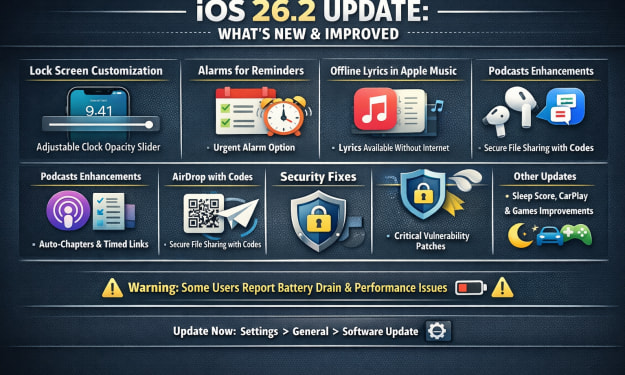
Apple iOS 26.2 Update
Apple officially released iOS 26.2 in December 2025 as a free over-the-air update for compatible iPhones (iPhone 11 and newer, plus second-generation iPhone SE). This second major point update for iOS 26 brings a mix of new features, system enhancements, customization options, security patches, and app upgrades aimed at refining the user experience following the launch of iOS 26 earlier in the year.
By USA daily update 5 days ago in 01
One Unchecked Box
"Republished" because it was the only way to add the embed for the newly recorded audio version of this story due to the Top Story badge. Plus it serves as a nice, informal announcement of the podcast's revival for another season (go subscribe!):
By Stephen A. Roddewig6 days ago in Fiction



Comments
There are no comments for this story
Be the first to respond and start the conversation.