
Reality or Illusion? The Butterfly Dream of Zhuang Zhou
An Exploration into the Relativity of Truth and Falsehood

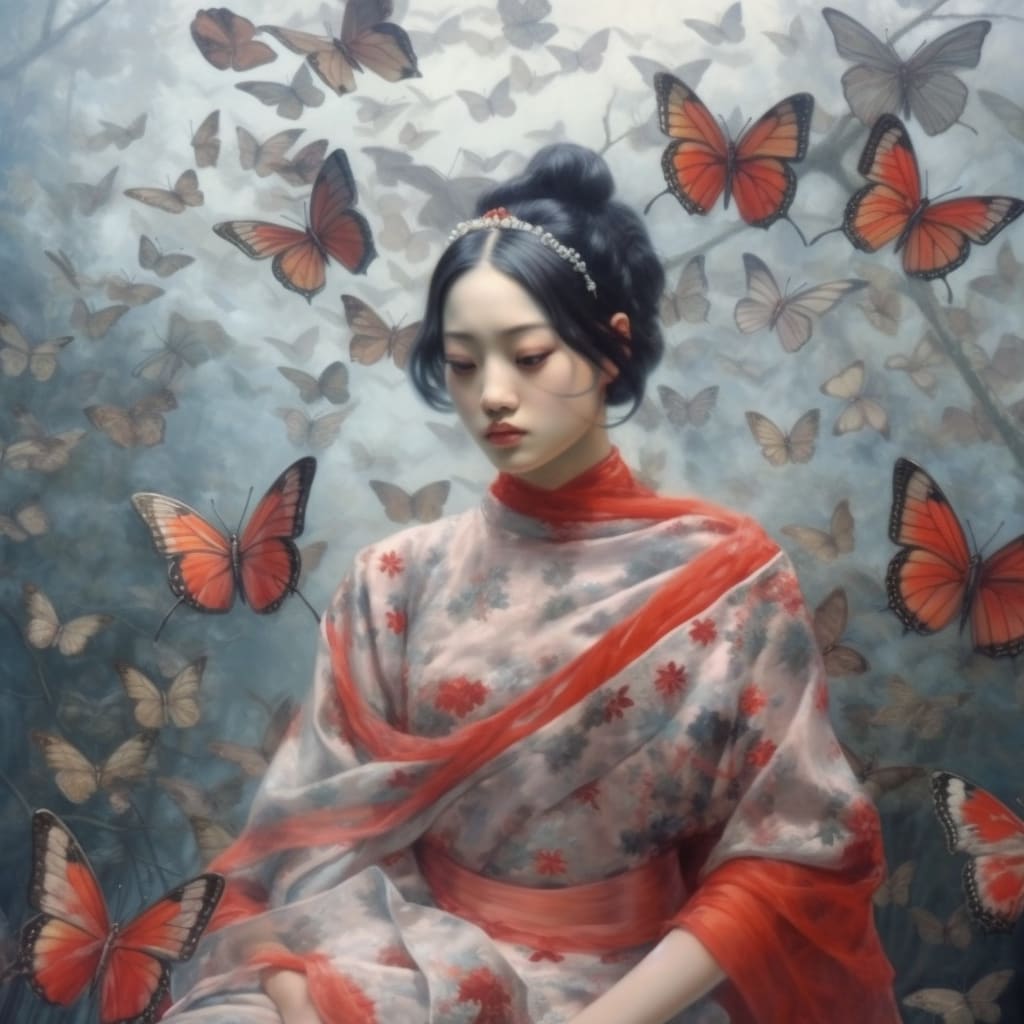
There once lived a man named Zhuang Zhou, a central figure in Daoism, whose philosophical tales have been a source of intrigue and reflection for centuries.
His most famous parable, often called "Zhuang Zhou's Dream of a Butterfly," is a provocative tale challenging our conception of reality and the distinction between truth and falsehood.
One night, Zhuang Zhou dreamt he was a butterfly, fluttering around without any awareness of being Zhuang Zhou. Everything was vivid, right from the flapping of his wings to the feeling of joy he experienced. It was all so real, as if he was truly a butterfly.
He was just a butterfly, free from human constraints, free to do as he wished. Then, he awoke, finding himself back to being Zhuang Zhou.
This led him to a profound existential question: Was he Zhuang Zhou who had dreamt he was a butterfly, or was he a butterfly now dreaming it was Zhuang Zhou?
This simple yet profound question triggers an array of philosophical thoughts surrounding the nature of reality, and our perceptions of truth and falsehood.
From a Western perspective, it may appear to be an early form of questioning reality akin to Descartes' philosophical inquiry in the 17th century: "I think, therefore I am." However, Zhuang Zhou's dream of a butterfly possesses a nuanced complexity that goes beyond mere doubt of one's existence.
At the heart of Zhuang Zhou's narrative is the relativity of truth and falsehood, a concept deeply entrenched in Daoist philosophy. It's a thought-provoking idea that what we perceive as real or unreal, truth or falsehood, is subjective and changes with perspective.
The human perception of reality is neither constant nor absolute. What we consider as "truth" might merely be a representation of our cognitive and sensory limitations.
The human perception of reality is neither constant nor absolute.
Zhuang Zhou's dream of a butterfly is a classic example of this. In his dream, he experienced the life of a butterfly with every sensation as true as his human life. So, which life was real? Which was truth, and which was falsehood?
As a man, he believed he was a man dreaming of being a butterfly, but as a butterfly, he believed he was just a butterfly, unaware of being a man.
In exploring this story, we're forced to consider whether our individual perception of reality is the absolute truth, or if it's just a part of a greater truth that's beyond our comprehension.
The story underlines the fact that our reality is filtered through our personal experiences and consciousness, limiting our understanding of a wider, perhaps more authentic, reality.
In a broader context, this narrative encourages us to stay open-minded and humble in the face of what we know and what we perceive as truth. It reminds us that there are multiple perspectives to consider, multiple narratives to hear, and multiple truths to understand.
It reiterates the importance of embracing diversity and understanding that the world does not exist in absolutes of right or wrong, truth or falsehood.
The Butterfly Dream of Zhuang Zhou thus transcends beyond an intriguing philosophical tale. It is a timeless reminder that the world we perceive is largely a reflection of our own consciousness.
It invites us to embrace ambiguity, question our assumptions, and constantly reevaluate our understanding of reality.
In this sense, the dream encourages us to keep exploring, keep learning, and keep growing, reminding us of the relativity of truth and falsehood, and the profound beauty of the ever-changing world we live in.
About the Creator
fiction creator
omnivorous creator,According to the historical background, write a novel, and see the historical issues behind it through the story
Keep reading
More stories from fiction creator and writers in 01 and other communities.



Comments
There are no comments for this story
Be the first to respond and start the conversation.